Institute for Informatics (I2), Washington University School of Medicine, Washington University in St. Louis, St. Louis, MO, USA.
Data Science, Washington University School of Medicine, Washington University in St. Louis, St. Louis, MO, USA.
BMC Bioinformatics. 2021 Feb 5;22(1):47. doi: 10.1186/s12859-020-03850-6.
Survival analysis is an important part of cancer studies. In addition to the existing Cox proportional hazards model, deep learning models have recently been proposed in survival prediction, which directly integrates multi-omics data of a large number of genes using the fully connected dense deep neural network layers, which are hard to interpret. On the other hand, cancer signaling pathways are important and interpretable concepts that define the signaling cascades regulating cancer development and drug resistance. Thus, it is important to investigate potential associations between patient survival and individual signaling pathways, which can help domain experts to understand deep learning models making specific predictions.
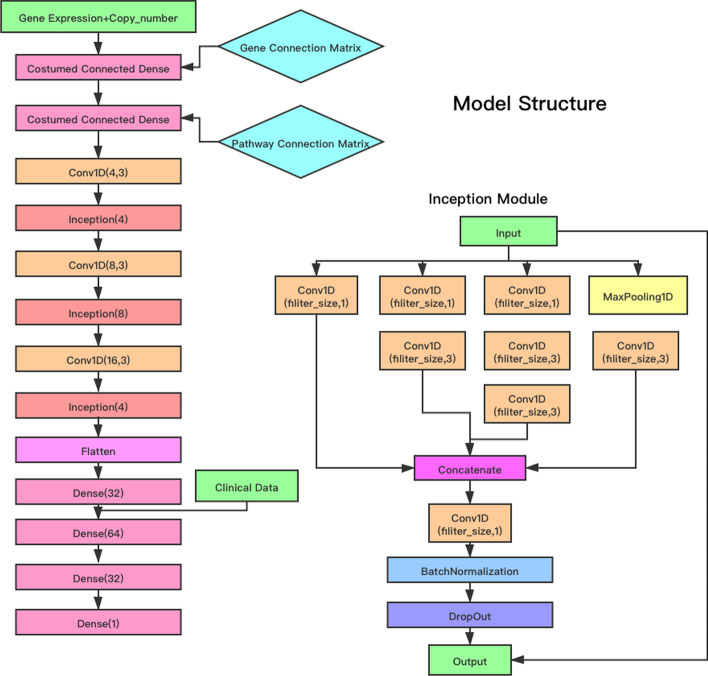
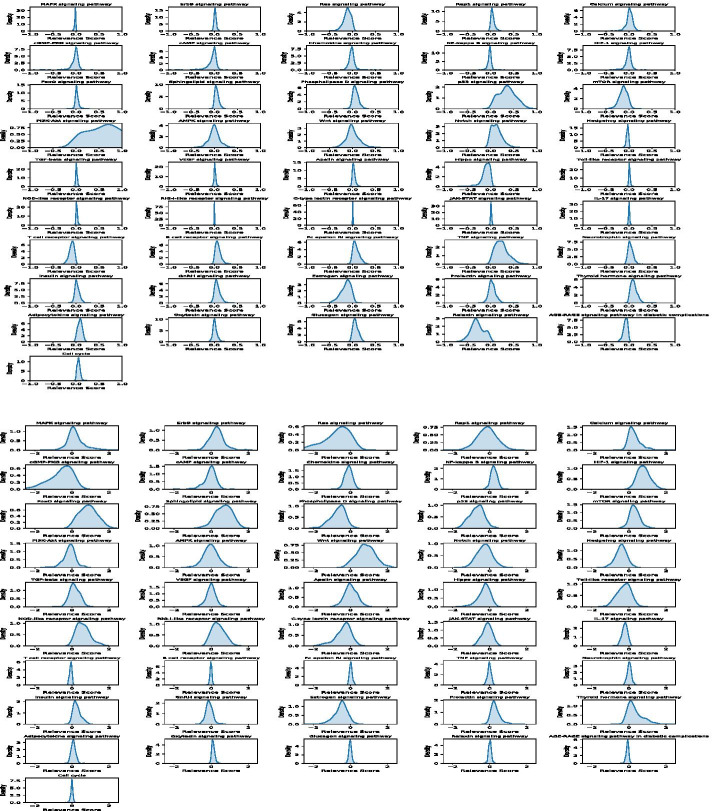
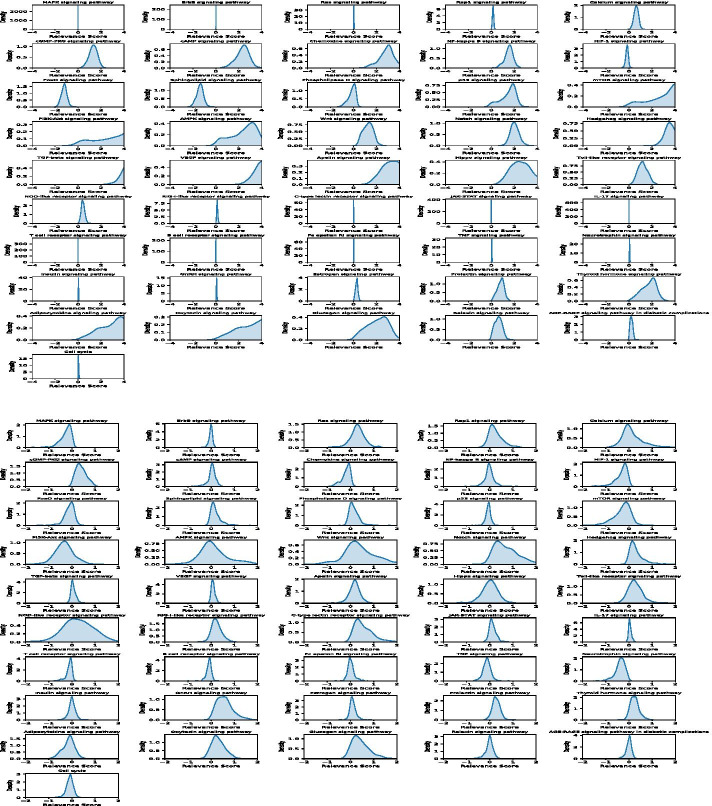
In this exploratory study, we proposed to investigate the relevance and influence of a set of core cancer signaling pathways in the survival analysis of cancer patients. Specifically, we built a simplified and partially biologically meaningful deep neural network, DeepSigSurvNet, for survival prediction. In the model, the gene expression and copy number data of 1967 genes from 46 major signaling pathways were integrated in the model. We applied the model to four types of cancer and investigated the influence of the 46 signaling pathways in the cancers. Interestingly, the interpretable analysis identified the distinct patterns of these signaling pathways, which are helpful in understanding the relevance of signaling pathways in terms of their application to the prediction of cancer patients' survival time. These highly relevant signaling pathways, when combined with other essential signaling pathways inhibitors, can be novel targets for drug and drug combination prediction to improve cancer patients' survival time.
The proposed DeepSigSurvNet model can facilitate the understanding of the implications of signaling pathways on cancer patients' survival by integrating multi-omics data and clinical factors.
生存分析是癌症研究的重要组成部分。除了现有的 Cox 比例风险模型外,深度学习模型最近也被提出用于生存预测,这些模型直接使用全连接密集深度神经网络层整合大量基因的多组学数据,这使得模型难以解释。另一方面,癌症信号通路是定义调节癌症发展和耐药性的信号级联的重要且可解释的概念。因此,研究患者生存与个体信号通路之间的潜在关联非常重要,这有助于领域专家理解做出具体预测的深度学习模型。
在这项探索性研究中,我们提出了一种方法来研究一组核心癌症信号通路在癌症患者生存分析中的相关性和影响。具体来说,我们构建了一个简化的、部分具有生物学意义的深度神经网络 DeepSigSurvNet,用于生存预测。在模型中,整合了来自 46 个主要信号通路的 1967 个基因的基因表达和拷贝数数据。我们将该模型应用于四种癌症,并研究了这些信号通路在癌症中的影响。有趣的是,可解释性分析确定了这些信号通路的不同模式,这有助于理解信号通路在预测癌症患者生存时间方面的相关性。当这些高度相关的信号通路与其他必需的信号通路抑制剂结合使用时,它们可能成为药物和药物组合预测的新靶点,以提高癌症患者的生存时间。
所提出的 DeepSigSurvNet 模型通过整合多组学数据和临床因素,有助于理解信号通路对癌症患者生存的影响。