Dong Zehao, Zhang Heming, Chen Yixin, Payne Philip R O, Li Fuhai
Department of Computer Science & Engineering, Washington University in St. Louis, St. Louis, MO 63130, USA.
Institute for Informatics, Data Science, and Biostatistics, Washington University School of Medicine, Washington University in St. Louis, St. Louis, MO 63110, USA.
Cancers (Basel). 2023 Aug 22;15(17):4210. doi: 10.3390/cancers15174210.
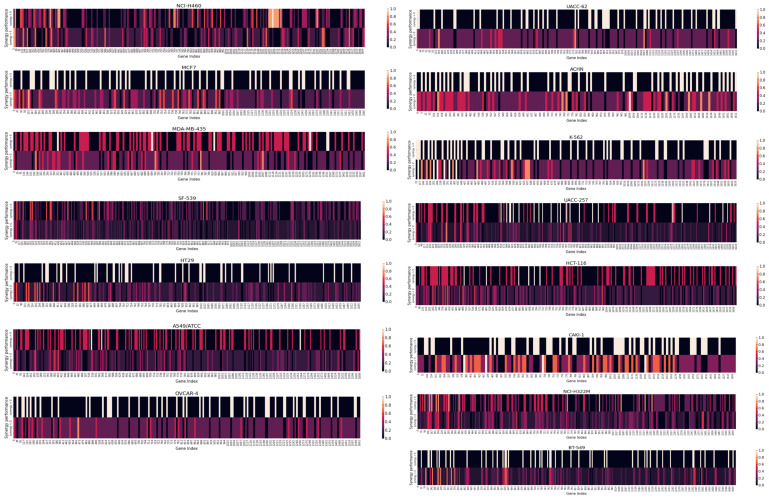
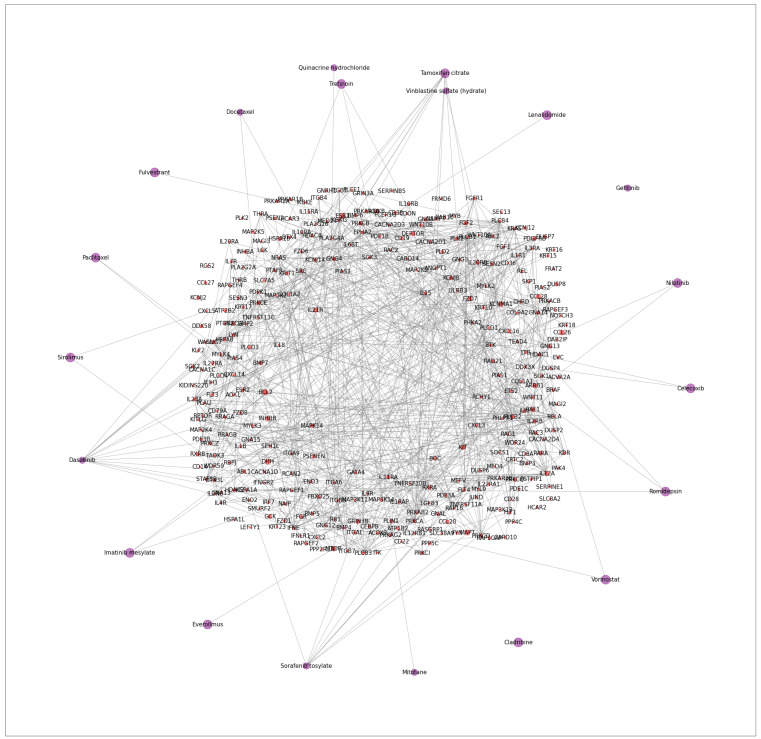
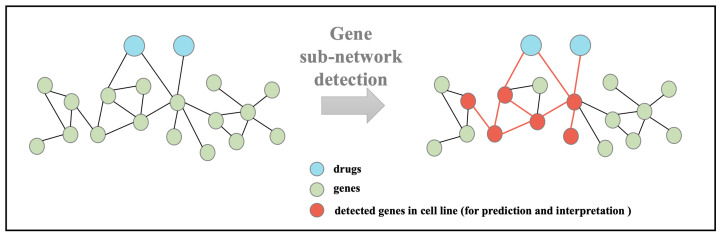
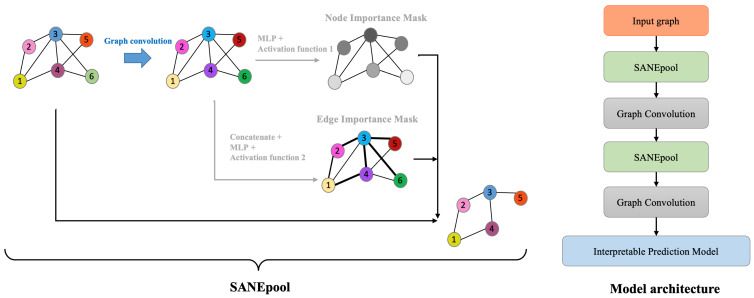
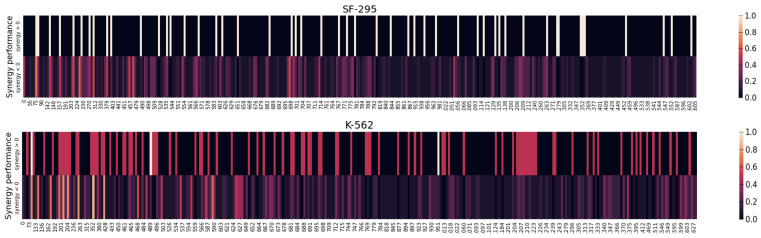
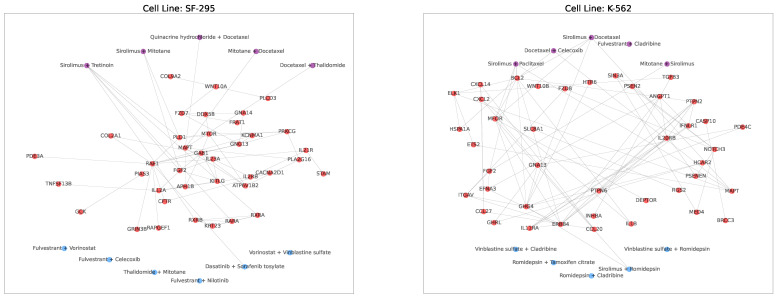
Synergistic drug combinations provide huge potentials to enhance therapeutic efficacy and to reduce adverse reactions. However, effective and synergistic drug combination prediction remains an open question because of the unknown causal disease signaling pathways. Though various deep learning (AI) models have been proposed to quantitatively predict the synergism of drug combinations, the major limitation of existing deep learning methods is that they are inherently not interpretable, which makes the conclusions of AI models untransparent to human experts, henceforth limiting the robustness of the model conclusion and the implementation ability of these models in real-world human-AI healthcare. In this paper, we develop an interpretable graph neural network (GNN) that reveals the underlying essential therapeutic targets and the mechanism of the synergy (MoS) by mining the sub-molecular network of great importance. The key point of the interpretable GNN prediction model is a novel graph pooling layer, a self-attention-based node and edge pool (henceforth SANEpool), that can compute the attention score (importance) of genes and connections based on the genomic features and topology. As such, the proposed GNN model provides a systematic way to predict and interpret the drug combination synergism based on the detected crucial sub-molecular network. Experiments on various well-adopted drug-synergy-prediction datasets demonstrate that (1) the SANEpool model has superior predictive ability to generate accurate synergy score prediction, and (2) the sub-molecular networks detected by the SANEpool are self-explainable and salient for identifying synergistic drug combinations.
协同药物组合在提高治疗效果和减少不良反应方面具有巨大潜力。然而,由于未知的致病信号通路,有效的协同药物组合预测仍然是一个悬而未决的问题。尽管已经提出了各种深度学习(AI)模型来定量预测药物组合的协同作用,但现有深度学习方法的主要局限性在于它们本质上不可解释,这使得AI模型的结论对人类专家不透明,从而限制了模型结论的稳健性以及这些模型在现实世界中人类 - AI医疗保健中的实施能力。在本文中,我们开发了一种可解释的图神经网络(GNN),通过挖掘非常重要的亚分子网络来揭示潜在的关键治疗靶点和协同作用机制(MoS)。可解释的GNN预测模型的关键点是一个新颖的图池化层,即基于自注意力的节点和边池化(以下简称SANEpool),它可以根据基因组特征和拓扑结构计算基因和连接的注意力分数(重要性)。因此,所提出的GNN模型提供了一种基于检测到的关键亚分子网络来预测和解释药物组合协同作用的系统方法。在各种广泛采用的药物协同作用预测数据集上的实验表明:(1)SANEpool模型具有卓越的预测能力,能够生成准确的协同分数预测;(2)SANEpool检测到的亚分子网络对于识别协同药物组合具有自解释性且十分显著。