Department of Physical Medicine and Rehabilitation, Harvard Medical School, Spaulding Rehabilitation Hospital, Boston, Massachusetts, USA.
Department of Rehabilitation and Movement Sciences, Rutgers University, Newark, New Jersey, USA.
Sci Data. 2021 Feb 5;8(1):47. doi: 10.1038/s41597-021-00831-z.
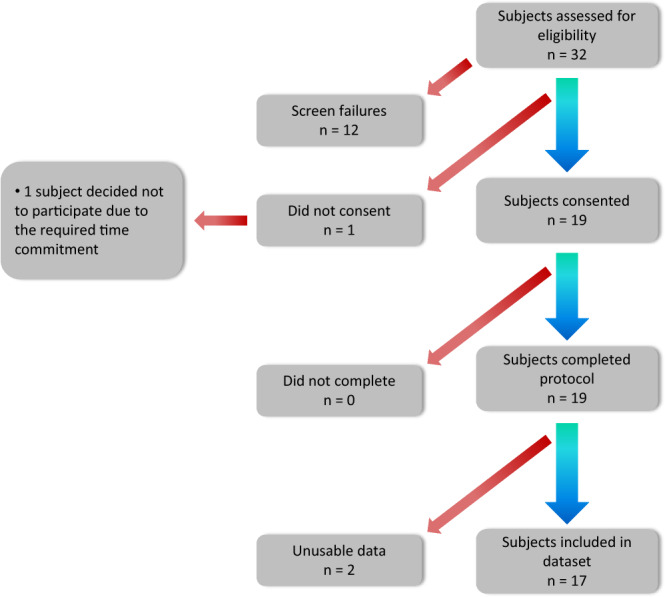
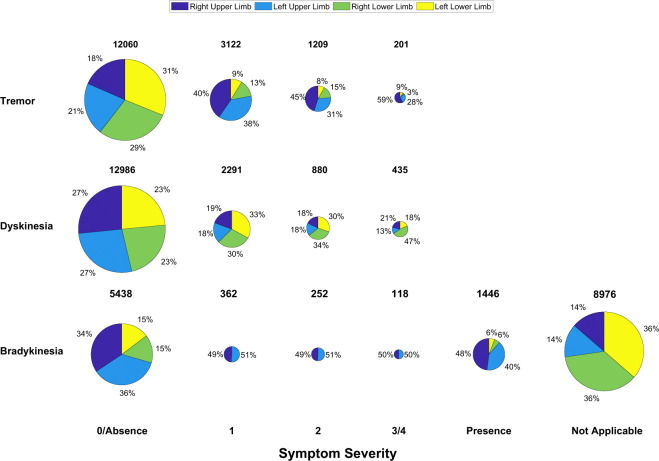
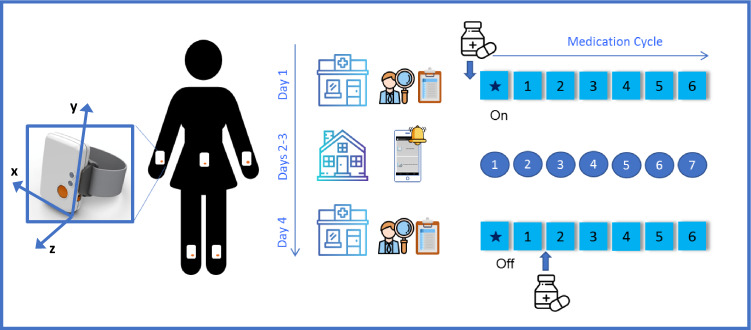
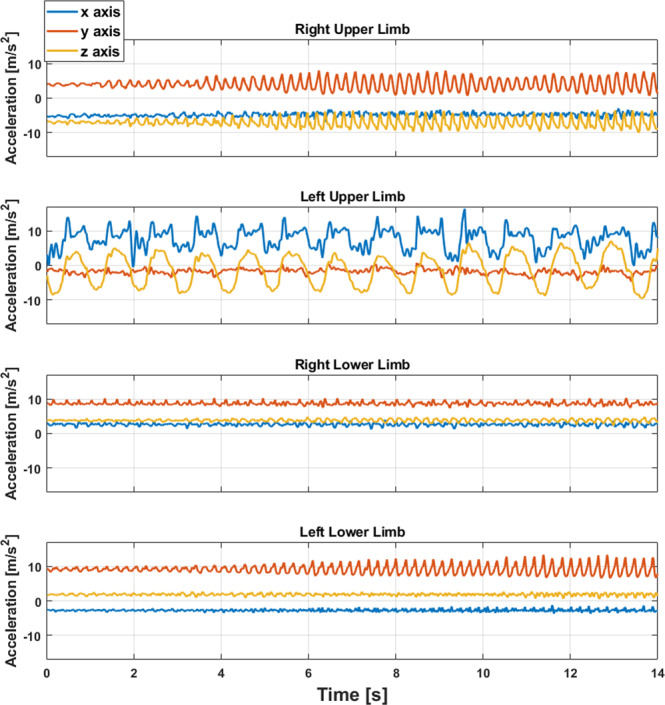
Parkinson's disease (PD) is a neurodegenerative disorder characterized by motor and non-motor symptoms. Dyskinesia and motor fluctuations are complications of PD medications. An objective measure of on/off time with/without dyskinesia has been sought for some time because it would facilitate the titration of medications. The objective of the dataset herein presented is to assess if wearable sensor data can be used to generate accurate estimates of limb-specific symptom severity. Nineteen subjects with PD experiencing motor fluctuations were asked to wear a total of five wearable sensors on both forearms and shanks, as well as on the lower back. Accelerometer data was collected for four days, including two laboratory visits lasting 3 to 4 hours each while the remainder of the time was spent at home and in the community. During the laboratory visits, subjects performed a battery of motor tasks while clinicians rated limb-specific symptom severity. At home, subjects were instructed to use a smartphone app that guided the periodic performance of a set of motor tasks.
帕金森病(PD)是一种神经退行性疾病,其特征是运动和非运动症状。运动障碍和运动波动是 PD 药物治疗的并发症。一段时间以来,人们一直在寻求一种客观的方法来测量有无运动障碍的开/关时间,因为这有助于调整药物剂量。本文数据集的目的是评估可穿戴传感器数据是否可用于生成对肢体特定症状严重程度的准确估计。19 名经历运动波动的 PD 患者被要求在前臂和小腿以及下背部总共佩戴五个可穿戴传感器。在四天的时间里收集了加速度计数据,其中包括两次持续 3 到 4 小时的实验室访问,其余时间则在家里和社区度过。在实验室访问期间,患者在执行一系列运动任务的同时,临床医生对肢体特定症状的严重程度进行了评估。在家中,患者被要求使用智能手机应用程序,该程序指导周期性执行一组运动任务。