Pellegrino Jeffrey L, Krob Jamillee L, Orkin Aaron
Emergency Management & Homeland Security, University of Akron, Akron, USA.
Health Sciences, Aultman College of Nursing & Health Sciences, Canton, USA.
Cureus. 2021 Jan 3;13(1):e12454. doi: 10.7759/cureus.12454.
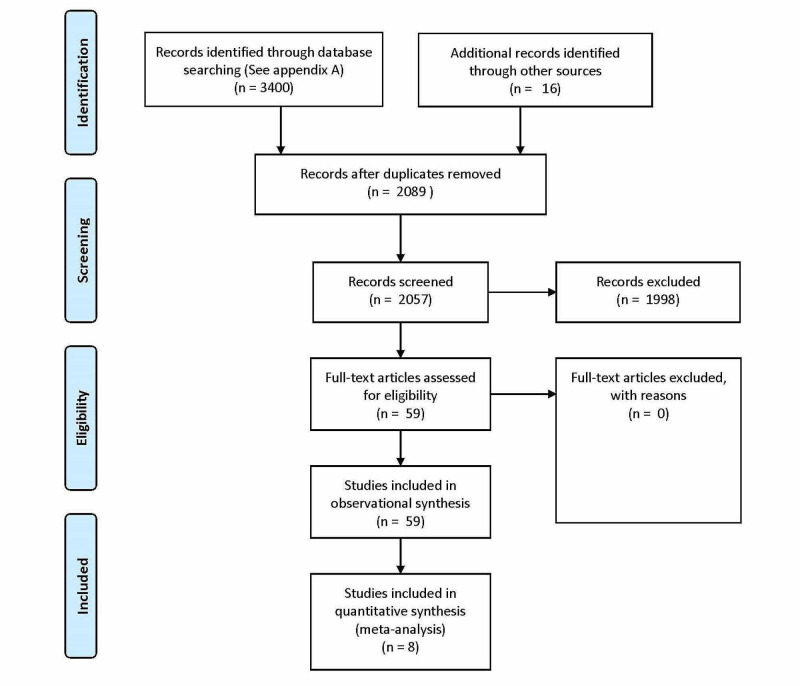
Effective health education needs ongoing evidence to support policy development and action in a public health crisis, like the opioid epidemic in the United States. Opioid Education and Naloxone Distribution (OEND) programs work to change behaviors through information, education, and resources to empower people to prevent and respond to opioid overdose poisonings. In this review, we sought to identify the first aid educational components of OEND to address opioid overdose poisoning, identify gaps in the existing literature, and support the development of future studies that could then be systematically reviewed. From a systematic review that identified 2057 peer-reviewed manuscripts, 59 studies demonstrated that the educational literature is sparse, of low quality, lacks quality measures and effective methodologies, and suffers from self-reported and highly inconsistent endpoints, making outcome comparisons challenging, if not impossible. The reviewed OEND programs generally used a public health/health education approach focusing on people who inject opioids, their family and friends, first responders, and rarely the general public. Depending on the learners, interventions were broken down to those <15, 16-90, and >90 minutes, which categorically showed differences in knowledge and first aid response actions. Only eight studies used comparison groups which provide a slightly higher level of evidence. Reports of survival appeared to positively correlate with naloxone kit distribution. Opportunity exists to develop policies and plans that support individual and community efforts through evidence-based guidelines, particularly to the domains of first aid education, so that educators and organizations can deliver efficacious programming that meets the needs of their learners.
有效的健康教育需要持续的证据来支持公共卫生危机中的政策制定和行动,比如美国的阿片类药物流行。阿片类药物教育与纳洛酮分发(OEND)项目致力于通过信息、教育和资源来改变行为,使人们有能力预防和应对阿片类药物过量中毒。在本综述中,我们试图确定OEND中用于应对阿片类药物过量中毒的急救教育内容,找出现有文献中的差距,并支持未来可进行系统综述的研究的开展。通过一项系统综述,我们识别出2057篇同行评议的手稿,其中59项研究表明,教育文献稀少、质量低下、缺乏质量衡量标准和有效的方法,且存在自我报告和终点高度不一致的问题,这使得结果比较即便不是不可能,也具有挑战性。所综述的OEND项目通常采用公共卫生/健康教育方法,重点关注注射阿片类药物者、他们的家人和朋友、急救人员,而很少针对普通公众。根据学习者的不同,干预措施分为小于15分钟、16 - 90分钟和大于90分钟三类,这几类在知识和急救反应行动方面存在明显差异。只有八项研究使用了对照组,其证据水平略高。生存报告似乎与纳洛酮试剂盒的分发呈正相关。有机会通过循证指南制定支持个人和社区努力的政策和计划,特别是在急救教育领域,以便教育工作者和组织能够提供满足学习者需求的有效项目。