Guhjjar Muhammad Khurram, Ghazanfar Haider, Ashraf Shoaib, Gaddam Maneesh, Matela Ajsza
Internal Medicine, Bronxcare Health System, Bronx, USA.
Internal Medicine, Bronx Care Health System, Icahn School of Medicine at Mount Sinai, Bronx, USA.
Cureus. 2021 Jan 3;13(1):e12458. doi: 10.7759/cureus.12458.
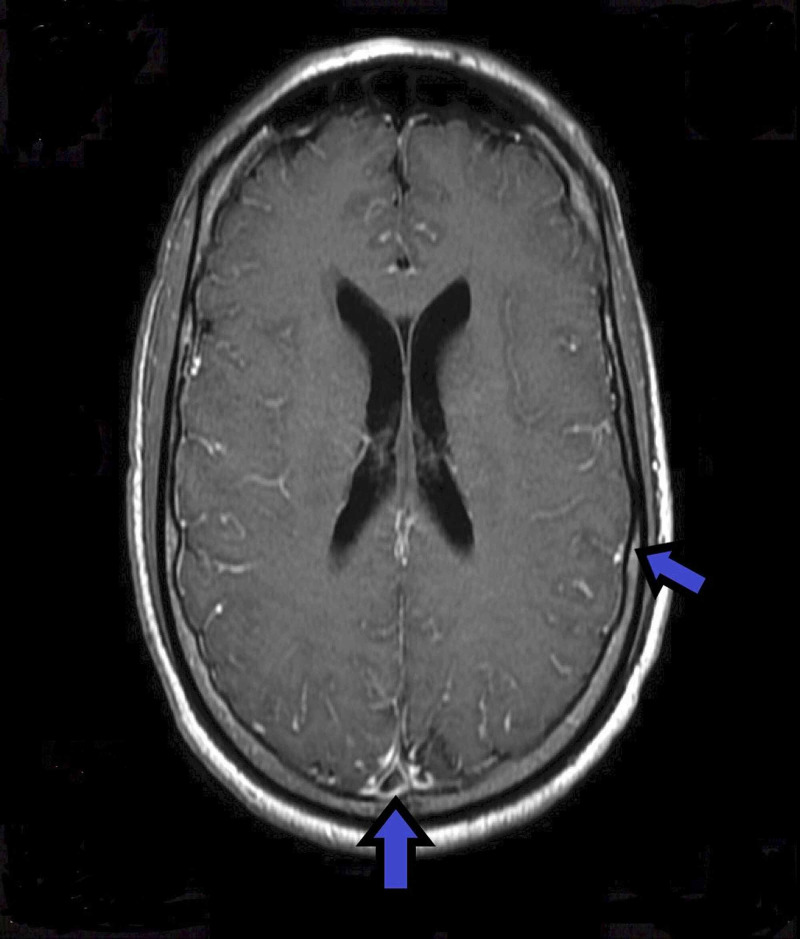
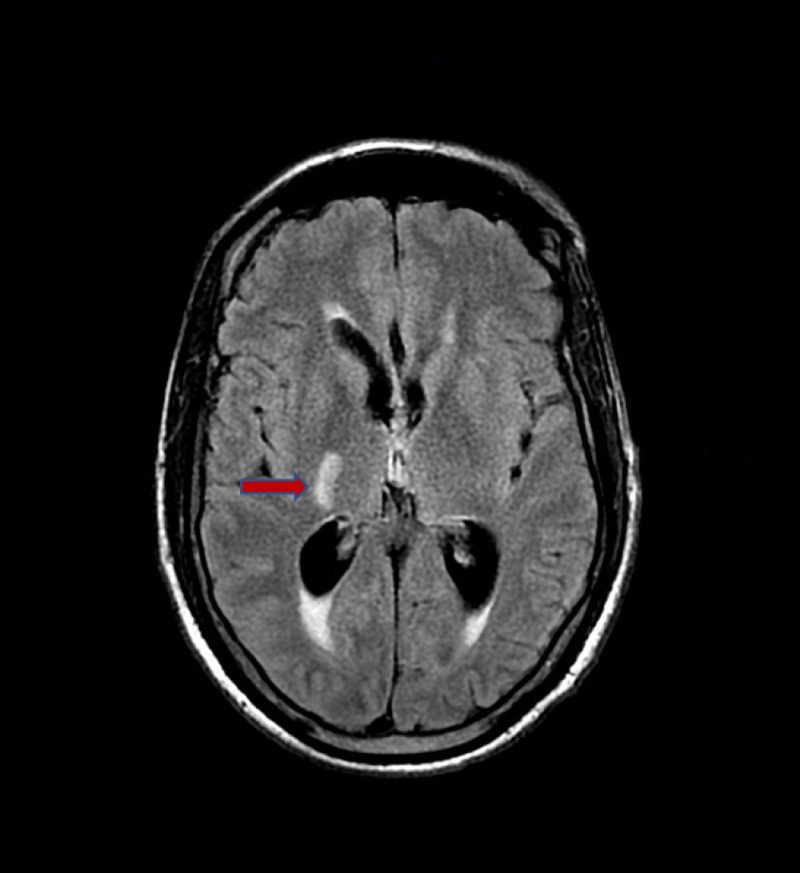
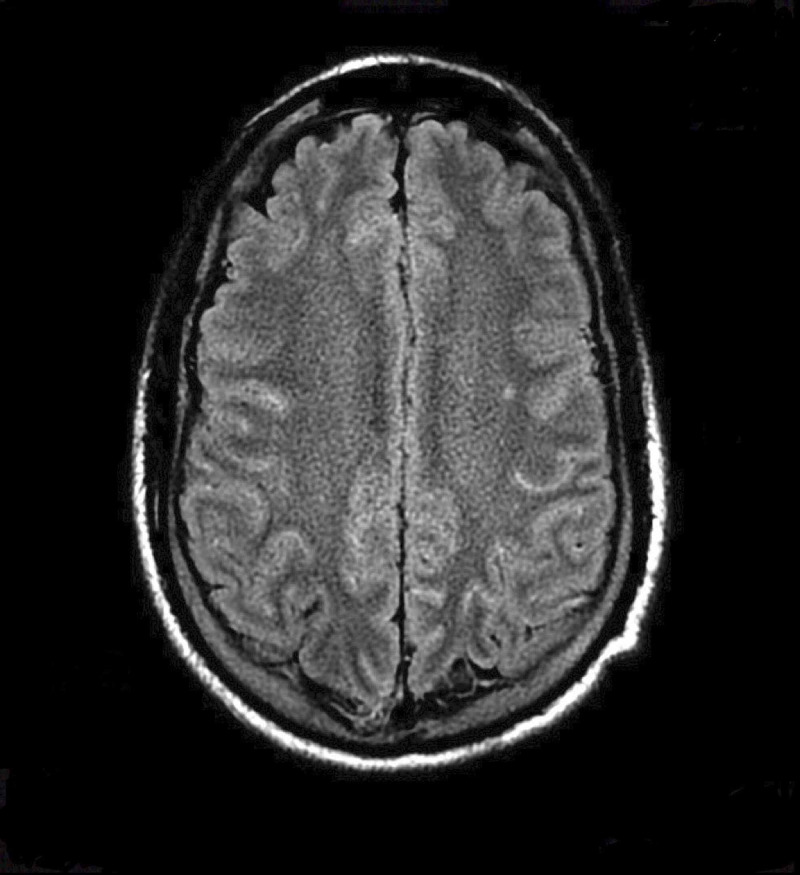
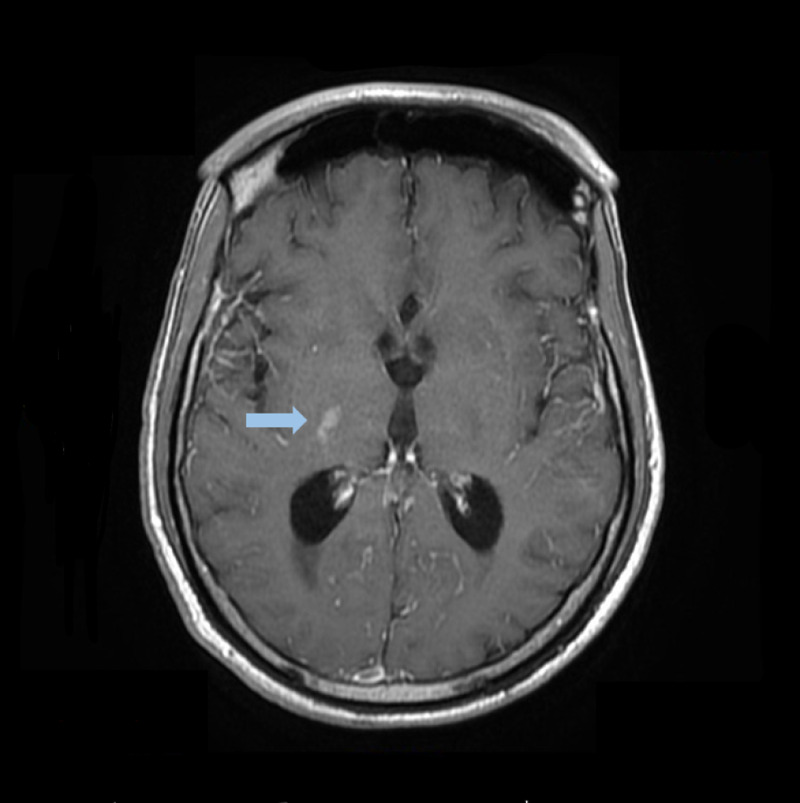
Cryptococcosis is a life-threatening opportunistic infection caused by Cryptococcus gattii and Cryptococcus neoformans. It affects both immunocompetent and immunosuppressed hosts. Disseminated cryptococcal infection is rare in immunocompetent patients, but the cryptococcal disease's neurological sequelae may be more prominent in this group. We present a case of a 58-year-old male patient with medical comorbidities of monoclonal gammopathy of undetermined significance (MGUS) and polycythemia vera. The patient presented with gradual worsening of mental status over one week. He was found to have Cryptococcus neoformans meningoencephalitis and fungemia. The patient received two weeks of liposomal amphotericin B (LAmB) and flucytosine with excellent clinical response. He was discharged on high dose fluconazole, and he returned to the hospital in one week with new-onset hemiplegia and cryptococcomas on imaging. Prolonged intravenous (IV) treatment of six weeks duration resulted in significant clinical improvement and disease-free state at two years follow-up. This article aims to stress the importance of individualized prolonged IV treatment with liposomal amphotericin B and flucytosine despite good initial response in patients with polycythemia vera and MGUS. This is the first reported case of cryptococcal disease, to the best of our knowledge, in a patient with MGUS and the third case of cryptococcal infection in patients with polycythemia vera in a non-HIV non-transplant state. Prolonged individualized IV treatment should be considered in immunocompetent patients with the above conditions, as this condition, if not adequately treated and relapses, lead to high morbidity and mortality.
隐球菌病是由加氏隐球菌和新型隐球菌引起的一种危及生命的机会性感染。它可影响免疫功能正常和免疫抑制的宿主。播散性隐球菌感染在免疫功能正常的患者中较为罕见,但该组患者隐球菌病的神经后遗症可能更为突出。我们报告一例58岁男性患者,患有意义未明的单克隆丙种球蛋白病(MGUS)和真性红细胞增多症的合并症。患者在一周内出现精神状态逐渐恶化。他被诊断为新型隐球菌性脑膜脑炎和真菌血症。患者接受了两周的脂质体两性霉素B(LAmB)和氟胞嘧啶治疗,临床反应良好。他出院时服用高剂量氟康唑,但一周后因新发偏瘫和影像学检查发现隐球菌瘤而再次入院。为期六周的延长静脉治疗取得了显著的临床改善,在两年的随访中处于无病状态。本文旨在强调,尽管初始反应良好,但对于患有真性红细胞增多症和MGUS的患者,使用脂质体两性霉素B和氟胞嘧啶进行个体化延长静脉治疗的重要性。据我们所知,这是首例MGUS患者发生隐球菌病的报告病例,也是非HIV非移植状态下真性红细胞增多症患者发生隐球菌感染的第三例病例。对于患有上述疾病的免疫功能正常的患者,应考虑延长个体化静脉治疗,因为这种疾病如果治疗不充分并复发,会导致高发病率和死亡率。