Department of Electrical Engineering and Computer Science, University of Missouri, Columbia, MO, USA.
Institute for Data Science and Informatics, University of Missouri, Columbia, MO, USA.
BMC Bioinformatics. 2021 Feb 8;22(1):55. doi: 10.1186/s12859-020-03948-x.
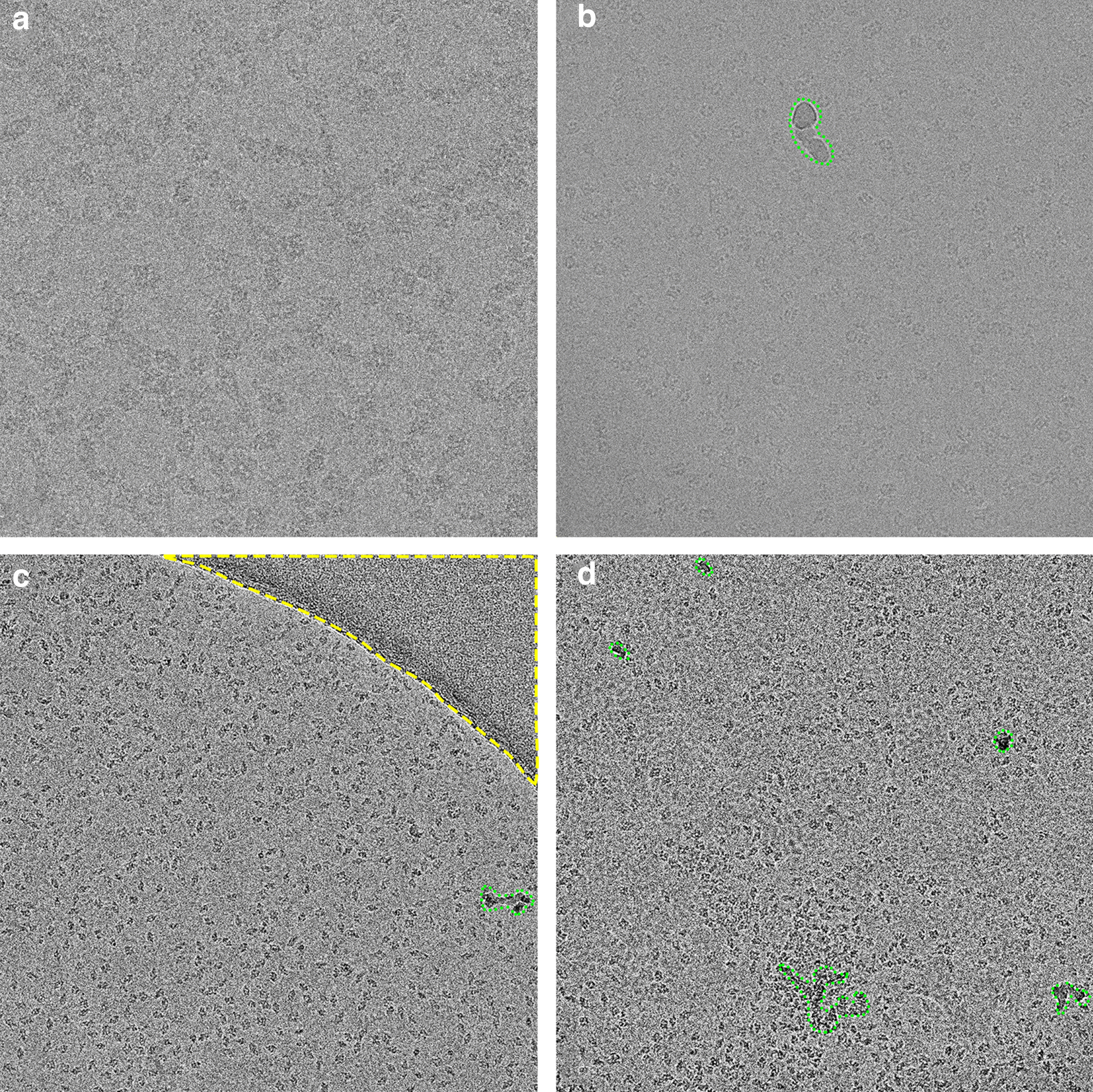
Identification and selection of protein particles in cryo-electron micrographs is an important step in single particle analysis. In this study, we developed a deep learning-based particle picking network to automatically detect particle centers from cryoEM micrographs. This is a challenging task due to the nature of cryoEM data, having low signal-to-noise ratios with variable particle sizes, shapes, distributions, grayscale variations as well as other undesirable artifacts.
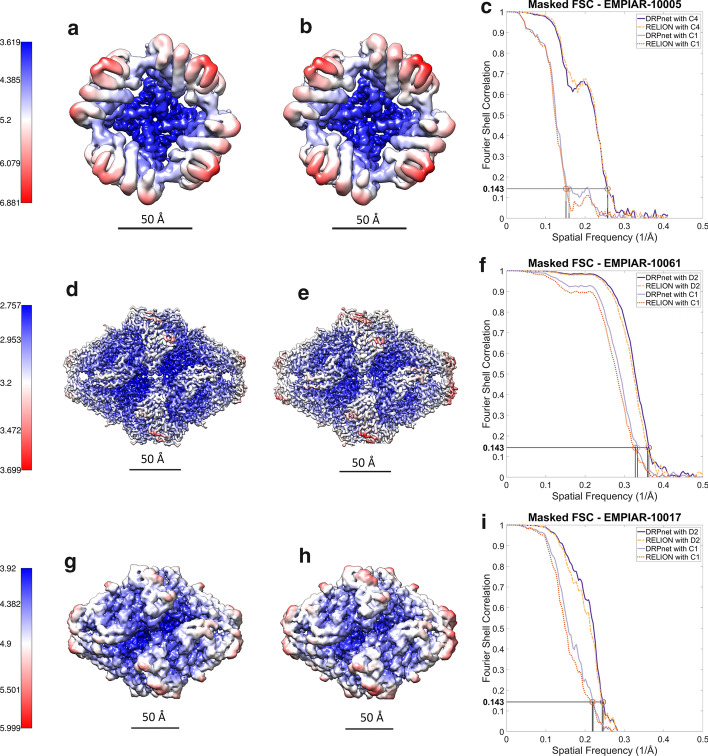
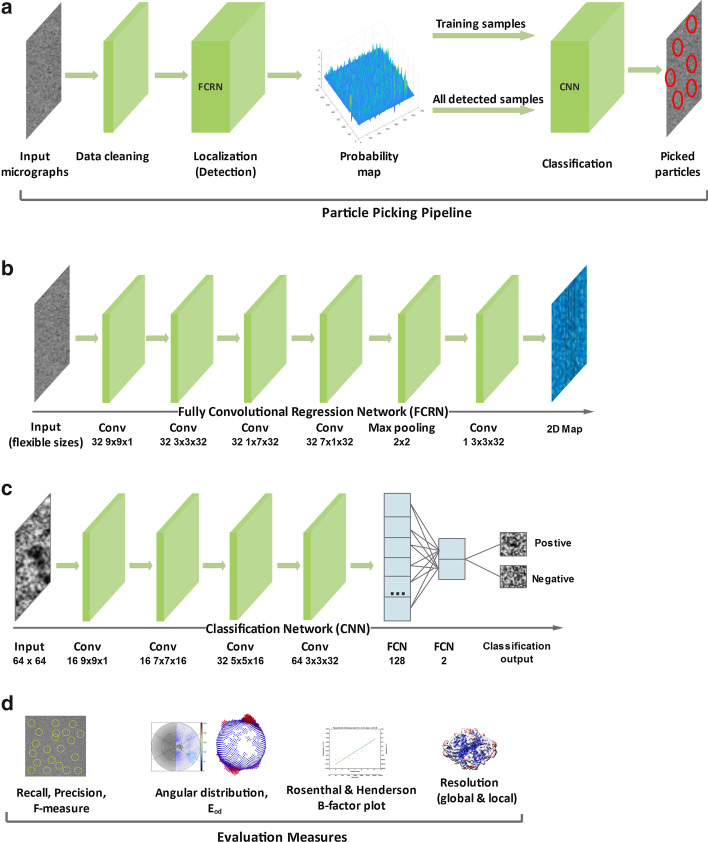
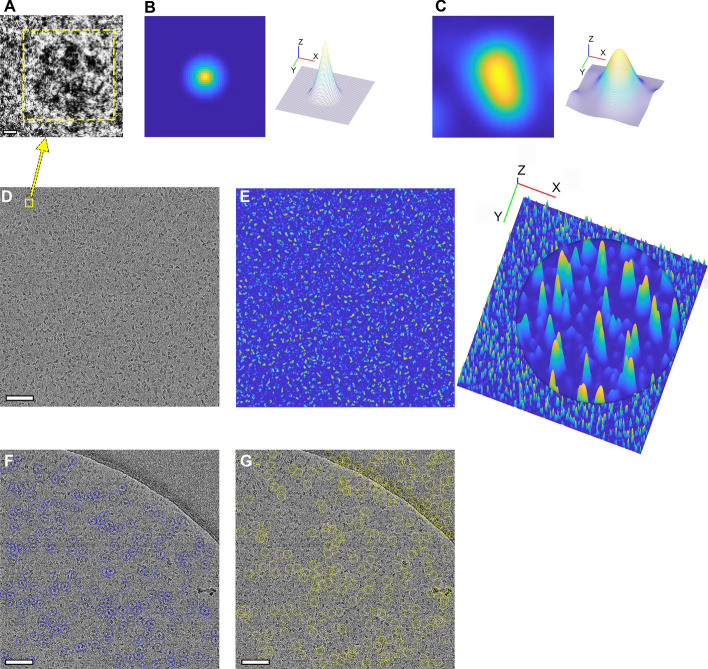
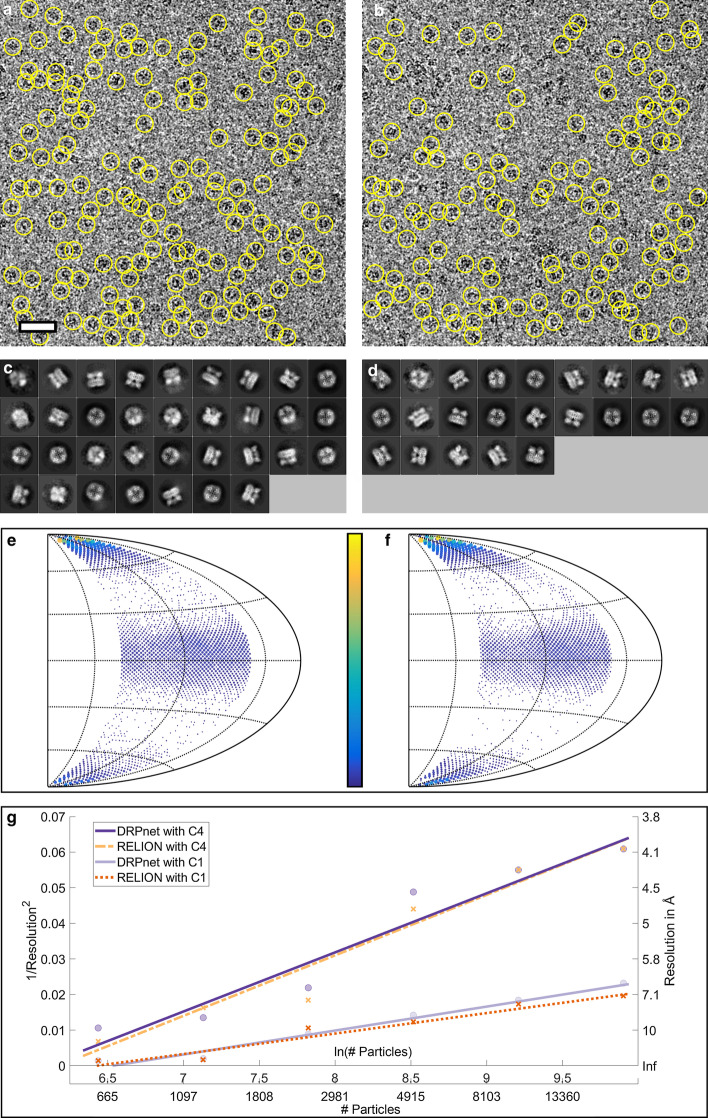
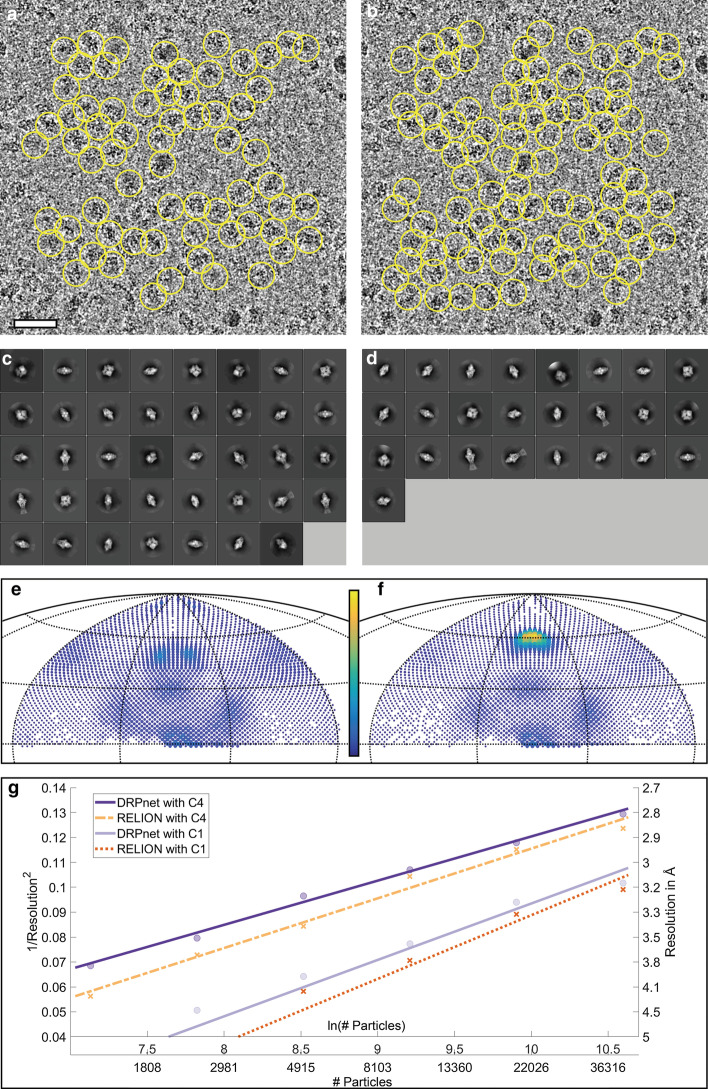
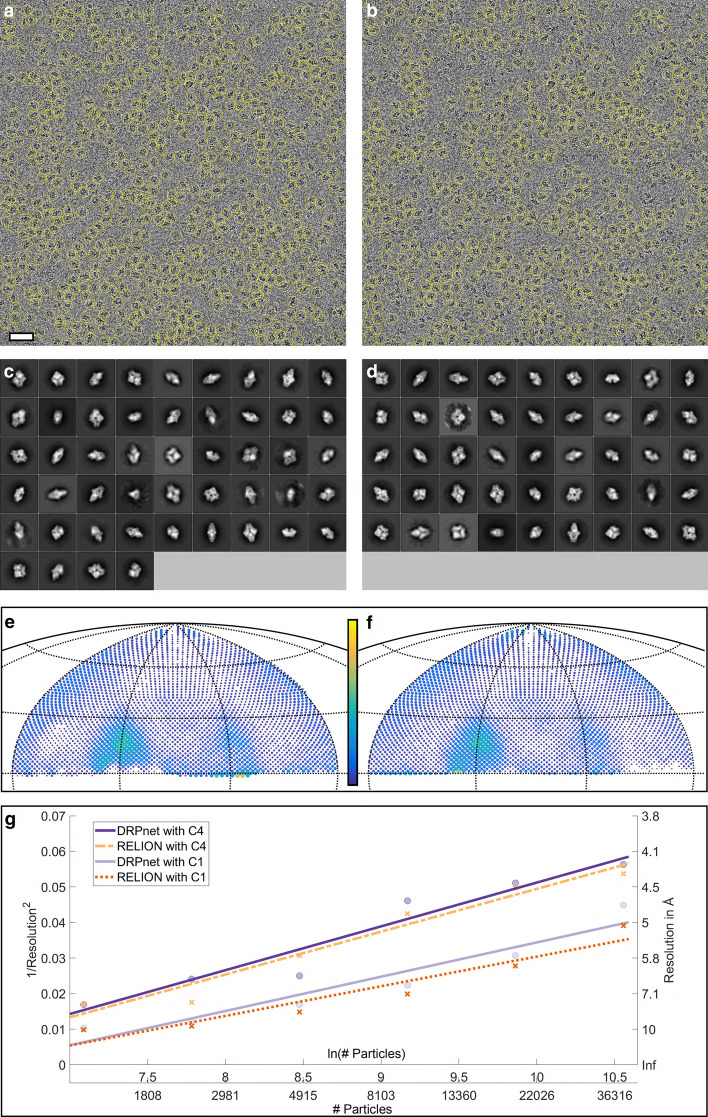
We propose a double convolutional neural network (CNN) cascade for automated detection of particles in cryo-electron micrographs. This approach, entitled Deep Regression Picker Network or "DRPnet", is simple but very effective in recognizing different particle sizes, shapes, distributions and grayscale patterns corresponding to 2D views of 3D particles. Particles are detected by the first network, a fully convolutional regression network (FCRN), which maps the particle image to a continuous distance map that acts like a probability density function of particle centers. Particles identified by FCRN are further refined to reduce false particle detections by the second classification CNN. DRPnet's first CNN pretrained with only a single cryoEM dataset can be used to detect particles from different datasets without retraining. Compared to RELION template-based autopicking, DRPnet results in better particle picking performance with drastically reduced user interactions and processing time. DRPnet also outperforms the state-of-the-art particle picking networks in terms of the supervised detection evaluation metrics recall, precision, and F-measure. To further highlight quality of the picked particle sets, we compute and present additional performance metrics assessing the resulting 3D reconstructions such as number of 2D class averages, efficiency/angular coverage, Rosenthal-Henderson plots and local/global 3D reconstruction resolution.
DRPnet shows greatly improved time-savings to generate an initial particle dataset compared to manual picking, followed by template-based autopicking. Compared to other networks, DRPnet has equivalent or better performance. DRPnet excels on cryoEM datasets that have low contrast or clumped particles. Evaluating other performance metrics, DRPnet is useful for higher resolution 3D reconstructions with decreased particle numbers or unknown symmetry, detecting particles with better angular orientation coverage.
在单颗粒分析中,从冷冻电子显微镜(cryo-electron microscopy,cryo-EM)照片中识别和选择蛋白质颗粒是一个重要步骤。在这项研究中,我们开发了一种基于深度学习的粒子挑选网络,以自动从 cryoEM 显微照片中检测粒子中心。由于 cryoEM 数据的性质,这是一项具有挑战性的任务,其具有低信噪比、可变的粒子大小、形状、分布、灰度变化以及其他不理想的伪影。
我们提出了一种双卷积神经网络(convolutional neural network,CNN)级联结构,用于自动检测 cryo-EM 显微照片中的粒子。这种方法名为深度回归挑选网络(Deep Regression Picker Network,DRPnet),它非常简单,但在识别对应于 3D 粒子 2D 视图的不同粒子大小、形状、分布和灰度模式方面非常有效。第一个网络,即全卷积回归网络(fully convolutional regression network,FCRN),通过将粒子图像映射到连续的距离图上来检测粒子,该距离图类似于粒子中心的概率密度函数。FCRN 识别的粒子通过第二个分类 CNN 进一步细化,以减少假粒子检测。使用仅来自单个 cryoEM 数据集的预训练的 DRPnet 的第一个 CNN 可以用于从不同数据集检测粒子,而无需重新训练。与 RELION 基于模板的自动挑选相比,DRPnet 可显著提高粒子挑选性能,同时减少用户交互和处理时间。在监督检测评估指标召回率、精度和 F 度量方面,DRPnet 也优于最先进的粒子挑选网络。为了进一步强调挑选粒子集的质量,我们计算并呈现了评估 3D 重建的其他性能指标,例如 2D 类平均数量、效率/角度覆盖率、Rosenthal-Henderson 图和局部/全局 3D 重建分辨率。
与手动挑选相比,DRPnet 在生成初始粒子数据集方面大大节省了时间,然后是基于模板的自动挑选。与其他网络相比,DRPnet 的性能相当或更好。DRPnet 在对比度低或粒子聚集的 cryoEM 数据集上表现出色。评估其他性能指标,DRPnet 可用于具有较少粒子数量或未知对称性的更高分辨率 3D 重建,检测具有更好角度方向覆盖率的粒子。