Biology III, Faculty of Biology, University of Freiburg, 79104 Freiburg, Germany.
Centre for Biological Signalling Studies, University of Freiburg, 79110 Freiburg, Germany.
Proc Natl Acad Sci U S A. 2021 Feb 16;118(7). doi: 10.1073/pnas.2021342118.
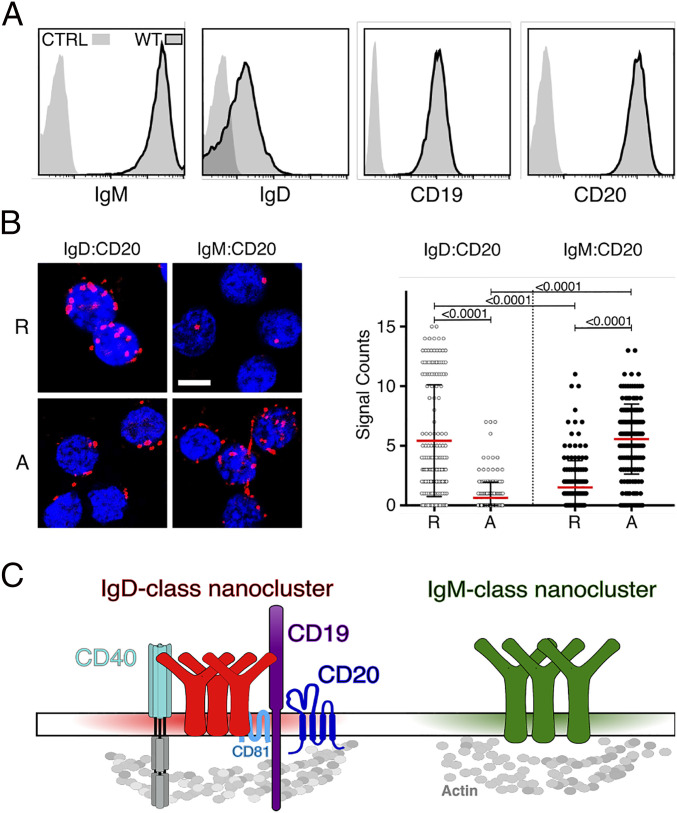
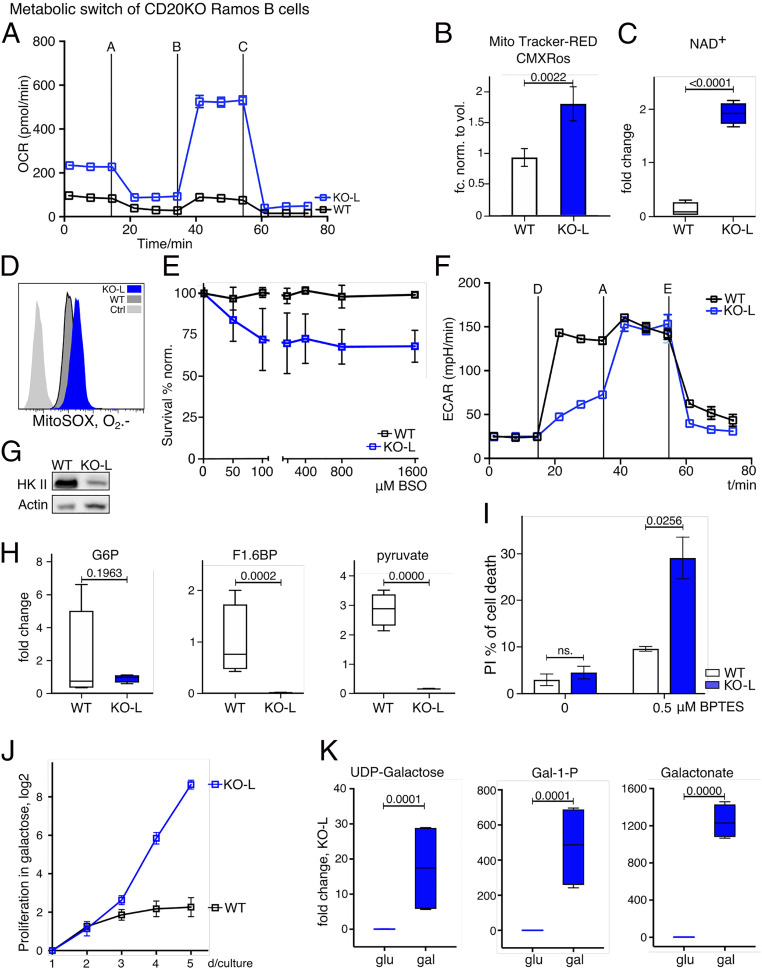
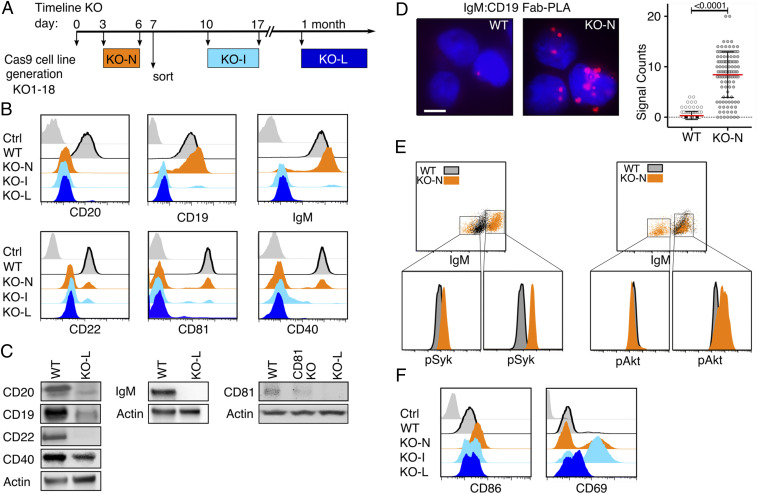
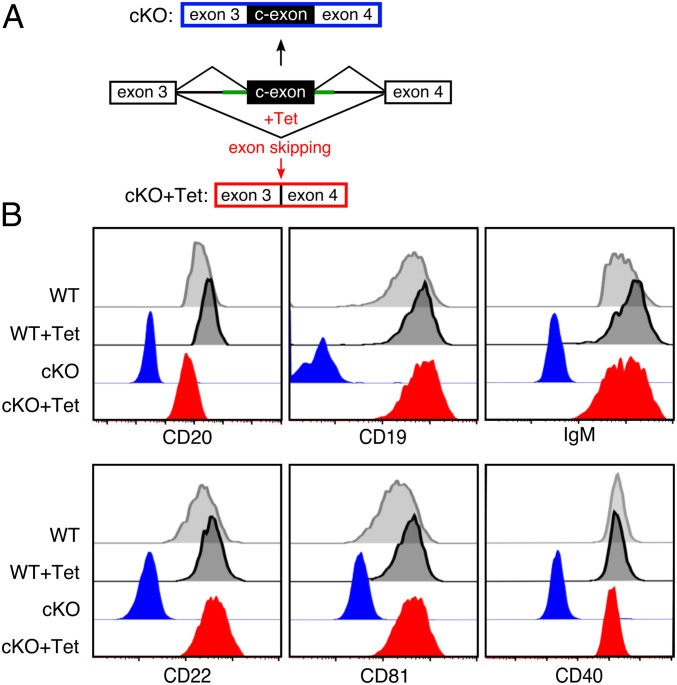
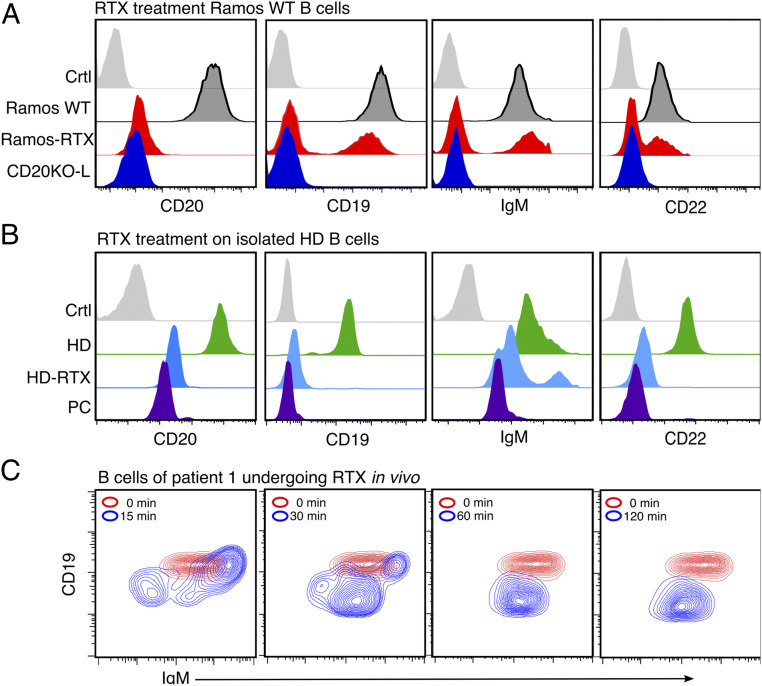
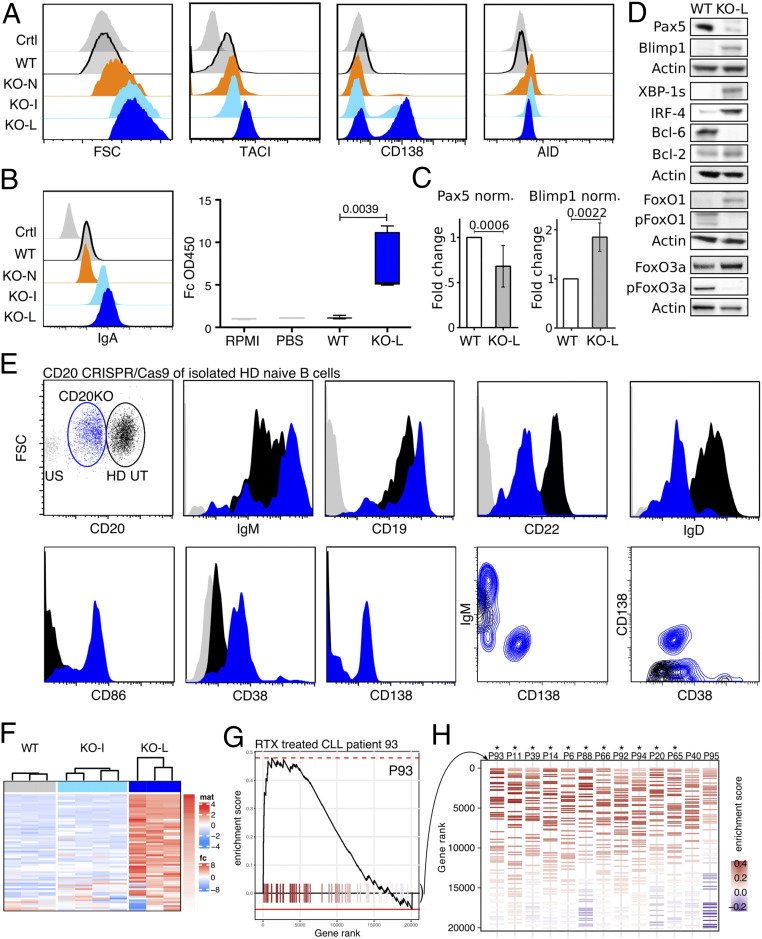
CD20 is a B cell-specific membrane protein and represents an attractive target for therapeutic antibodies. Despite widespread usage of anti-CD20 antibodies for B cell depletion therapies, the biological function of their target remains unclear. Here, we demonstrate that CD20 controls the nanoscale organization of receptors on the surface of resting B lymphocytes. CRISPR/Cas9-mediated ablation of CD20 in resting B cells resulted in relocalization and interaction of the IgM-class B cell antigen receptor with the coreceptor CD19. This receptor rearrangement led to a transient activation of B cells, accompanied by the internalization of many B cell surface marker proteins. Reexpression of CD20 restored the expression of the B cell surface proteins and the resting state of Ramos B cells. Similarly, treatment of Ramos or naive human B cells with the anti-CD20 antibody rituximab induced nanoscale receptor rearrangements and transient B cell activation in vitro and in vivo. A departure from the resting B cell state followed by the loss of B cell identity of CD20-deficient Ramos B cells was accompanied by a PAX5 to BLIMP-1 transcriptional switch, metabolic reprogramming toward oxidative phosphorylation, and a shift toward plasma cell development. Thus, anti-CD20 engagement or the loss of CD20 disrupts membrane organization, profoundly altering the fate of human B cells.
CD20 是一种 B 细胞特异性膜蛋白,是治疗性抗体的一个有吸引力的靶标。尽管抗 CD20 抗体已被广泛用于 B 细胞耗竭疗法,但它们的靶标生物学功能仍不清楚。在这里,我们证明 CD20 控制静止 B 淋巴细胞表面受体的纳米级组织。CRISPR/Cas9 介导的静止 B 细胞中 CD20 的缺失导致 IgM 类 B 细胞抗原受体与共受体 CD19 的重新定位和相互作用。这种受体重排导致 B 细胞的短暂激活,同时伴随许多 B 细胞表面标记蛋白的内化。CD20 的重新表达恢复了 Ramos B 细胞的 B 细胞表面蛋白的表达和静止状态。同样,用抗 CD20 抗体利妥昔单抗体外和体内处理 Ramos 或幼稚人 B 细胞诱导了纳米级受体重排和瞬时 B 细胞激活。CD20 缺陷的 Ramos B 细胞从静止 B 细胞状态的偏离,随后丧失 B 细胞身份,伴随着 PAX5 向 BLIMP-1 的转录开关、向氧化磷酸化的代谢重编程以及向浆细胞发育的转变。因此,抗 CD20 结合或 CD20 的丧失会破坏膜组织,从而深刻改变人类 B 细胞的命运。