David Braley Centre for Antibiotics Discovery, M.G. DeGroote Institute for Infectious Disease Research, Department of Biochemistry and Biomedical Sciences, McMaster University, Hamilton, Ontario, Canada.
Department of Chemical Engineering and Applied Chemistry, University of Toronto, Toronto, Ontario, Canada.
mBio. 2021 Feb 9;12(1):e02705-20. doi: 10.1128/mBio.02705-20.
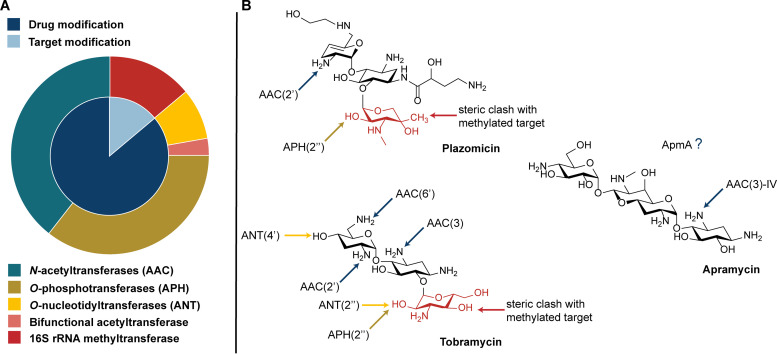
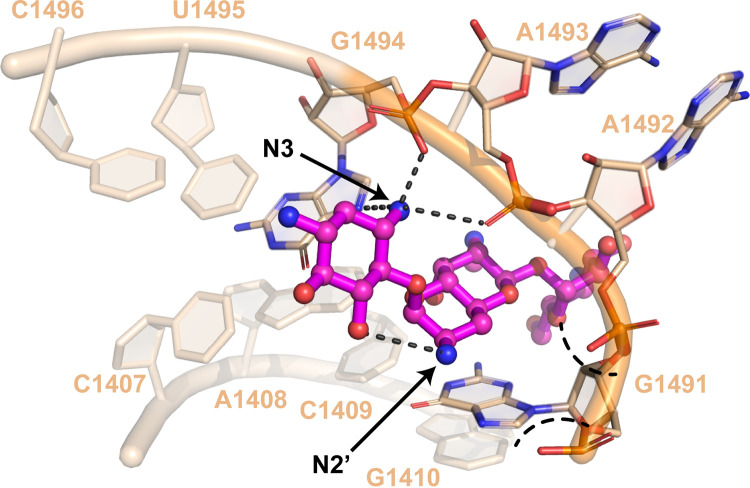
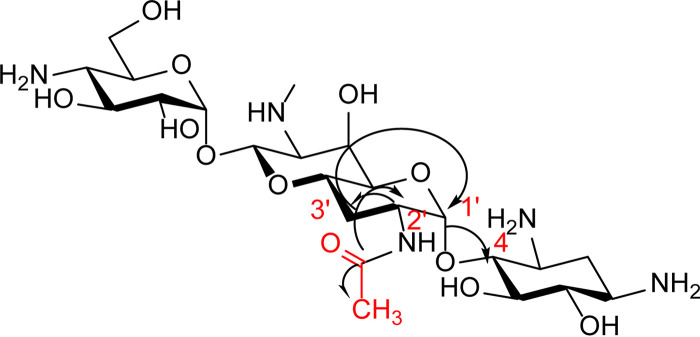
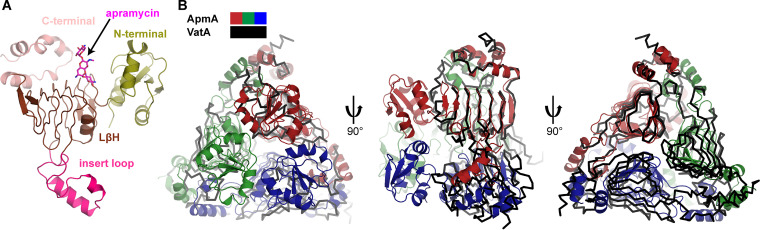
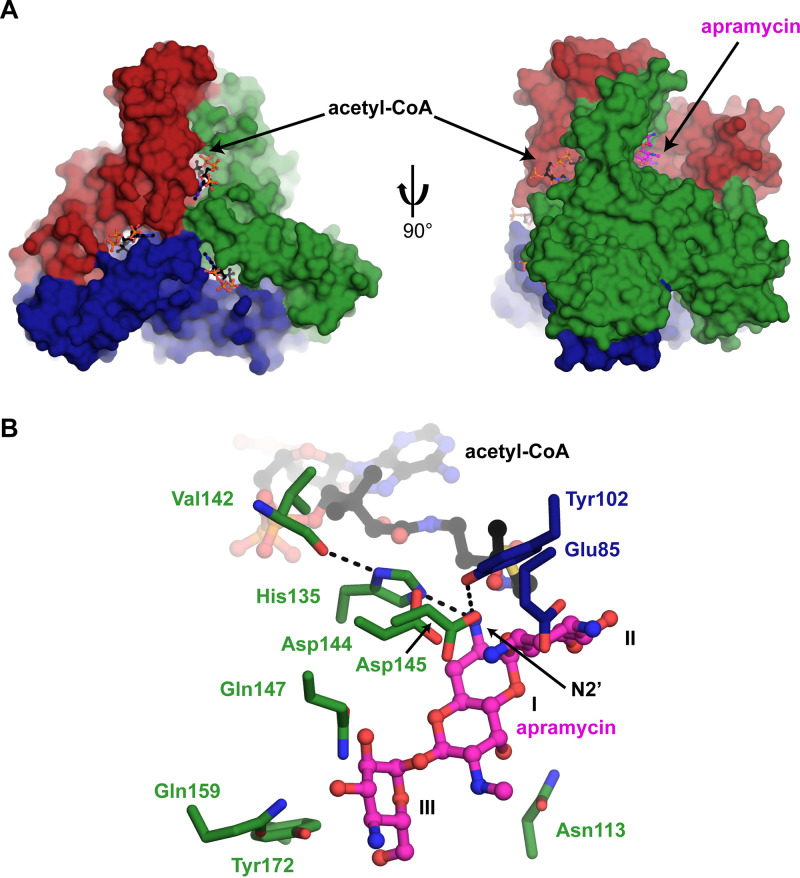
Apramycin is an aminoglycoside antibiotic with the potential to be developed to combat multidrug-resistant pathogens. Its unique structure evades the clinically widespread mechanisms of aminoglycoside resistance that currently compromise the efficacy of other members in this drug class. Of the aminoglycoside-modifying enzymes that chemically alter these antibiotics, only AAC(3)-IVa has been demonstrated to confer resistance to apramycin through -acetylation. Knowledge of other modification mechanisms is important to successfully develop apramycin for clinical use. Here, we show that ApmA is structurally unique among the previously described aminoglycoside-modifying enzymes and capable of conferring a high level of resistance to apramycin. experiments indicated ApmA to be an -acetyltransferase, but in contrast to AAC(3)-IVa, ApmA has a unique regiospecificity of the acetyl transfer to the N2' position of apramycin. Crystallographic analysis of ApmA conclusively showed that this enzyme is an acetyltransferase from the left-handed β-helix protein superfamily (LβH) with a conserved active site architecture. The success of apramycin will be dependent on consideration of the impact of this potential form of clinical resistance. Apramycin is an aminoglycoside antibiotic that has been traditionally used in veterinary medicine. Recently, it has become an attractive candidate to repurpose in the fight against multidrug-resistant pathogens prioritized by the World Health Organization. Its atypical structure circumvents most of the clinically relevant mechanisms of resistance that impact this class of antibiotics. Prior to repurposing apramycin, it is important to understand the resistance mechanisms that could be a liability. Our study characterizes the most recently identified apramycin resistance element, We show ApmA does not belong to the protein families typically associated with aminoglycoside resistance and is responsible for modifying a different site on the molecule. The data presented will be critical in the development of apramycin derivatives that will evade in the event it becomes prevalent in the clinic.
氨丙基霉素是一种氨基糖苷类抗生素,具有开发潜力,可用于对抗多药耐药病原体。它的独特结构规避了临床上广泛存在的氨基糖苷类耐药机制,这些机制目前削弱了该类药物中其他成员的疗效。在化学改变这些抗生素的氨基糖苷修饰酶中,只有 AAC(3)-IVa 通过乙酰化被证明对氨丙基霉素具有耐药性。了解其他修饰机制对于成功开发用于临床的氨丙基霉素很重要。在这里,我们表明 ApmA 在以前描述的氨基糖苷修饰酶中结构独特,能够赋予氨丙基霉素高水平的耐药性。实验表明 ApmA 是一种乙酰转移酶,但与 AAC(3)-IVa 不同,ApmA 对氨丙基霉素的乙酰化转移具有独特的区域特异性到 N2'位置。ApmA 的晶体结构分析明确表明,该酶是来自左手β-螺旋蛋白超家族(LβH)的乙酰转移酶,具有保守的活性位点结构。氨丙基霉素的成功将取决于对这种潜在临床耐药形式的影响的考虑。氨丙基霉素是一种氨基糖苷类抗生素,传统上用于兽医领域。最近,它已成为对抗世界卫生组织优先考虑的多药耐药病原体的有吸引力的候选药物。其非典型结构规避了影响此类抗生素的大多数临床相关耐药机制。在重新利用氨丙基霉素之前,了解可能成为负担的耐药机制很重要。我们的研究描述了最近发现的氨丙基霉素耐药元件,我们表明 ApmA 不属于通常与氨基糖苷类耐药相关的蛋白家族,而是负责修饰分子上的不同位点。所提供的数据对于开发能够规避的氨丙基霉素衍生物将是至关重要的,如果它在临床上变得普遍。