Department of Biochemistry, Post Graduate Institute of Medical Education and Research, Chandigarh, 160012, India.
Centre for Systems Biology and Molecular Medicine, Yenepoya Research Centre, Yenepoya (Deemed To Be University), Mangalore, 575018, India.
Sci Rep. 2021 Feb 9;11(1):3365. doi: 10.1038/s41598-021-82635-0.
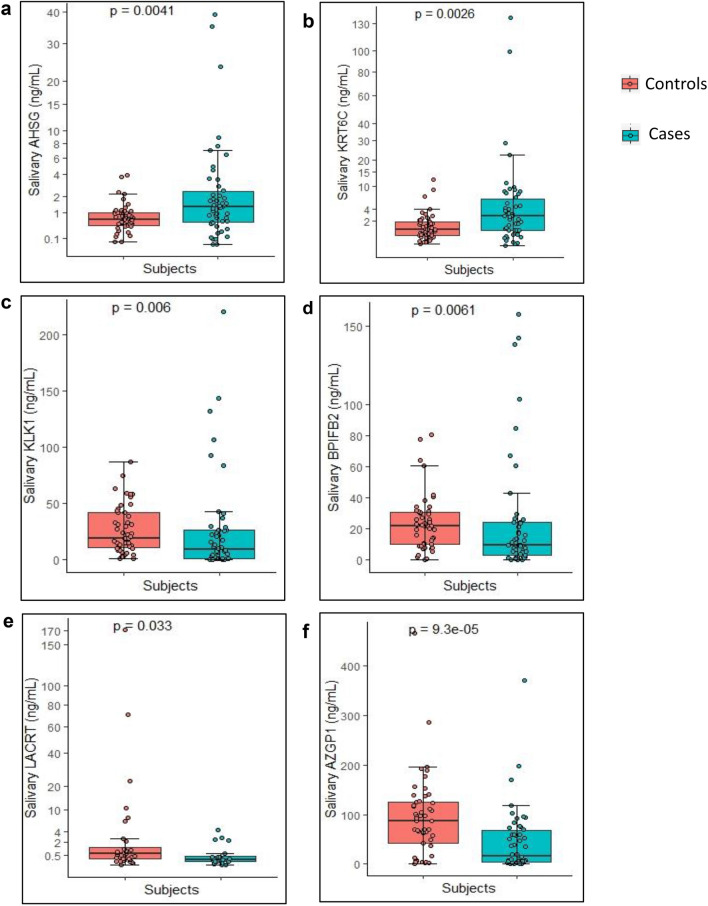
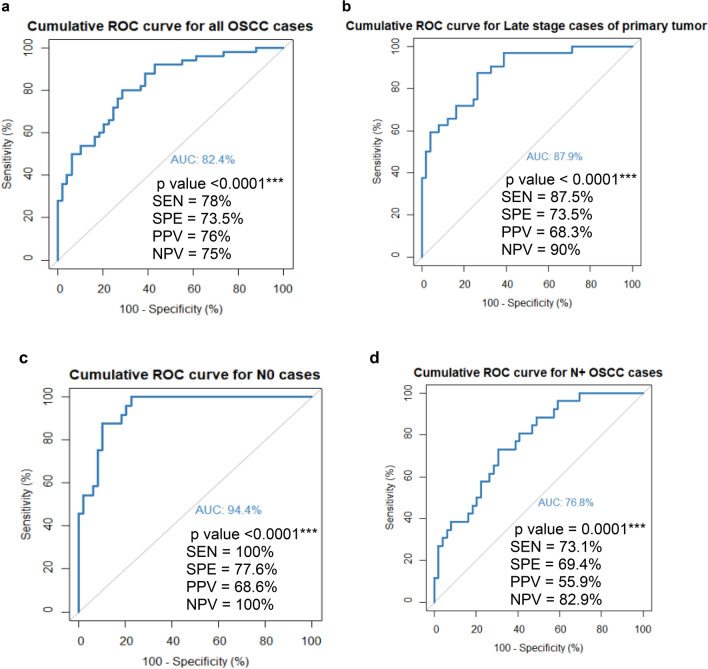
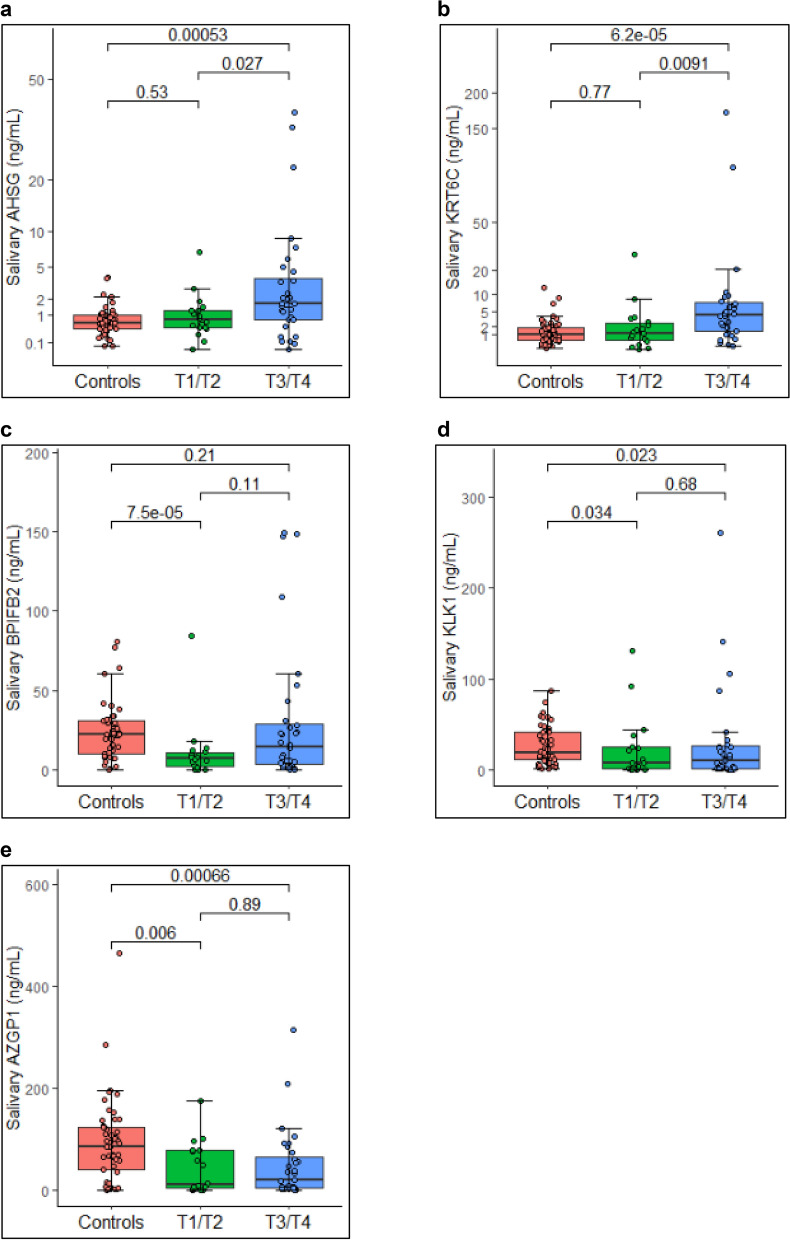
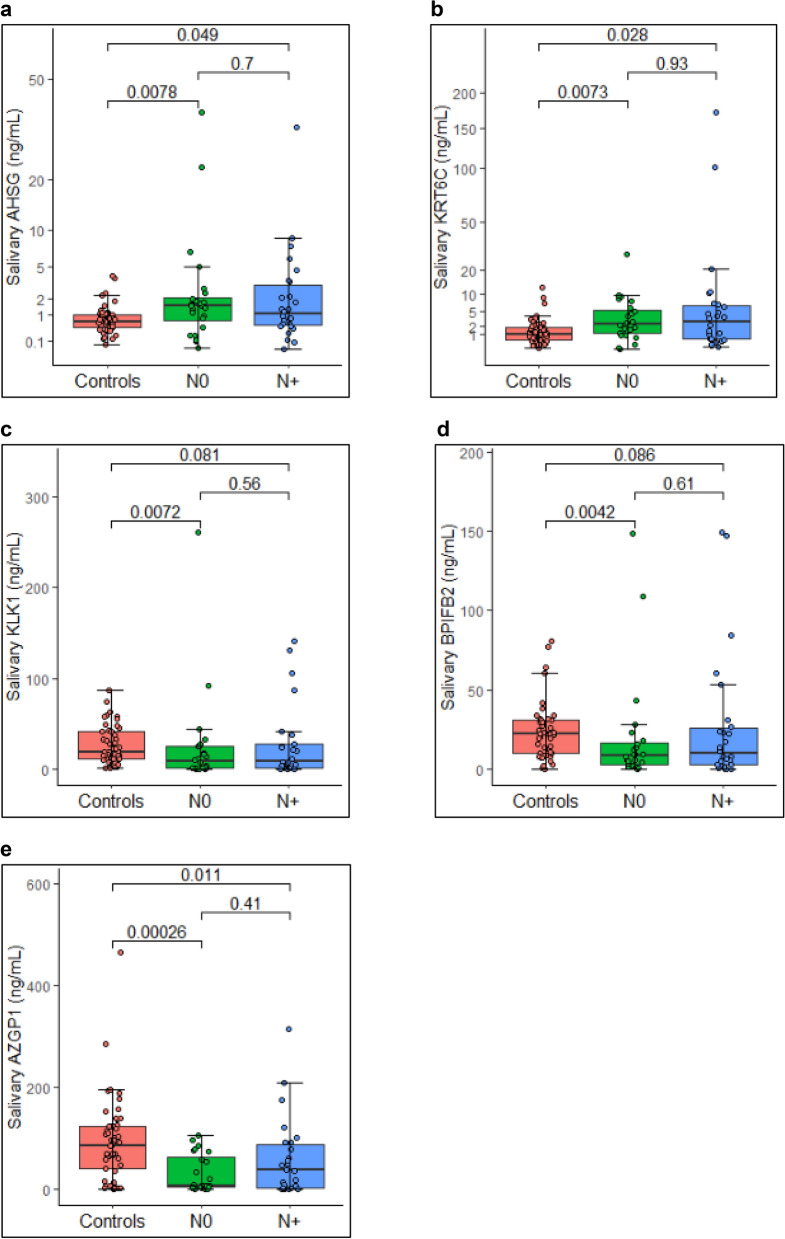
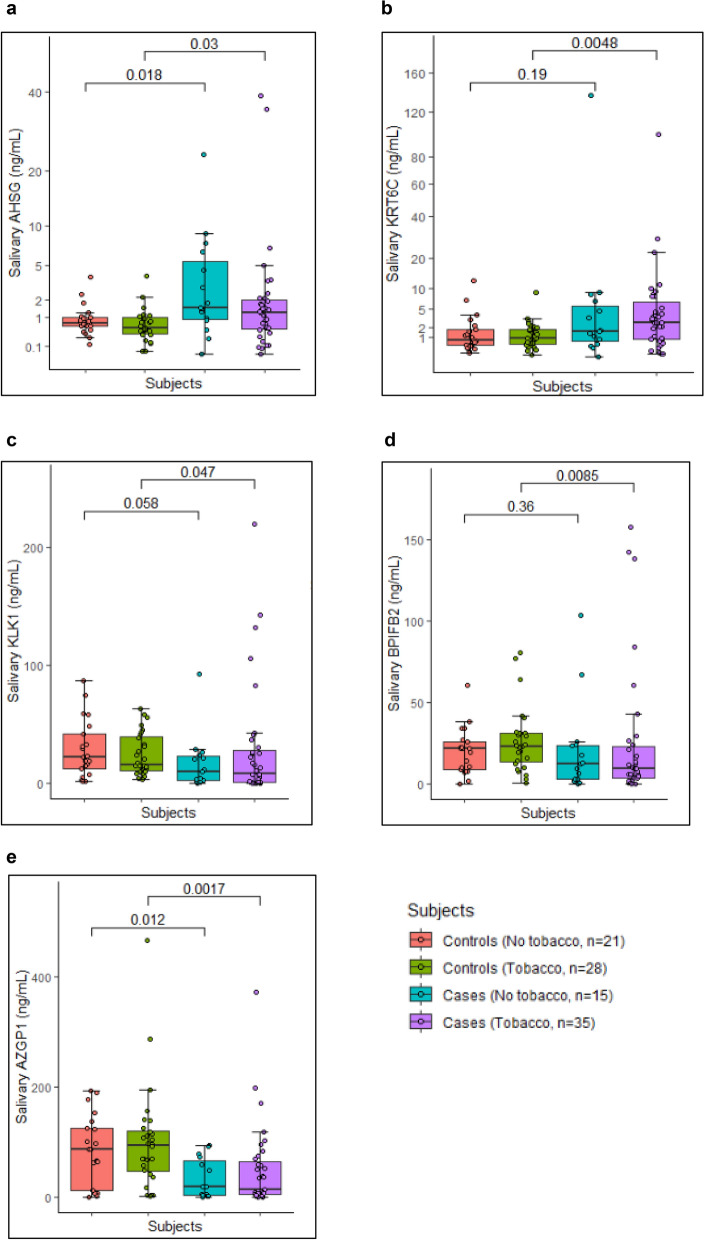
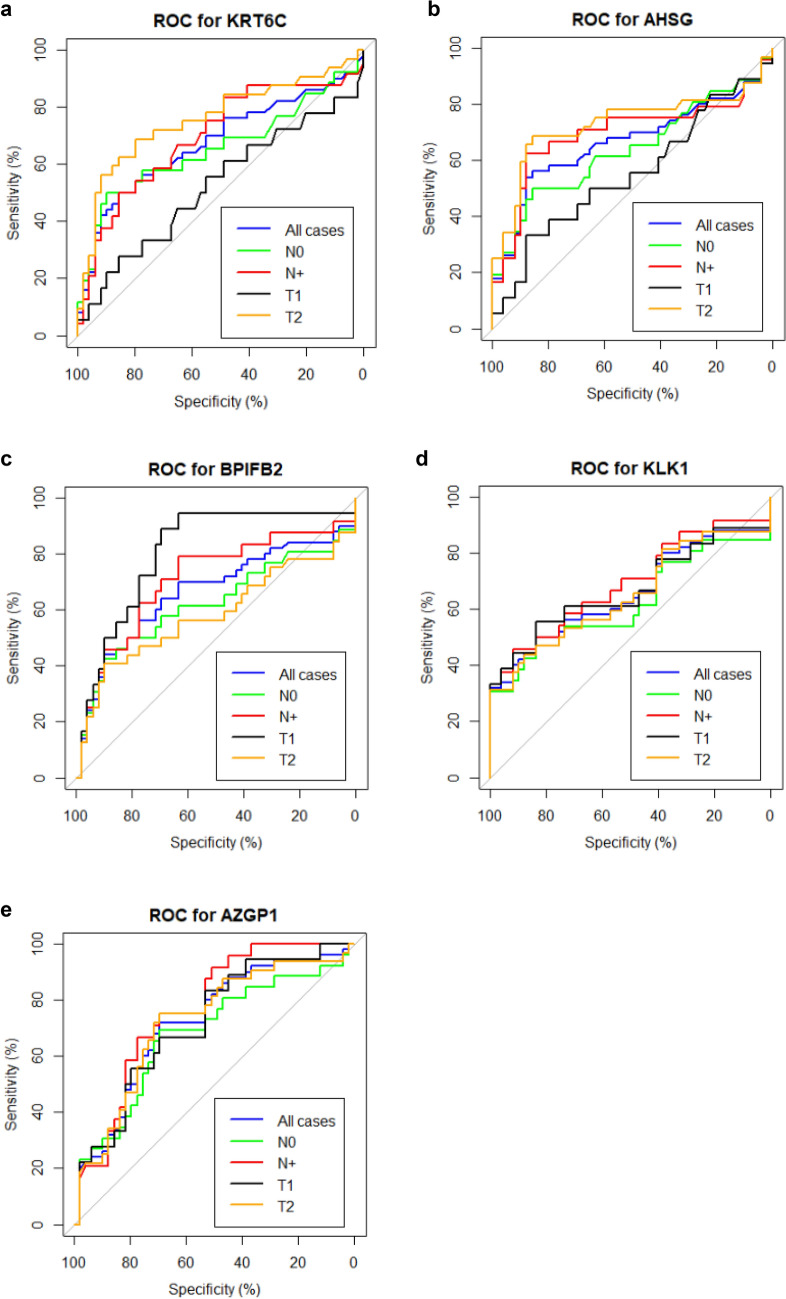
Oral squamous cell carcinoma (OSCC) is one of the most prevalent cancers worldwide with the maximum number of incidences and deaths reported from India. One of the major causes of poor survival rate associated with OSCC has been attributed to late presentation due to non-availability of a biomarker. Identification of early diagnostic biomarker will help in reducing the disease morbidity and mortality. We validated 12 salivary proteins using targeted proteomics, identified initially by relative quantification of salivary proteins on LC-MS, in OSCC patients and controls. Salivary AHSG (p = 0.0041**) and KRT6C (p = 0.002**) were upregulated in OSCC cases and AZGP1 (p ≤ 0.0001***), KLK1 (p = 0.006**) and BPIFB2 (p = 0.0061**) were downregulated. Regression modelling resulted in a significant risk prediction model (p < 0.0001***) consisting of AZGP1, AHSG and KRT6C for which ROC curve had AUC, sensitivity and specificity of 82.4%, 78% and 73.5% respectively for all OSCC cases and 87.9%, 87.5% and 73.5% respectively for late stage (T3/T4) OSCC. AZGP1, AHSG, KRT6C and BPIFB2 together resulted in ROC curve (p < 0.0001***) with AUC, sensitivity and specificity of 94%, 100% and 77.6% respectively for N0 cases while KRT6C and AZGP1 for N+ cases with ROC curve (p < 0.0001***) having AUC sensitivity and specificity of 76.8%, 73% and 69.4%. Our data aids in the identification of biomarker panels for the diagnosis of OSCC cases with a differential diagnosis between early and late-stage cases.
口腔鳞状细胞癌(OSCC)是全球最常见的癌症之一,发病率和死亡率最高的报告来自印度。导致 OSCC 生存率低的一个主要原因是由于缺乏生物标志物,导致就诊时间较晚。鉴定早期诊断生物标志物将有助于降低疾病的发病率和死亡率。我们使用靶向蛋白质组学验证了 12 种唾液蛋白,这些蛋白最初是通过 LC-MS 对唾液蛋白进行相对定量鉴定的,在 OSCC 患者和对照组中进行了鉴定。OSCC 病例中唾液 AHSG(p=0.0041**)和 KRT6C(p=0.002**)上调,而 AZGP1(p≤0.0001***)、KLK1(p=0.006**)和 BPIFB2(p=0.0061**)下调。回归模型得出了一个具有显著风险预测模型(p<0.0001***),该模型由 AZGP1、AHSG 和 KRT6C 组成,其 ROC 曲线的 AUC、敏感性和特异性分别为 82.4%、78%和 73.5%,用于所有 OSCC 病例,分别为 87.9%、87.5%和 73.5%,用于晚期(T3/T4)OSCC 病例。AZGP1、AHSG、KRT6C 和 BPIFB2 共同产生的 ROC 曲线(p<0.0001***)具有 AUC、敏感性和特异性分别为 94%、100%和 77.6%,用于 N0 病例,而 KRT6C 和 AZGP1 用于 N+病例,ROC 曲线(p<0.0001***)的 AUC、敏感性和特异性分别为 76.8%、73%和 69.4%。我们的数据有助于鉴定用于诊断 OSCC 病例的生物标志物谱,并对早期和晚期病例进行鉴别诊断。