Akatsu Hiroyasu
Department of Community-Based Medical Education, Graduate School of Medical Sciences, Nagoya City University, Nagoya 467-8601, Japan.
Vaccines (Basel). 2021 Feb 8;9(2):136. doi: 10.3390/vaccines9020136.
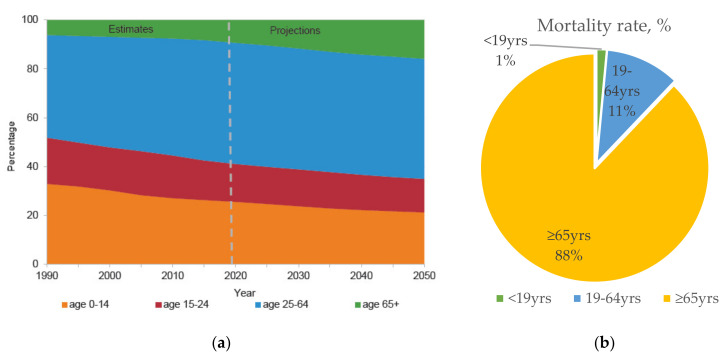
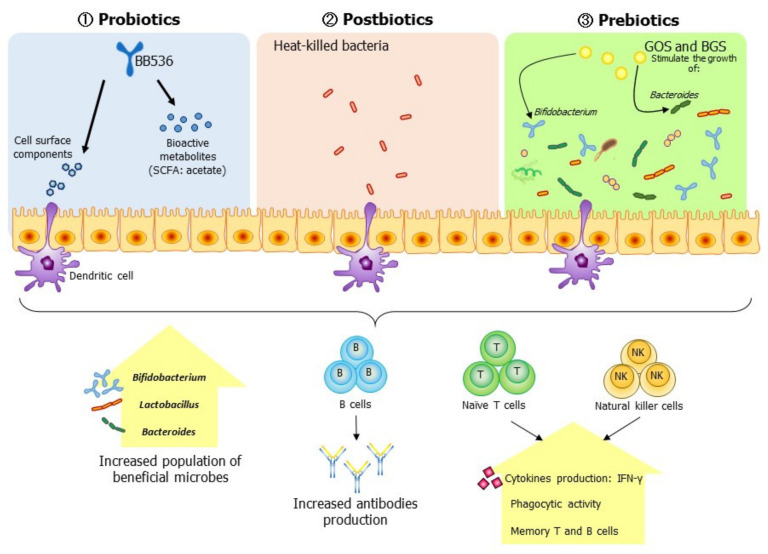
Vaccination is the easiest way to stimulate the immune system to confer protection from disease. However, the inefficacy of vaccination in the elderly, especially those under nutritional control such as individuals receiving artificial nutrition after cerebral infarction or during dementia, has led to the search for an adjuvant to augment the acquired immune response in this population. The cross-talk between the gut microbiota and the host immune system is gaining attention as a potential adjuvant for vaccines. Probiotics, prebiotics, and postbiotics, which are commonly used to modulate gut health, may enhance the immune response and the effectiveness of vaccination in the elderly. This review summarizes the use of these gut modulators as adjuvants to boost both the innate and acquired immune responses in the elderly under nutritional control. Although the clinical evidence on this topic is limited and the initial findings await clarification through future studies with large sample sizes and proper study designs, they highlight the necessity for additional research in this field, especially in light of the ongoing COVID-19 pandemic, which is disproportionately affecting the elderly.
接种疫苗是刺激免疫系统以预防疾病的最简单方法。然而,疫苗接种在老年人中效果不佳,尤其是那些处于营养控制之下的老年人,如脑梗死后接受人工营养或患有痴呆症的个体,这促使人们寻找一种佐剂来增强这一人群的获得性免疫反应。肠道微生物群与宿主免疫系统之间的相互作用作为疫苗的潜在佐剂正受到关注。常用于调节肠道健康的益生菌、益生元及合生元,可能会增强老年人的免疫反应及疫苗接种效果。本综述总结了这些肠道调节剂作为佐剂在增强营养控制下老年人的固有免疫和获得性免疫反应方面的应用。尽管关于这一主题的临床证据有限,初步研究结果有待通过未来大样本量和合理研究设计的研究加以阐明,但这些结果凸显了该领域进一步研究的必要性,尤其是鉴于当前的新冠疫情对老年人的影响尤为严重。