Kaiser Tim, Laireiter Anton-Rupert
University of Salzburg, Psychotherapy Research Group, Hellbrunnerstrasse 34, 5020 Salzburg, Austria.
J Pers Oriented Res. 2018 Dec 26;4(2):49-62. doi: 10.17505/jpor.2018.06. eCollection 2018.
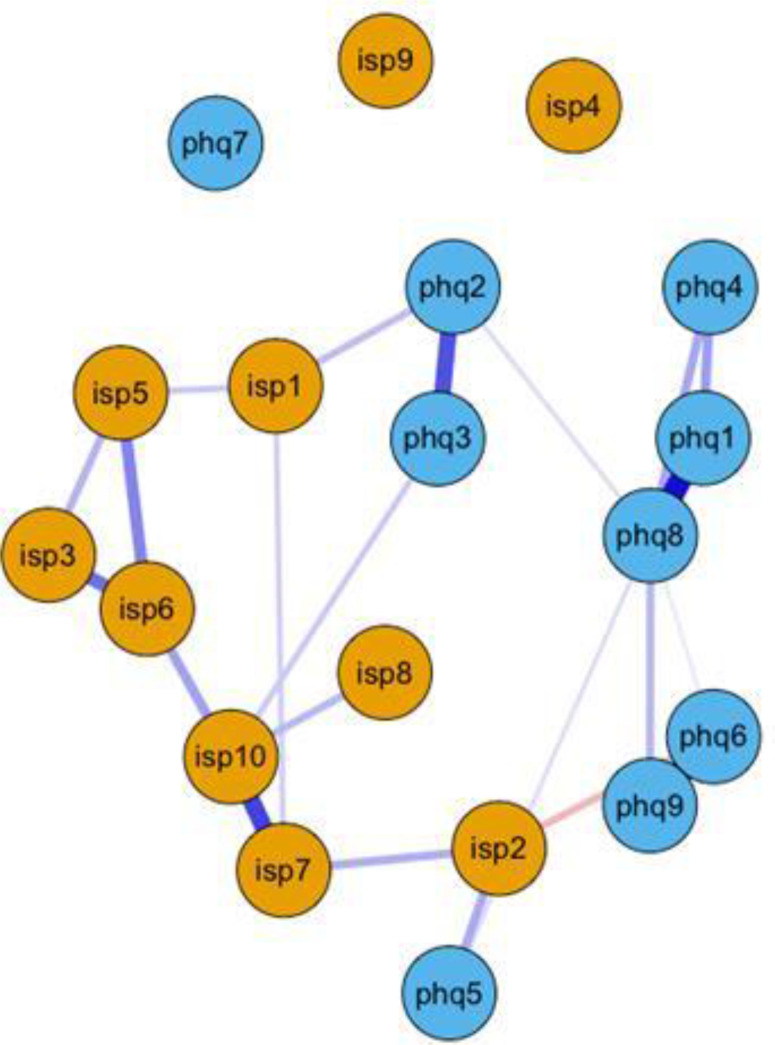
real-time monitoring of psychotherapeutic processes was recently described as a promising, new way of tracking periods of change in ongoing treatments. This approach generates complex, multivariate datasets that have to be presented in an intuitive way for clinicians to aid their clinical decision-making. Using network modeling and new approaches in centrality analyses, we examine "bridge nodes" between symptom stress and aspects of the psychotherapeutic process between therapy session (intersession processes, ISP). Method:we recorded intersession processes as well as depressive and anxiety symptoms using daily questionnaires in ten cases. Regularized, thresholded intraindividual dynamic networks were estimated. We applied bridge centrality analysis to identify individual bridges between psychotherapeutic processes and symptoms in the resulting models. Case-wise interpretations of bridge centrality values are offered.
bridge centrality analysis revealed individual bridge nodes between intersession processes and symptom severity. Strength and direction of bridges varied substantially across individuals.
given current methodological challenges, idiographic network studies are feasible and offer important insights for psychotherapy process research. In this case, we demonstrated how patients deal with periods of increased symptom stress. In this case we have described how patients deal with their therapy under increased symptom load. Bridges between psychotherapeutic processes and symptom stress are a promising target for monitoring systems based on ISP. Future studies should examine the clinical utility of network-based monitoring and feedback in ongoing therapies. In the near future, process feedback systems based on idiographic models could serve clinicians to improve treatments.
心理治疗过程的实时监测最近被描述为一种很有前景的新方法,用于追踪正在进行的治疗中的变化阶段。这种方法会生成复杂的多变量数据集,必须以直观的方式呈现给临床医生,以帮助他们进行临床决策。我们使用网络建模和中心性分析的新方法,研究症状压力与治疗会话之间心理治疗过程各方面(会话间过程,ISP)之间的“桥梁节点”。方法:我们通过每日问卷记录了10个案例中的会话间过程以及抑郁和焦虑症状。估计了正则化、阈值化的个体内部动态网络。我们应用桥梁中心性分析来识别所得模型中心理治疗过程与症状之间的个体桥梁。提供了桥梁中心性值的逐案解释。
桥梁中心性分析揭示了会话间过程与症状严重程度之间的个体桥梁节点。不同个体之间桥梁的强度和方向差异很大。
鉴于当前的方法学挑战,个性化网络研究是可行的,并且为心理治疗过程研究提供了重要见解。在本案例中,我们展示了患者如何应对症状压力增加的时期。在本案例中,我们描述了患者在症状负荷增加的情况下如何进行治疗。心理治疗过程与症状压力之间的桥梁是基于ISP的监测系统的一个有前景的目标。未来的研究应该检验基于网络的监测和反馈在正在进行的治疗中的临床效用。在不久的将来,基于个性化模型的过程反馈系统可以为临床医生提供帮助,以改善治疗效果。