Liu Jingjing, Zhang Jin
3rd Department of Breast Cancer, China Tianjin Breast Cancer Prevention, Treatment and Research Center, Tianjin Medical University Cancer Institute and Hospital, Tianjin, China.
Key Laboratory of Breast Cancer Prevention and Therapy of Ministry of Education, Tianjin, China.
Ann Transl Med. 2021 Jan;9(2):135. doi: 10.21037/atm-20-7922.
Breast cancer is the most common cancer and leading cause of cancer mortality in women worldwide. Exonuclease 1 (EXO1), a protein with 5' to 3' exonuclease and RNase H activity, could be involved in mismatch repair and recombination. This study aims to investigate the prognostic value of EXO1 in breast cancer and explore the association between EXO1 expression and breast carcinogenesis.
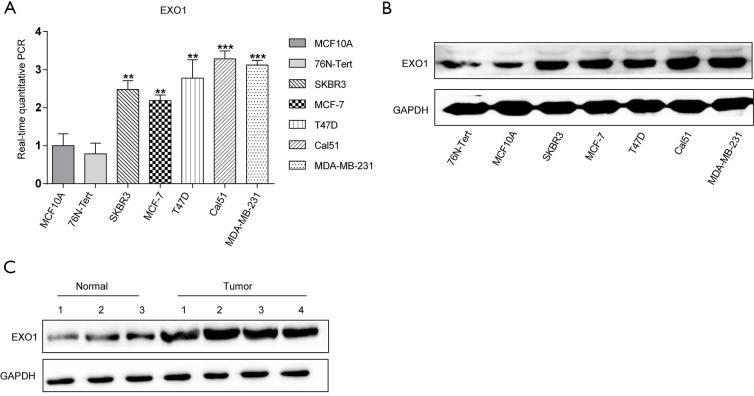
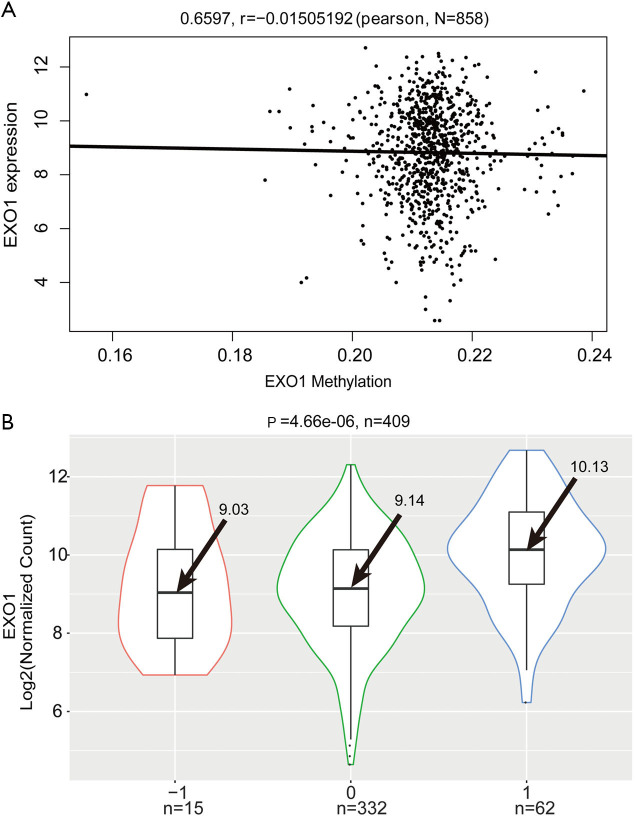
The data of 1,215 breast cancer susceptibility gene (BRCA) samples were obtained from The Cancer Genome Atlas (TCGA). Real-time quantitative polymerase chain reaction (RT-qPCR) further verified the elevated mRNA expression level of EXO1 in human BRCA cells MDA-MB231 compared with that in human breast epithelial cells MCF-10A. EXO1 copy number was proved to be correlated with its expression level. Besides, Kaplan-Meier analysis, differentially expressed genes and function enrichment analysis were performed.
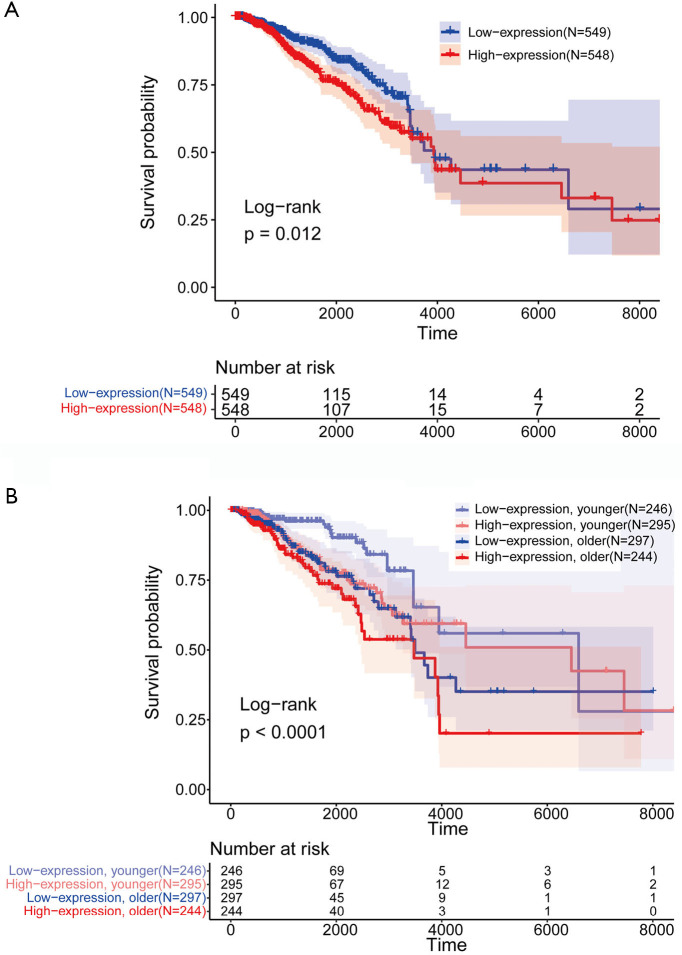
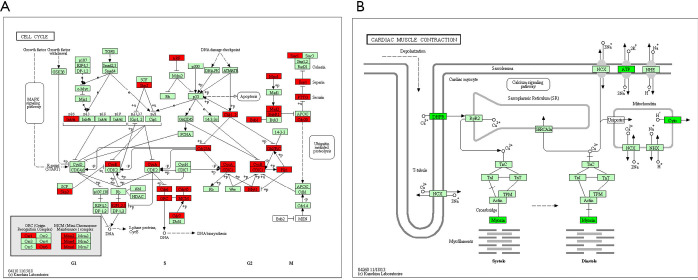
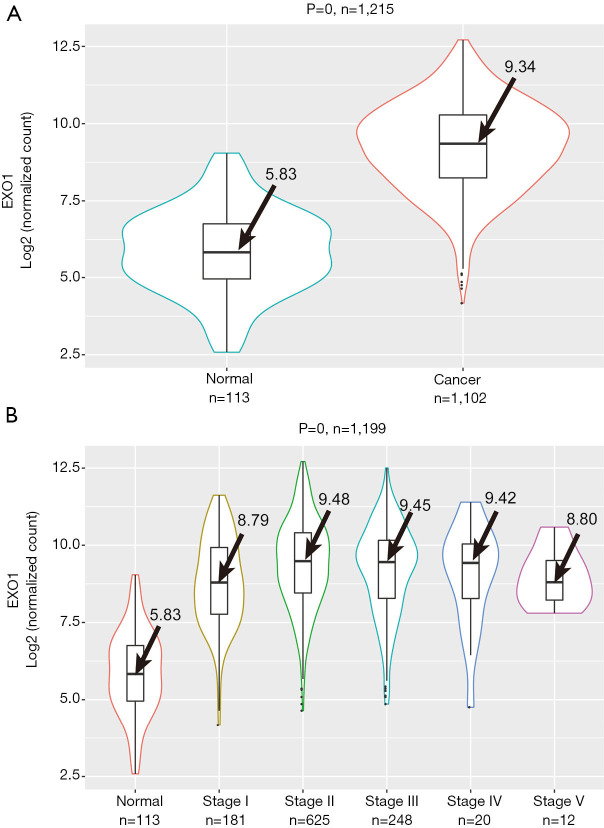
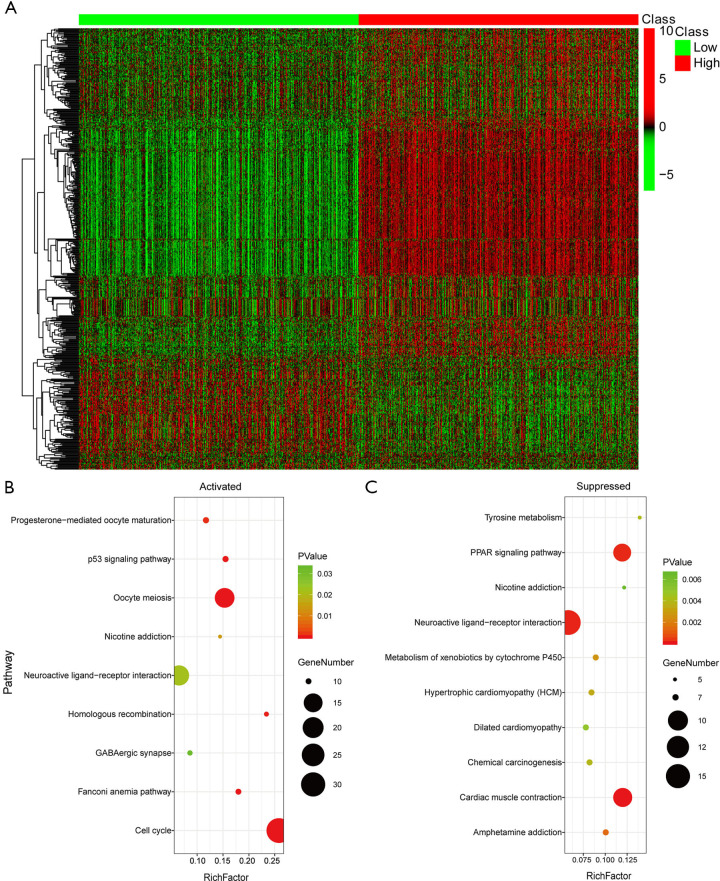
Analysis of data from The Cancer Genome Atlas (TCGA) revealed that the EXO1 expression level in breast cancer tissues was significantly increased. Real-time quantitative polymerase chain reaction (RT-qPCR) supported the elevated mRNA expression level of EXO1 in human breast cancer cells MDA-MB231 compared with that in human breast epithelial cells MCF-10A. EXO1 copy number was shown to be correlated with its expression level. Kaplan-Meier analysis showed that elevated EXO1 was an indicator of poor breast cancer prognosis. Furthermore, differentially expressed genes and function enrichment analysis indicated that the cell cycle pathway and cardiac muscle contraction pathway were activated and inhibited respectively in breast cancer samples with high EXO1 expression.
Therefore, this study shows that elevated EXO1 expression is associated with carcinogenesis and poor prognosis in breast cancer, and might be a biomarker for breast cancer treatment.
乳腺癌是全球女性中最常见的癌症及癌症死亡的主要原因。核酸外切酶1(EXO1)是一种具有5'至3'核酸外切酶和核糖核酸酶H活性的蛋白质,可能参与错配修复和重组过程。本研究旨在探讨EXO1在乳腺癌中的预后价值,并探究EXO1表达与乳腺癌发生之间的关联。
从癌症基因组图谱(TCGA)获取了1215个乳腺癌易感基因(BRCA)样本的数据。实时定量聚合酶链反应(RT-qPCR)进一步验证了与人类乳腺上皮细胞MCF-10A相比,人类BRCA细胞MDA-MB231中EXO1的mRNA表达水平升高。EXO1拷贝数被证明与其表达水平相关。此外,进行了Kaplan-Meier分析、差异表达基因分析和功能富集分析。
对癌症基因组图谱(TCGA)的数据进行分析发现,乳腺癌组织中EXO1的表达水平显著升高。实时定量聚合酶链反应(RT-qPCR)支持与人类乳腺上皮细胞MCF-10A相比,人类乳腺癌细胞MDA-MB231中EXO1的mRNA表达水平升高。EXO1拷贝数与其表达水平相关。Kaplan-Meier分析表明,EXO1表达升高是乳腺癌预后不良的一个指标。此外,差异表达基因和功能富集分析表明,在EXO1高表达的乳腺癌样本中,细胞周期途径被激活,而心肌收缩途径被抑制。
因此,本研究表明EXO1表达升高与乳腺癌的发生及不良预后相关,可能是乳腺癌治疗的一个生物标志物。