Department of Microbiology, School of Medicine, Jiangsu University, Zhenjiang, China.
Pharmacy Department, People's Hospital of Rizhao, Rizhao, China.
Pol J Microbiol. 2020 Dec;69(4):471-478. doi: 10.33073/pjm-2020-051. Epub 2020 Dec 27.
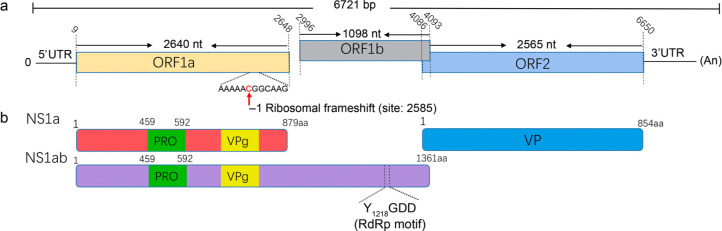
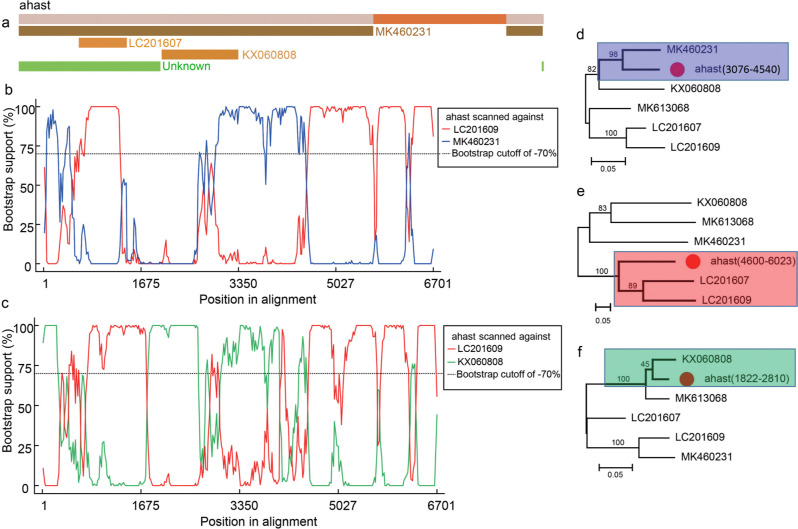
Porcine astroviruses (PAstVs) have wide distribution in swine herds worldwide. At present, five porcine astrovirus genotypes have been identified. In this study, using viral metagenomics, a novel PAstV strain (designated as Ahast) was identified in fecal samples from pigs in Anhui of China, and the complete genomic sequence of Ahast was obtained by assembling and PCR amplification. Genomic structural analysis indicated that Ahast had a typical ribosomal frameshifting signal, and some conserve amino acid motifs were also found in virally encoded proteins. Phylogenetic analysis and sequence comparison indicated that this virus belonged to porcine astrovirus genotype 4 (PAstV4), which formed a clade clustered with other PAstV4. Multiple recombinant events were confirmed by recombination analysis and indicated that Ahast was a potential recombinant. Epidemiological investigation indicated that PAstV4 has a 10.7% prevalence in this pig farm. The new recombinant identified in this study will be beneficial to comprehend the origin, genetic diversity, and evolution of porcine astroviruses in Anhui of China.
猪星状病毒(PAstV)在世界范围内广泛存在于猪群中。目前已鉴定出五种猪星状病毒基因型。本研究通过病毒宏基因组学方法,从中国安徽猪的粪便样本中鉴定出一种新型 PAstV 株(命名为 Ahast),并通过组装和 PCR 扩增获得了 Ahast 的全基因组序列。基因组结构分析表明,Ahast 具有典型的核糖体移码信号,在病毒编码蛋白中也发现了一些保守的氨基酸基序。系统进化分析和序列比较表明,该病毒属于猪星状病毒 4 型(PAstV4),与其他 PAstV4 形成一个分支聚类。通过重组分析证实了多个重组事件,并表明 Ahast 是一种潜在的重组病毒。流行病学调查表明,该猪场的 PAstV4 感染率为 10.7%。本研究鉴定的新型重组病毒将有助于了解安徽地区猪星状病毒的起源、遗传多样性和进化。