Chen Xiaobo, Qian Wubin, Song Zhenzhen, Li Qi-Xiang, Guo Sheng
Crown Bioscience, Inc., 218 Xinghu Road, Suzhou, Jiangsu 215400, China.
Crown Bioscience, Inc., 16550 W Bernardo Dr, Building 5, San Diego, CA 92127, USA.
NAR Genom Bioinform. 2020 Aug 18;2(3):lqaa060. doi: 10.1093/nargab/lqaa060. eCollection 2020 Sep.
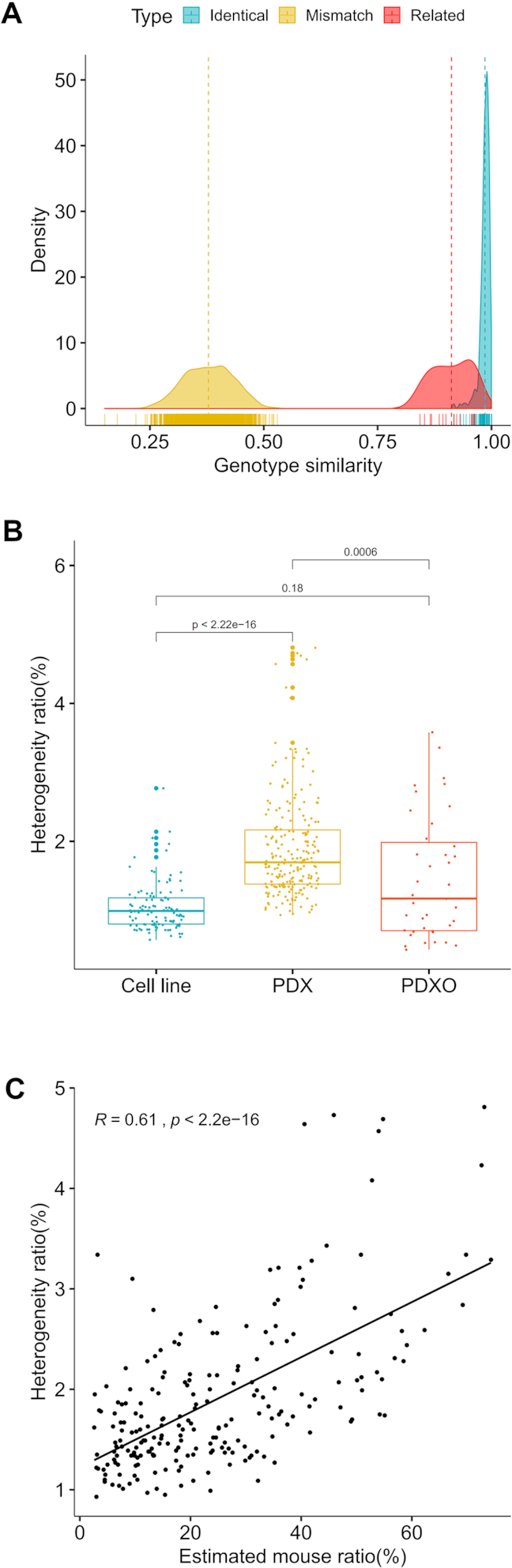
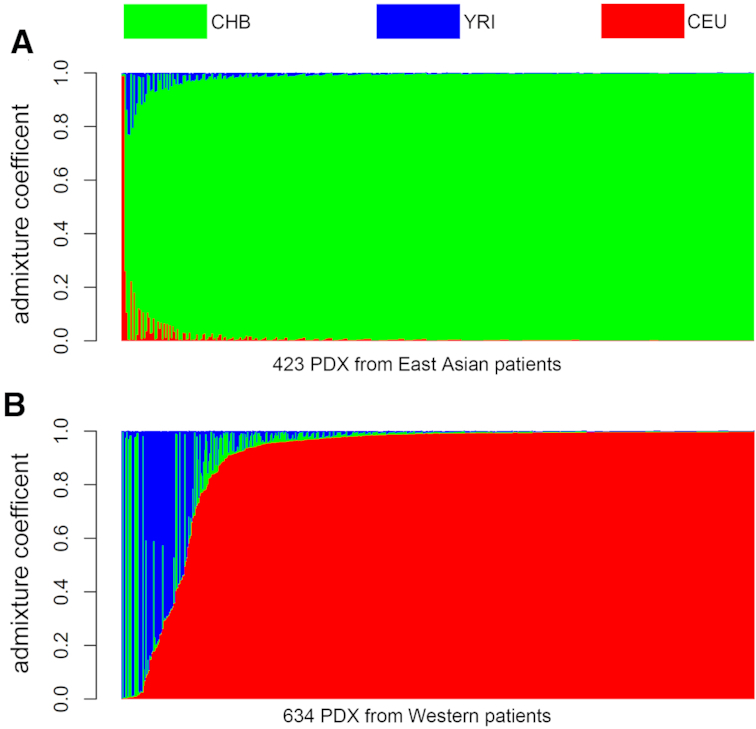
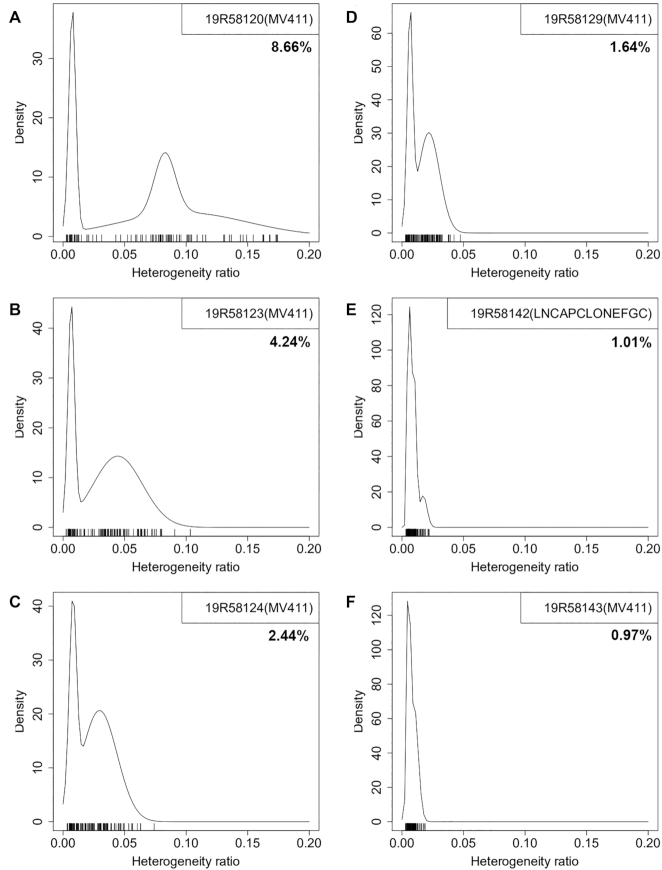
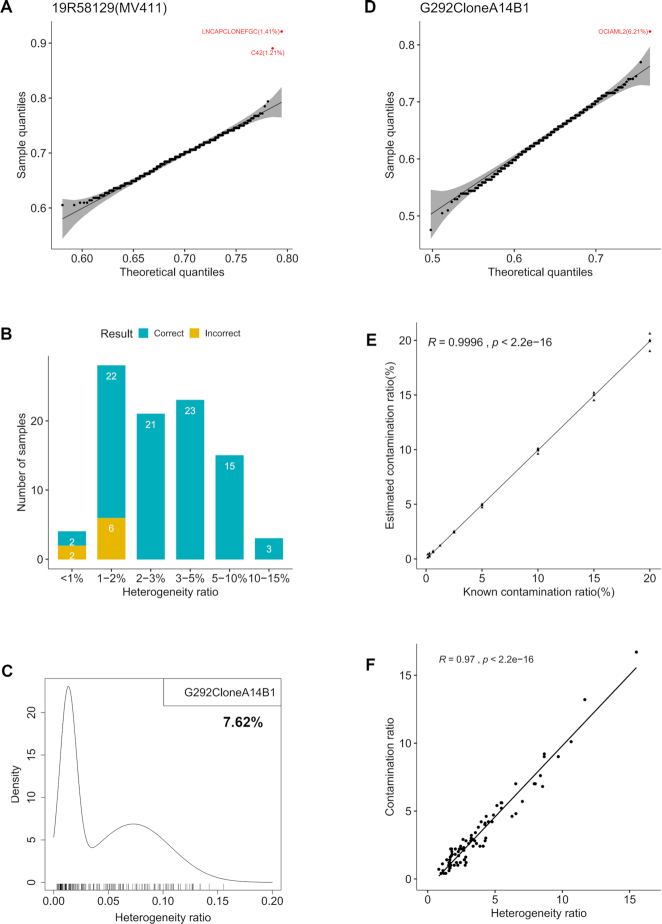
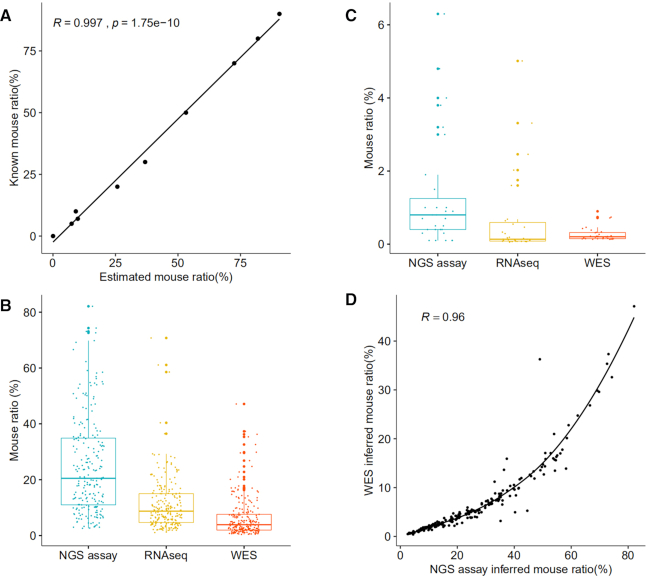
Misidentification and contamination of biobank samples (e.g. cell lines) have plagued biomedical research. Short tandem repeat (STR) and single-nucleotide polymorphism assays are widely used to authenticate biosamples and detect contamination, but with insufficient sensitivity at 5-10% and 3-5%, respectively. Here, we describe a deep NGS-based method with significantly higher sensitivity (≤1%). It can be used to authenticate human and mouse cell lines, xenografts and organoids. It can also reliably identify and quantify contamination of human cell line samples, contaminated with only small amount of other cell samples; detect and quantify species-specific components in human-mouse mixed samples (e.g. xenografts) with 0.1% sensitivity; detect mycoplasma contamination; and infer population structure and gender of human samples. By adopting DNA barcoding technology, we are able to profile 100-200 samples in a single run at per-sample cost comparable to conventional STR assays, providing a truly high-throughput and low-cost assay for building and maintaining high-quality biobanks.
生物样本库样本(如细胞系)的错误识别和污染一直困扰着生物医学研究。短串联重复序列(STR)和单核苷酸多态性分析被广泛用于生物样本的鉴定和污染检测,但灵敏度分别仅为5-10%和3-5%,存在不足。在此,我们描述了一种基于深度NGS的方法,其灵敏度显著更高(≤1%)。它可用于鉴定人和小鼠细胞系、异种移植物和类器官。它还能可靠地识别和定量仅被少量其他细胞样本污染的人细胞系样本的污染情况;以0.1%的灵敏度检测和定量人鼠混合样本(如异种移植物)中的物种特异性成分;检测支原体污染;并推断人样本的群体结构和性别。通过采用DNA条形码技术,我们能够在单次运行中对100-200个样本进行分析,每个样本的成本与传统STR分析相当,为建立和维护高质量生物样本库提供了一种真正高通量且低成本的分析方法。