Jin Jiankang, Huo Longfei, Fan Yibo, Wang Ruiping, Scott Ailing W, Pizzi Melissa Pool, Yao Xiaodan, Shao Shan, Ma Lang, Da Silva Matheus S, Yamashita Kohei, Yoshimura Katsuhiro, Zhang Boyu, Wu Jingjing, Wang Linghua, Song Shumei, Ajani Jaffer A
Department of Gastrointestinal Medical Oncology, The University of Texas MD Anderson Cancer Center, Houston, TX, United States.
Department of Genomic Medicine, The University of Texas MD Anderson Cancer Center, Houston, TX, United States.
Front Oncol. 2023 Feb 6;13:1062424. doi: 10.3389/fonc.2023.1062424. eCollection 2023.
To establish a fast and accurate detection method for interspecies contaminations in the patient-derived xenograft (PDX) models and cell lines, and to elucidate possible mechanisms if interspecies oncogenic transformation is detected.
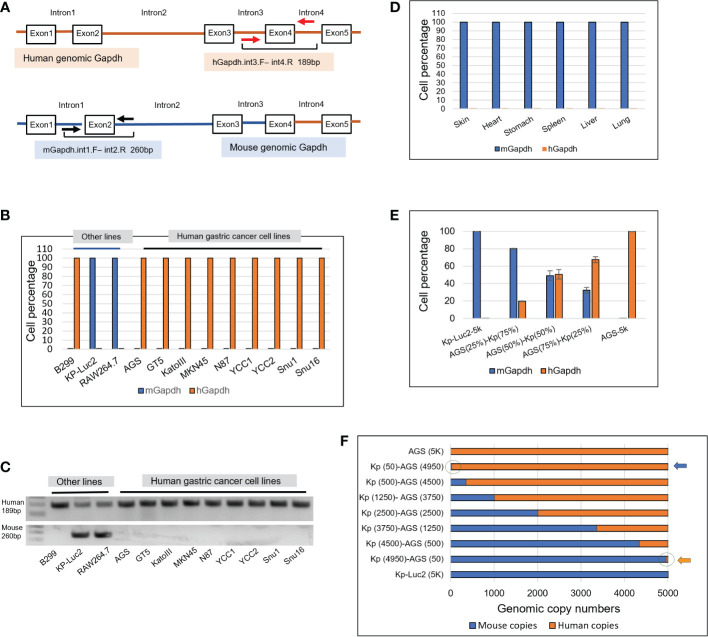
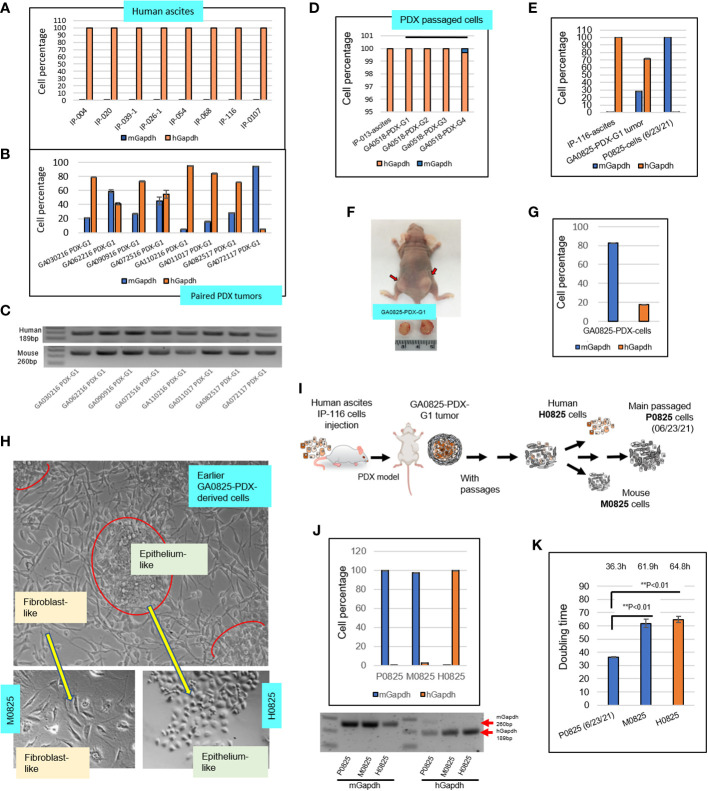
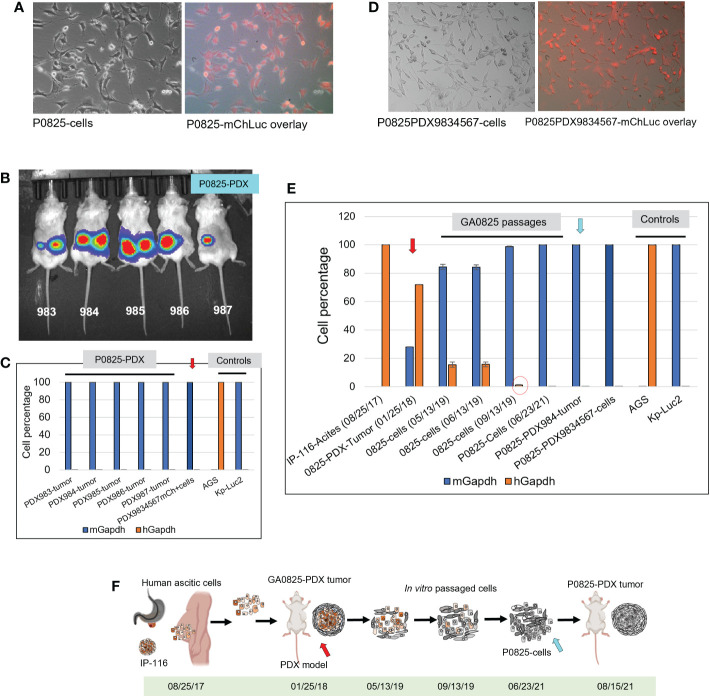
A fast and highly sensitive intronic qPCR method detecting Gapdh intronic genomic copies was developed to quantify if cells were human or murine or a mixture. By this method, we documented that murine stromal cells were abundant in the PDXs; we also authenticated our cell lines to be human or murine.
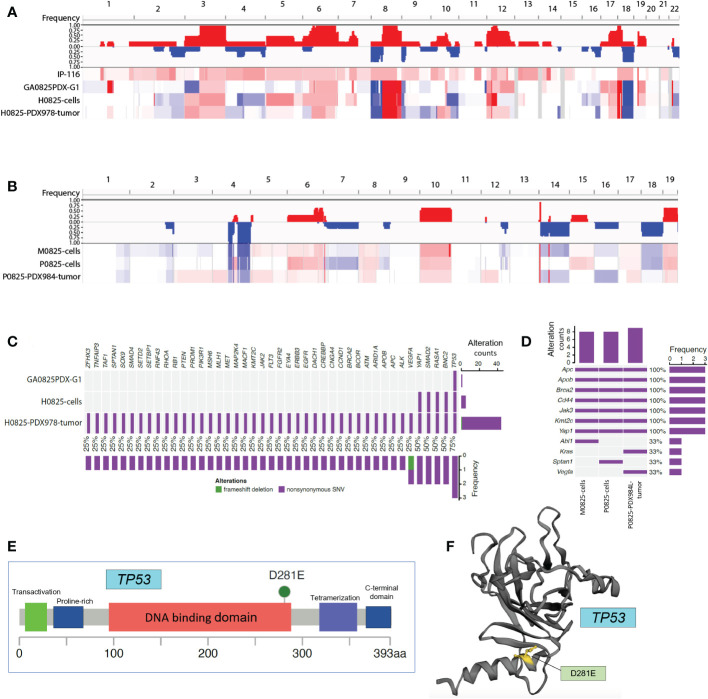
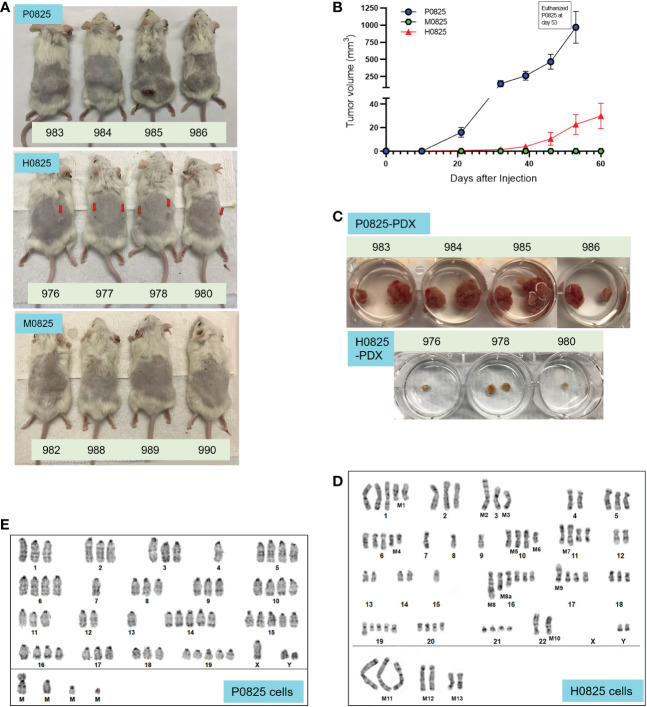
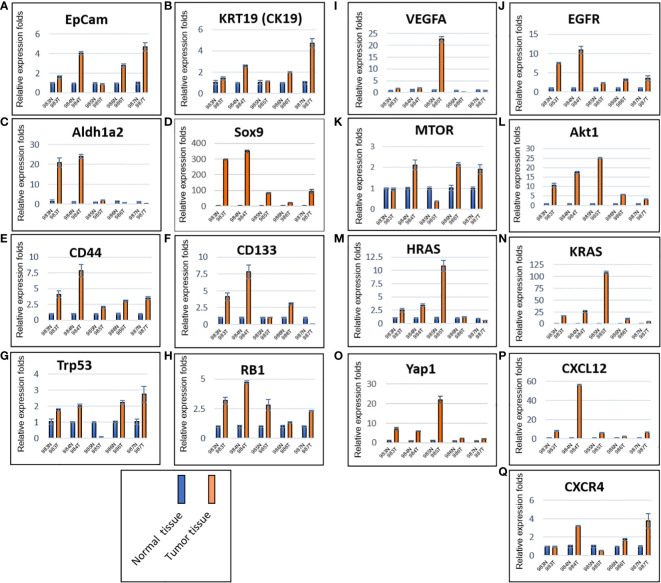
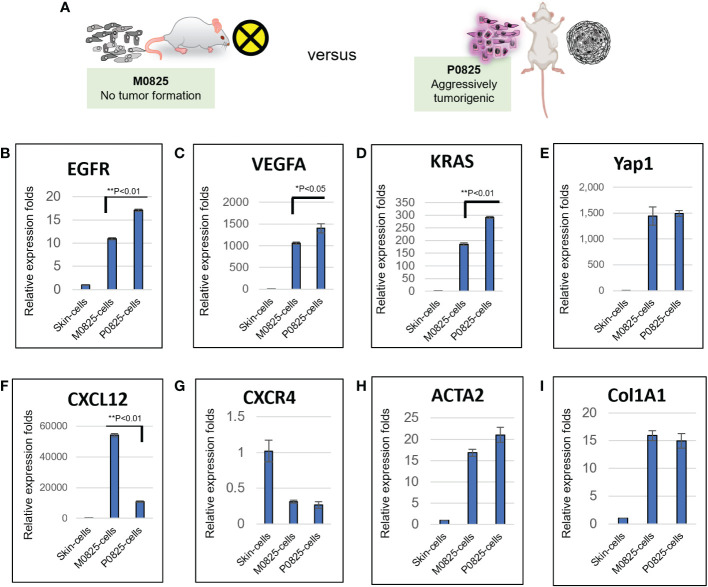
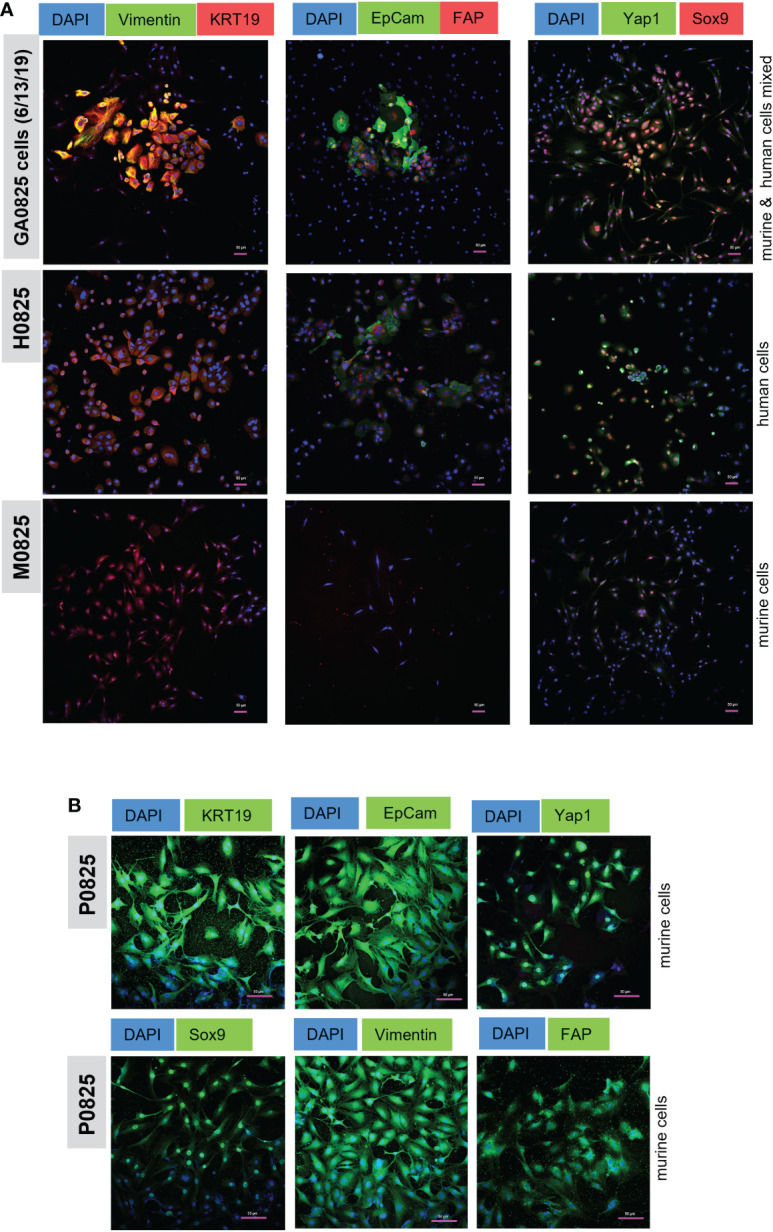
In one mouse model, GA0825-PDX transformed murine stromal cells into a malignant tumorigenic murine P0825 cell line. We traced the timeline of this transformation and discovered three subpopulations descended from the same GA0825-PDX model: epithelium-like human H0825, fibroblast-like murine M0825, and main passaged murine P0825 displayed differences in tumorigenic capability . P0825 was the most aggressive and H0825 was weakly tumorigenic. Immunofluorescence (IF) staining revealed that P0825 cells highly expressed several oncogenic and cancer stem cell markers. Whole exosome sequencing (WES) analysis revealed that TP53 mutation in the human ascites IP116-generated GA0825-PDX may have played a role in the human-to-murine oncogenic transformation.
This intronic qPCR is able to quantify human/mouse genomic copies with high sensitivity and within a time frame of a few hours. We are the first to use intronic genomic qPCR for authentication and quantification of biosamples. Human ascites transformed murine stroma into malignancy in a PDX model.
建立一种快速、准确检测患者来源异种移植(PDX)模型和细胞系中种间污染的方法,并阐明若检测到种间致癌转化的可能机制。
开发了一种快速且高度灵敏的内含子定量聚合酶链反应(qPCR)方法,通过检测甘油醛-3-磷酸脱氢酶(Gapdh)内含子基因组拷贝数来量化细胞是人源、鼠源还是混合来源。通过该方法,我们记录到PDX模型中鼠源基质细胞丰富;我们还对细胞系进行了人源或鼠源鉴定。
在一个小鼠模型中,GA0825-PDX将鼠源基质细胞转化为具有恶性致瘤性的鼠源P0825细胞系。我们追踪了这种转化的时间线,发现源自同一GA0825-PDX模型的三个亚群:上皮样人源H0825、成纤维细胞样鼠源M0825和主要传代的鼠源P0825在致瘤能力上存在差异。P0825最具侵袭性,H0825致瘤性较弱。免疫荧光(IF)染色显示P0825细胞高表达几种致癌和癌症干细胞标志物。全外泌体测序(WES)分析表明,人腹水IP116产生的GA0825-PDX中的TP53突变可能在人源到鼠源的致癌转化中起作用。
这种内含子qPCR能够在数小时内以高灵敏度定量人/鼠基因组拷贝数。我们首次使用内含子基因组qPCR对生物样本进行鉴定和定量。在一个PDX模型中,人腹水将鼠源基质转化为恶性肿瘤。