Nelson Michelle, Salguero Francisco J, Hunter Laura, Atkins Timothy P
CBR Division, Defence Science and Technology Laboratory (Dstl), Salisbury, United Kingdom.
Public Health England, Salisbury, United Kingdom.
Front Cell Infect Microbiol. 2021 Jan 28;10:621635. doi: 10.3389/fcimb.2020.621635. eCollection 2020.
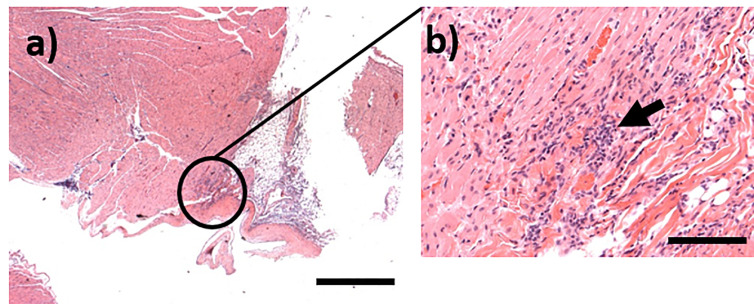
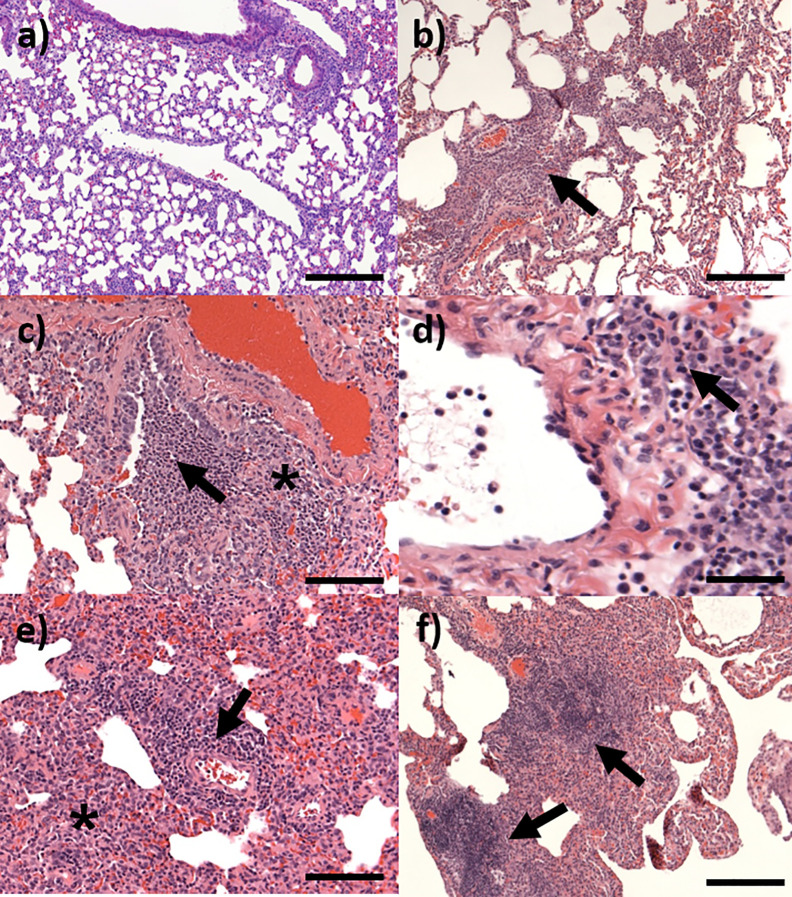
Common marmosets ( were shown to be susceptible to inhalational infection with , in a dose-dependent manner, producing a disease similar to human Q fever, characterized by a resolving febrile response. Illness was also associated with weight loss, liver enzyme dysfunction, characteristic cellular activation, circulating INF- and bacteraemia. Viable was recovered from various tissues during disease and from 75% of the animal's lungs on 28 days post challenge, when there were no overt clinical features of disease but there was histological evidence of macrophage and lymphocyte infiltration into the lung resulting in granulomatous alveolitis. Taken together, these features of disease progression, physiology and bacterial spread appear to be consistent with human disease and therefore the common marmoset can be considered as a suitable model for studies on the pathogenesis or the development of medical counter measures of inhalational Q fever.
普通狨猴被证明对吸入感染[病原体名称未给出]敏感,且呈剂量依赖性,会引发一种类似于人类Q热的疾病,其特征为发热反应逐渐消退。疾病还伴有体重减轻、肝酶功能障碍、特征性细胞活化、循环中的干扰素以及菌血症。在疾病期间,可从各种组织中分离出活的[病原体名称未给出],在攻毒后28天,75%的动物肺部可检测到该病原体,此时虽无明显的疾病临床特征,但有组织学证据表明巨噬细胞和淋巴细胞浸润肺部,导致肉芽肿性肺泡炎。综合来看,疾病进展、生理学及细菌传播的这些特征似乎与人类疾病相符,因此普通狨猴可被视为研究吸入性Q热发病机制或开发医学应对措施的合适模型。