• 文献检索
  • 文档翻译
  • 深度研究
  • 学术资讯
  • Suppr Zotero 插件Zotero 插件
  • 邀请有礼
  • 套餐&价格
  • 历史记录
应用&插件
Suppr Zotero 插件Zotero 插件浏览器插件Mac 客户端Windows 客户端微信小程序
定价
高级版会员购买积分包购买API积分包
服务
文献检索文档翻译深度研究API 文档MCP 服务
关于我们
关于 Suppr公司介绍联系我们用户协议隐私条款
关注我们

Suppr 超能文献

核心技术专利:CN118964589B侵权必究
粤ICP备2023148730 号-1Suppr @ 2026

文献检索

告别复杂PubMed语法,用中文像聊天一样搜索,搜遍4000万医学文献。AI智能推荐,让科研检索更轻松。

立即免费搜索

文件翻译

保留排版,准确专业,支持PDF/Word/PPT等文件格式,支持 12+语言互译。

免费翻译文档

深度研究

AI帮你快速写综述,25分钟生成高质量综述,智能提取关键信息,辅助科研写作。

立即免费体验

一种混合随机分数阶冠状病毒(2019 - nCov)数学模型。

A hybrid stochastic fractional order Coronavirus (2019-nCov) mathematical model.

作者信息

Sweilam N H, Al-Mekhlafi S M, Baleanu D

机构信息

Cairo University, Faculty of Science, Department of Mathematics, Giza, Egypt.

Sana'a University, Faculty of Education, Department of Mathematics, Yemen.

出版信息

Chaos Solitons Fractals. 2021 Apr;145:110762. doi: 10.1016/j.chaos.2021.110762. Epub 2021 Feb 10.

DOI:10.1016/j.chaos.2021.110762
PMID:33589855
原文链接:https://pmc.ncbi.nlm.nih.gov/articles/PMC7874938/
Abstract

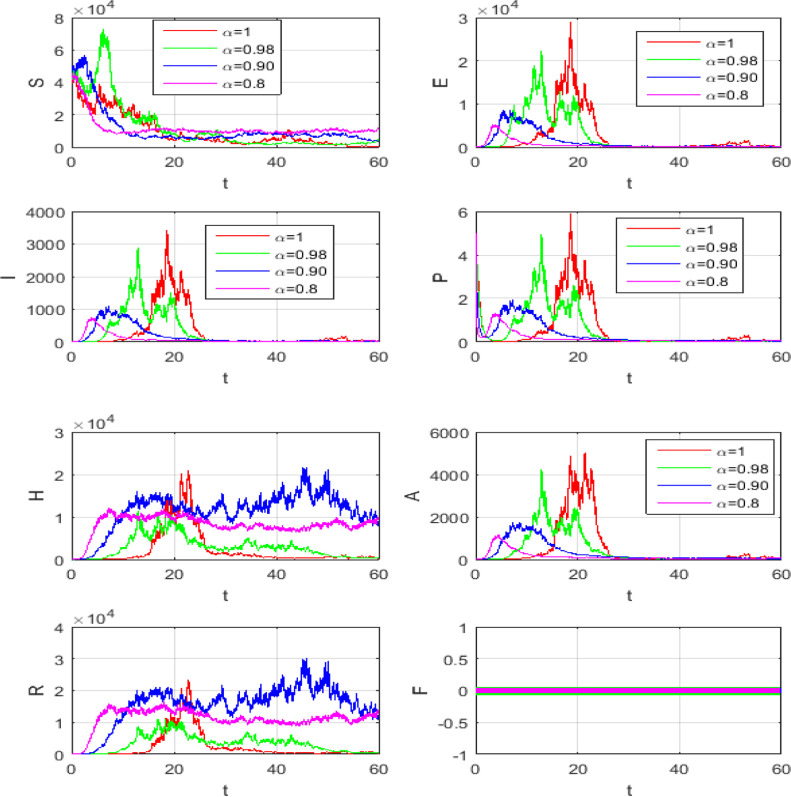
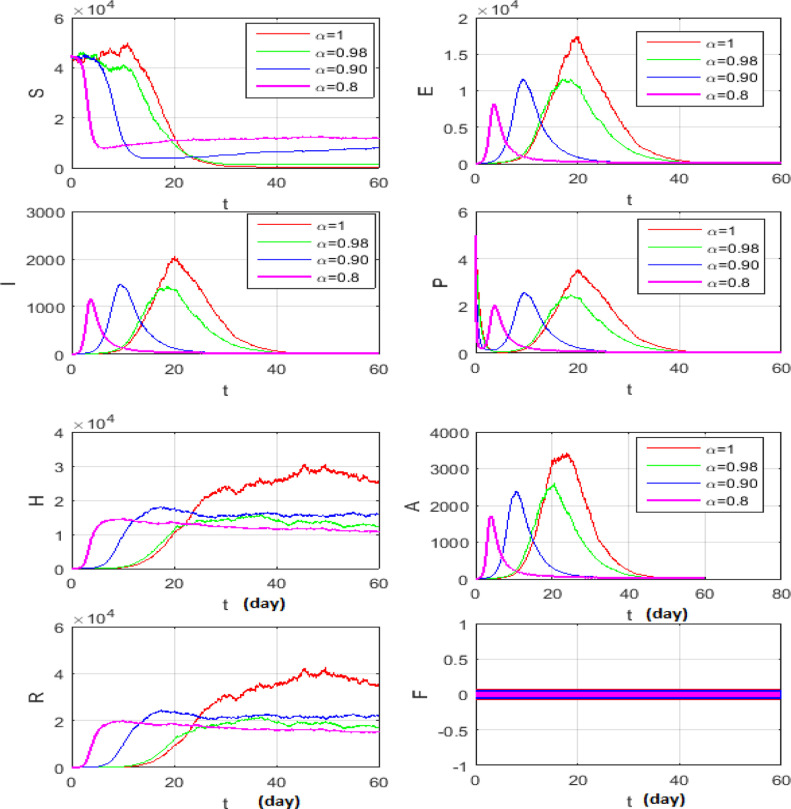
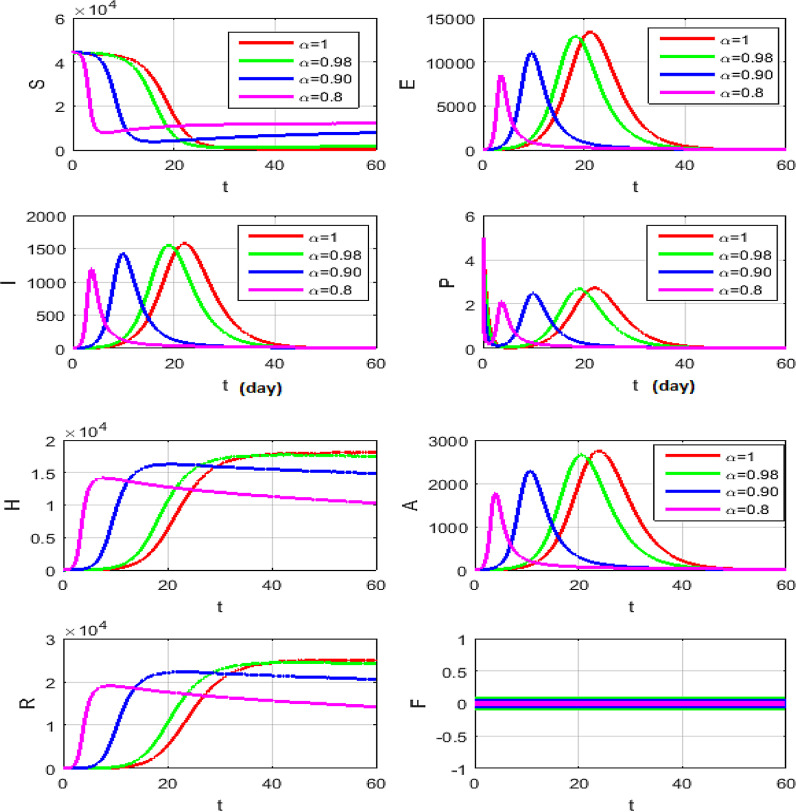
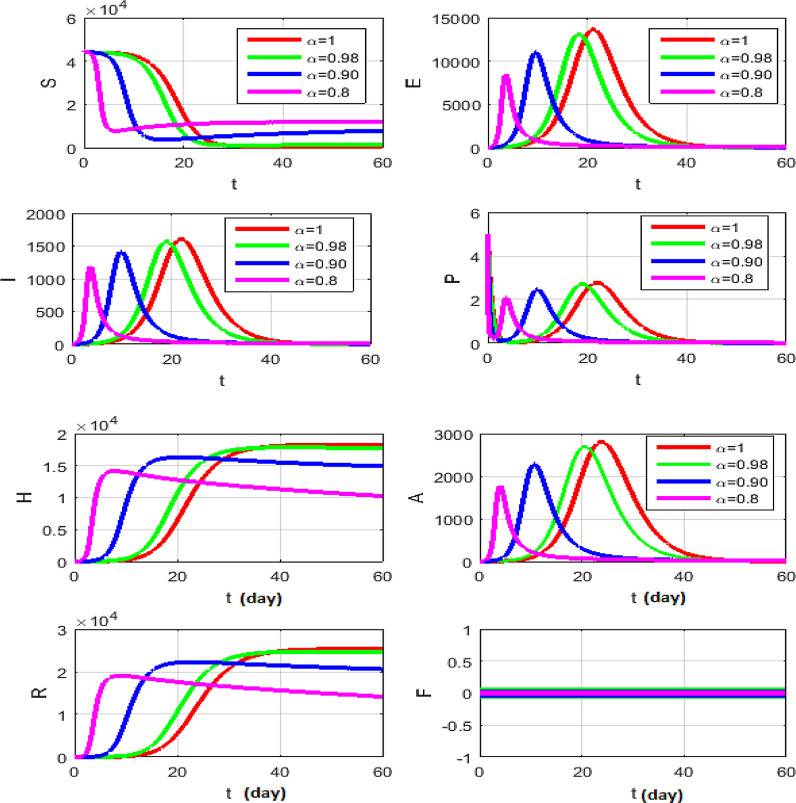
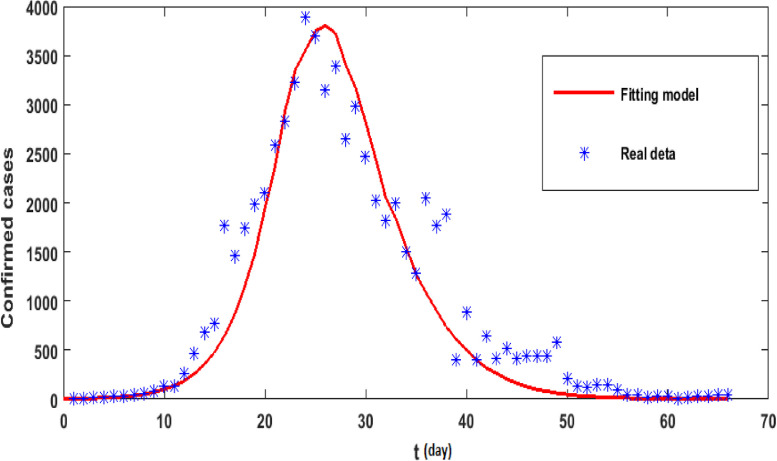
In this paper, a new stochastic fractional Coronavirus (2019-nCov) model with modified parameters is presented. The proposed stochastic COVID-19 model describes well the real data of daily confirmed cases in Wuhan. Moreover, a novel fractional order operator is introduced, it is a linear combination of Caputo's fractional derivative and Riemann-Liouville integral. Milstein's higher order method is constructed with the new fractional order operator to study the model problem. The mean square stability of Milstein algorithm is proved. Numerical results and comparative studies are introduced.

摘要

本文提出了一种具有修正参数的新型随机分数阶冠状病毒(2019 - nCov)模型。所提出的随机新冠病毒模型很好地描述了武汉每日确诊病例的实际数据。此外,引入了一种新型分数阶算子,它是卡普托分数阶导数和黎曼 - 刘维尔积分的线性组合。利用新的分数阶算子构造了米尔斯坦高阶方法来研究该模型问题。证明了米尔斯坦算法的均方稳定性。给出了数值结果和对比研究。
https://cdn.ncbi.nlm.nih.gov/pmc/blobs/9740/7874938/fbabb2f20235/gr16_lrg.jpg
https://cdn.ncbi.nlm.nih.gov/pmc/blobs/9740/7874938/e8393b2d1e04/gr1_lrg.jpg
https://cdn.ncbi.nlm.nih.gov/pmc/blobs/9740/7874938/6dc5a1323553/gr2_lrg.jpg
https://cdn.ncbi.nlm.nih.gov/pmc/blobs/9740/7874938/96299a01007e/gr3_lrg.jpg
https://cdn.ncbi.nlm.nih.gov/pmc/blobs/9740/7874938/39311e0323af/gr4_lrg.jpg
https://cdn.ncbi.nlm.nih.gov/pmc/blobs/9740/7874938/aeea84d14d94/gr5_lrg.jpg
https://cdn.ncbi.nlm.nih.gov/pmc/blobs/9740/7874938/8deb03ef51e3/gr6_lrg.jpg
https://cdn.ncbi.nlm.nih.gov/pmc/blobs/9740/7874938/64c71928951f/gr7_lrg.jpg
https://cdn.ncbi.nlm.nih.gov/pmc/blobs/9740/7874938/f9735a07d52b/gr8_lrg.jpg
https://cdn.ncbi.nlm.nih.gov/pmc/blobs/9740/7874938/9ca258cc7721/gr9_lrg.jpg
https://cdn.ncbi.nlm.nih.gov/pmc/blobs/9740/7874938/a032a84f3c54/gr10_lrg.jpg
https://cdn.ncbi.nlm.nih.gov/pmc/blobs/9740/7874938/55db733e7f88/gr11_lrg.jpg
https://cdn.ncbi.nlm.nih.gov/pmc/blobs/9740/7874938/2eaff72b3a5d/gr12_lrg.jpg
https://cdn.ncbi.nlm.nih.gov/pmc/blobs/9740/7874938/8df7feb2450d/gr13_lrg.jpg
https://cdn.ncbi.nlm.nih.gov/pmc/blobs/9740/7874938/433c40786cbe/gr14_lrg.jpg
https://cdn.ncbi.nlm.nih.gov/pmc/blobs/9740/7874938/cbf467654aa0/gr15_lrg.jpg
https://cdn.ncbi.nlm.nih.gov/pmc/blobs/9740/7874938/fbabb2f20235/gr16_lrg.jpg
https://cdn.ncbi.nlm.nih.gov/pmc/blobs/9740/7874938/e8393b2d1e04/gr1_lrg.jpg
https://cdn.ncbi.nlm.nih.gov/pmc/blobs/9740/7874938/6dc5a1323553/gr2_lrg.jpg
https://cdn.ncbi.nlm.nih.gov/pmc/blobs/9740/7874938/96299a01007e/gr3_lrg.jpg
https://cdn.ncbi.nlm.nih.gov/pmc/blobs/9740/7874938/39311e0323af/gr4_lrg.jpg
https://cdn.ncbi.nlm.nih.gov/pmc/blobs/9740/7874938/aeea84d14d94/gr5_lrg.jpg
https://cdn.ncbi.nlm.nih.gov/pmc/blobs/9740/7874938/8deb03ef51e3/gr6_lrg.jpg
https://cdn.ncbi.nlm.nih.gov/pmc/blobs/9740/7874938/64c71928951f/gr7_lrg.jpg
https://cdn.ncbi.nlm.nih.gov/pmc/blobs/9740/7874938/f9735a07d52b/gr8_lrg.jpg
https://cdn.ncbi.nlm.nih.gov/pmc/blobs/9740/7874938/9ca258cc7721/gr9_lrg.jpg
https://cdn.ncbi.nlm.nih.gov/pmc/blobs/9740/7874938/a032a84f3c54/gr10_lrg.jpg
https://cdn.ncbi.nlm.nih.gov/pmc/blobs/9740/7874938/55db733e7f88/gr11_lrg.jpg
https://cdn.ncbi.nlm.nih.gov/pmc/blobs/9740/7874938/2eaff72b3a5d/gr12_lrg.jpg
https://cdn.ncbi.nlm.nih.gov/pmc/blobs/9740/7874938/8df7feb2450d/gr13_lrg.jpg
https://cdn.ncbi.nlm.nih.gov/pmc/blobs/9740/7874938/433c40786cbe/gr14_lrg.jpg
https://cdn.ncbi.nlm.nih.gov/pmc/blobs/9740/7874938/cbf467654aa0/gr15_lrg.jpg
https://cdn.ncbi.nlm.nih.gov/pmc/blobs/9740/7874938/fbabb2f20235/gr16_lrg.jpg

相似文献

1
A hybrid stochastic fractional order Coronavirus (2019-nCov) mathematical model.一种混合随机分数阶冠状病毒(2019 - nCov)数学模型。
Chaos Solitons Fractals. 2021 Apr;145:110762. doi: 10.1016/j.chaos.2021.110762. Epub 2021 Feb 10.
2
A hybrid fractional optimal control for a novel Coronavirus (2019-nCov) mathematical model.一种新型冠状病毒(2019-nCov)数学模型的混合分数阶最优控制。
J Adv Res. 2021 Sep;32:149-160. doi: 10.1016/j.jare.2020.08.006. Epub 2020 Aug 25.
3
Analytical investigation of vesicle dynamics via the modified Riemann-Liouville fractional derivative: Mittag-Leffler function solution and comparative analysis with Caputo's derivative.基于修正的黎曼-刘维尔分数阶导数对囊泡动力学的解析研究:米塔格-莱夫勒函数解及与卡普托导数的对比分析
Chaos. 2024 Jun 1;34(6). doi: 10.1063/5.0208993.
4
Fractional order mathematical modeling of COVID-19 transmission.新型冠状病毒肺炎传播的分数阶数学建模
Chaos Solitons Fractals. 2020 Oct;139:110256. doi: 10.1016/j.chaos.2020.110256. Epub 2020 Sep 2.
5
Data for numerical solution of Caputo's and Riemann-Liouville's fractional differential equations.卡普托和黎曼-刘维尔分数阶微分方程数值解的数据。
Data Brief. 2020 Mar 5;30:105375. doi: 10.1016/j.dib.2020.105375. eCollection 2020 Jun.
6
A new fractional orthogonal basis and its application in nonlinear delay fractional optimal control problems.一种新的分数阶正交基及其在非线性延迟分数阶最优控制问题中的应用。
ISA Trans. 2021 Aug;114:106-119. doi: 10.1016/j.isatra.2020.12.037. Epub 2020 Dec 24.
7
Application of a time-fractal fractional derivative with a power-law kernel to the Burke-Shaw system based on Newton's interpolation polynomials.基于牛顿插值多项式的具有幂律核的时间分形分数阶导数在伯克 - 肖系统中的应用。
MethodsX. 2023 Dec 14;12:102510. doi: 10.1016/j.mex.2023.102510. eCollection 2024 Jun.
8
Equivalent system for a multiple-rational-order fractional differential system.多重有理阶分数阶微分系统的等价系统。
Philos Trans A Math Phys Eng Sci. 2013 Apr 1;371(1990):20120156. doi: 10.1098/rsta.2012.0156. Print 2013 May 13.
9
A mathematical model to examine the effect of quarantine on the spread of coronavirus.一个用于研究隔离对冠状病毒传播影响的数学模型。
Chaos Solitons Fractals. 2021 Jan;142:110418. doi: 10.1016/j.chaos.2020.110418. Epub 2020 Nov 30.
10
Mathematical analysis of fractional-order Caputo's derivative of coronavirus disease model via Laplace Adomian decomposition method.基于拉普拉斯-阿多米安分解法的冠状病毒病模型分数阶卡普托导数的数学分析
Beni Suef Univ J Basic Appl Sci. 2022;11(1):144. doi: 10.1186/s43088-022-00326-9. Epub 2022 Dec 6.

引用本文的文献

1
Statistical methods for the computation and parameter estimation of a fractional SIRC model with Salmonella infection.用于具有沙门氏菌感染的分数阶SIRC模型计算和参数估计的统计方法。
Heliyon. 2024 May 13;10(10):e30885. doi: 10.1016/j.heliyon.2024.e30885. eCollection 2024 May 30.
2
Mathematical Modeling of SARS-CoV-2 Omicron Wave under Vaccination Effects.接种疫苗影响下的新冠病毒奥密克戎毒株浪潮的数学建模
Computation (Basel). 2023 Feb;11(2). doi: 10.3390/computation11020036. Epub 2023 Feb 15.
3
Global analysis of a time fractional order spatio-temporal SIR model.

本文引用的文献

1
Modeling third waves of Covid-19 spread with piecewise differential and integral operators: Turkey, Spain and Czechia.用分段微分和积分算子对新冠疫情第三波传播进行建模:土耳其、西班牙和捷克共和国。
Results Phys. 2021 Oct;29:104694. doi: 10.1016/j.rinp.2021.104694. Epub 2021 Aug 18.
2
Mathematical model of COVID-19 spread in Turkey and South Africa: theory, methods, and applications.新冠病毒在土耳其和南非传播的数学模型:理论、方法与应用
Adv Differ Equ. 2020;2020(1):659. doi: 10.1186/s13662-020-03095-w. Epub 2020 Nov 25.
3
A discrete stochastic model of the COVID-19 outbreak: Forecast and control.
全球分析时空 SIR 模型的分数阶时间。
Sci Rep. 2022 Apr 6;12(1):5751. doi: 10.1038/s41598-022-08992-6.
4
A Fourth-Order Compact Finite Difference Scheme for Solving the Time Fractional Carbon Nanotubes Model.用于求解时间分数阶碳纳米管模型的四阶紧致有限差分格式。
ScientificWorldJournal. 2022 Mar 2;2022:1426837. doi: 10.1155/2022/1426837. eCollection 2022.
5
Analysis of Key Factors of a SARS-CoV-2 Vaccination Program: A Mathematical Modeling Approach.严重急性呼吸综合征冠状病毒2型疫苗接种计划的关键因素分析:一种数学建模方法
Epidemiologia (Basel). 2021 Jun;2(2):140-161. doi: 10.3390/epidemiologia2020012. Epub 2021 Apr 1.
一个 COVID-19 爆发的离散随机模型:预测和控制。
Math Biosci Eng. 2020 Mar 16;17(4):2792-2804. doi: 10.3934/mbe.2020153.
4
A hybrid fractional optimal control for a novel Coronavirus (2019-nCov) mathematical model.一种新型冠状病毒(2019-nCov)数学模型的混合分数阶最优控制。
J Adv Res. 2021 Sep;32:149-160. doi: 10.1016/j.jare.2020.08.006. Epub 2020 Aug 25.
5
A fractional differential equation model for the COVID-19 transmission by using the Caputo-Fabrizio derivative.一个使用卡普托-法布里齐奥导数的COVID-19传播分数阶微分方程模型。
Adv Differ Equ. 2020;2020(1):299. doi: 10.1186/s13662-020-02762-2. Epub 2020 Jun 18.
6
Modelling the spread of COVID-19 with new fractal-fractional operators: Can the lockdown save mankind before vaccination?用新的分形分数算子对COVID-19传播进行建模:封锁措施能否在疫苗接种前拯救人类?
Chaos Solitons Fractals. 2020 Jul;136:109860. doi: 10.1016/j.chaos.2020.109860. Epub 2020 May 29.
7
Mathematical modeling of the spread of the coronavirus disease 2019 (COVID-19) taking into account the undetected infections. The case of China.考虑未检测到感染情况的2019冠状病毒病(COVID-19)传播的数学模型。以中国为例。
Commun Nonlinear Sci Numer Simul. 2020 Sep;88:105303. doi: 10.1016/j.cnsns.2020.105303. Epub 2020 Apr 30.
8
Mathematical modeling of COVID-19 transmission dynamics with a case study of Wuhan.基于武汉案例研究的新冠病毒传播动力学数学建模
Chaos Solitons Fractals. 2020 Jun;135:109846. doi: 10.1016/j.chaos.2020.109846. Epub 2020 Apr 27.
9
Healthcare impact of COVID-19 epidemic in India: A stochastic mathematical model.印度新冠疫情的医疗保健影响:一个随机数学模型。
Med J Armed Forces India. 2020 Apr;76(2):147-155. doi: 10.1016/j.mjafi.2020.03.022. Epub 2020 Apr 2.
10
Analysis of COVID-19 infection spread in Japan based on stochastic transition model.基于随机转移模型的日本 COVID-19 感染传播分析。
Biosci Trends. 2020 May 21;14(2):134-138. doi: 10.5582/bst.2020.01482. Epub 2020 Mar 19.