Asri Nastaran, Rostami-Nejad Mohammad, Anderson Robert P, Rostami Kamran
Basic and Molecular Epidemiology of Gastrointestinal Disorders Research Center, Research Institute for Gastroenterology and Liver Diseases, Shahid Beheshti University of Medical Sciences, Tehran, Iran.
Gastroenterology and Liver Diseases Research Center, Research Institute for Gastroenterology and Liver Diseases, Shahid Beheshti University of Medical Sciences, Tehran, Iran.
Appl Clin Genet. 2021 Feb 11;14:37-50. doi: 10.2147/TACG.S276596. eCollection 2021.
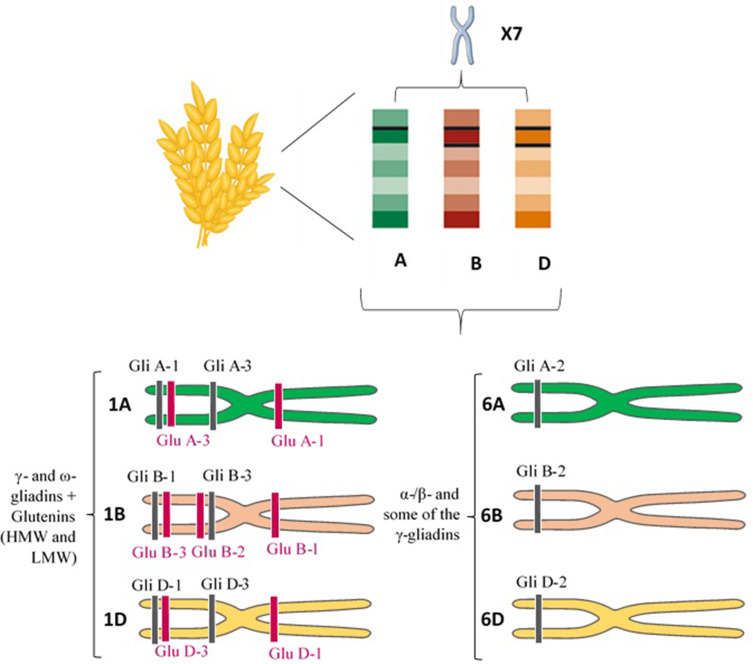
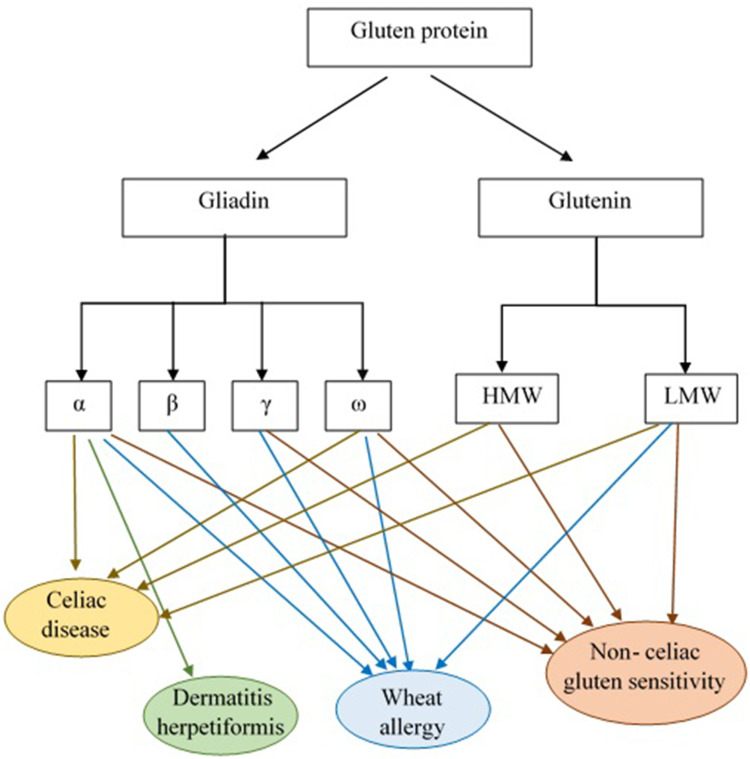
Wheat flour is one of the most important food ingredients containing several essential nutrients including proteins. Gluten is one of the major protein components of wheat consisted of glutenin (encoded on chromosome 1) and gliadin (encoded on chromosome 1 and 6) and there are around hundred genes encoding it in wheat. Gluten proteins have the ability of eliciting the pathogenic immune responses and hypersensitivity reactions in susceptible individuals called "gluten-related disorders (GRDs)", which include celiac disease (CD), wheat allergy (WA), and non-celiac gluten sensitivity (NCGS). Currently removing gluten from the diet is the only effective treatment for mentioned GRDs and studies for the appropriate and alternative therapeutic approaches are ongoing. Accordingly, several genetic studies have focused on breeding wheat with low immunological properties through gene editing methods. The present review considers genetic characteristics of gluten protein components, focusing on their role in the incidence of gluten-related diseases, and genetic modifications conducted to produce wheat with less immunological properties.
小麦粉是最重要的食品原料之一,含有多种必需营养素,包括蛋白质。面筋是小麦的主要蛋白质成分之一,由麦谷蛋白(由1号染色体编码)和醇溶蛋白(由1号和6号染色体编码)组成,小麦中约有100个基因编码面筋。面筋蛋白能够在易感个体中引发致病性免疫反应和超敏反应,称为“麸质相关疾病(GRDs)”,其中包括乳糜泻(CD)、小麦过敏(WA)和非乳糜泻麸质敏感(NCGS)。目前,从饮食中去除麸质是上述GRDs的唯一有效治疗方法,针对合适的替代治疗方法的研究正在进行。因此,一些遗传学研究致力于通过基因编辑方法培育具有低免疫特性的小麦。本综述考虑了面筋蛋白成分的遗传特征,重点关注它们在麸质相关疾病发病中的作用,以及为培育具有较低免疫特性的小麦所进行的基因改造。