• 文献检索
  • 文档翻译
  • 深度研究
  • 学术资讯
  • Suppr Zotero 插件Zotero 插件
  • 邀请有礼
  • 套餐&价格
  • 历史记录
应用&插件
Suppr Zotero 插件Zotero 插件浏览器插件Mac 客户端Windows 客户端微信小程序
定价
高级版会员购买积分包购买API积分包
服务
文献检索文档翻译深度研究API 文档MCP 服务
关于我们
关于 Suppr公司介绍联系我们用户协议隐私条款
关注我们

Suppr 超能文献

核心技术专利:CN118964589B侵权必究
粤ICP备2023148730 号-1Suppr @ 2026

文献检索

告别复杂PubMed语法,用中文像聊天一样搜索,搜遍4000万医学文献。AI智能推荐,让科研检索更轻松。

立即免费搜索

文件翻译

保留排版,准确专业,支持PDF/Word/PPT等文件格式,支持 12+语言互译。

免费翻译文档

深度研究

AI帮你快速写综述,25分钟生成高质量综述,智能提取关键信息,辅助科研写作。

立即免费体验

机器学习与专家意见驱动的逻辑回归模型在预测早产儿30天内非计划再入院中的应用:一项基于人群的前瞻性研究(EPIPAGE 2)

Machine-Learning vs. Expert-Opinion Driven Logistic Regression Modelling for Predicting 30-Day Unplanned Rehospitalisation in Preterm Babies: A Prospective, Population-Based Study (EPIPAGE 2).

作者信息

Reed Robert A, Morgan Andrei S, Zeitlin Jennifer, Jarreau Pierre-Henri, Torchin Héloïse, Pierrat Véronique, Ancel Pierre-Yves, Khoshnood Babak

机构信息

Université de Paris, Epidemiology and Statistics Research Center/CRESS, INSERM, INRA, Paris, France.

Elizabeth Garrett Anderson Institute for Womens' Health, University College London (UCL), London, United Kingdom.

出版信息

Front Pediatr. 2021 Feb 3;8:585868. doi: 10.3389/fped.2020.585868. eCollection 2020.

DOI:10.3389/fped.2020.585868
PMID:33614539
原文链接:https://pmc.ncbi.nlm.nih.gov/articles/PMC7886676/
Abstract

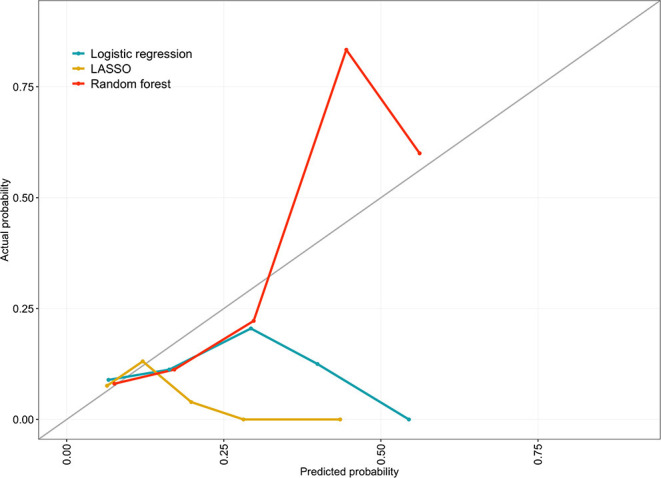
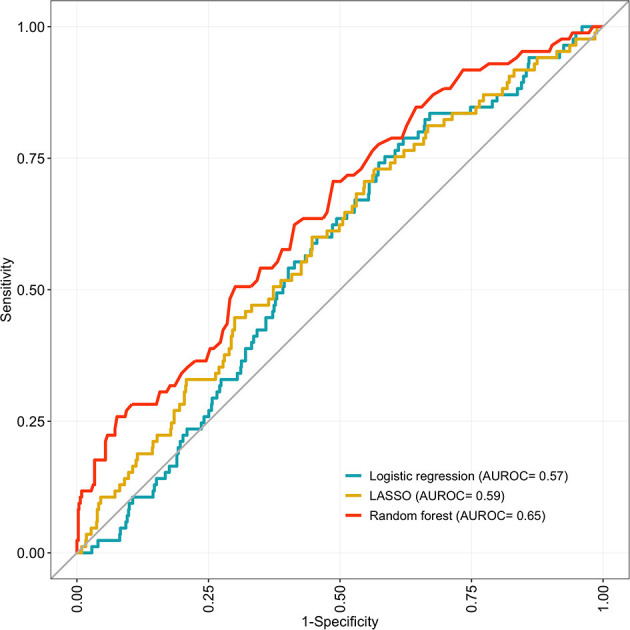
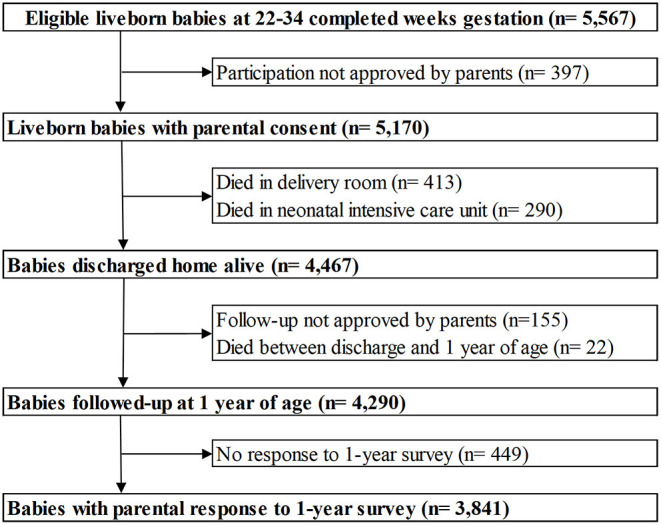
Preterm babies are a vulnerable population that experience significant short and long-term morbidity. Rehospitalisations constitute an important, potentially modifiable adverse event in this population. Improving the ability of clinicians to identify those patients at the greatest risk of rehospitalisation has the potential to improve outcomes and reduce costs. Machine-learning algorithms can provide potentially advantageous methods of prediction compared to conventional approaches like logistic regression. To compare two machine-learning methods (least absolute shrinkage and selection operator (LASSO) and random forest) to expert-opinion driven logistic regression modelling for predicting unplanned rehospitalisation within 30 days in a large French cohort of preterm babies. This study used data derived exclusively from the population-based prospective cohort study of French preterm babies, EPIPAGE 2. Only those babies discharged home alive and whose parents completed the 1-year survey were eligible for inclusion in our study. All predictive models used a binary outcome, denoting a baby's status for an unplanned rehospitalisation within 30 days of discharge. Predictors included those quantifying clinical, treatment, maternal and socio-demographic factors. The predictive abilities of models constructed using LASSO and random forest algorithms were compared with a traditional logistic regression model. The logistic regression model comprised 10 predictors, selected by expert clinicians, while the LASSO and random forest included 75 predictors. Performance measures were derived using 10-fold cross-validation. Performance was quantified using area under the receiver operator characteristic curve, sensitivity, specificity, Tjur's coefficient of determination and calibration measures. The rate of 30-day unplanned rehospitalisation in the eligible population used to construct the models was 9.1% (95% CI 8.2-10.1) (350/3,841). The random forest model demonstrated both an improved AUROC (0.65; 95% CI 0.59-0.7; = 0.03) and specificity vs. logistic regression (AUROC 0.57; 95% CI 0.51-0.62, = 0.04). The LASSO performed similarly (AUROC 0.59; 95% CI 0.53-0.65; = 0.68) to logistic regression. Compared to an expert-specified logistic regression model, random forest offered improved prediction of 30-day unplanned rehospitalisation in preterm babies. However, all models offered relatively low levels of predictive ability, regardless of modelling method.

摘要

早产儿是一个脆弱的群体,会经历严重的短期和长期发病情况。再次住院是这一群体中一个重要的、可能可改变的不良事件。提高临床医生识别那些再次住院风险最高的患者的能力,有可能改善治疗结果并降低成本。与逻辑回归等传统方法相比,机器学习算法可以提供具有潜在优势的预测方法。为了比较两种机器学习方法(最小绝对收缩和选择算子(LASSO)和随机森林)与基于专家意见的逻辑回归模型,以预测法国一个大型早产儿队列中30天内的非计划再次住院情况。本研究使用的数据完全来自基于人群的法国早产儿前瞻性队列研究EPIPAGE 2。只有那些活着出院且父母完成了1年调查的婴儿才有资格纳入我们的研究。所有预测模型都使用二元结局,表示婴儿出院后30天内非计划再次住院的状态。预测因素包括量化临床、治疗、母亲和社会人口学因素的指标。将使用LASSO和随机森林算法构建的模型的预测能力与传统逻辑回归模型进行比较。逻辑回归模型由专家临床医生选择的10个预测因素组成,而LASSO和随机森林模型包括75个预测因素。使用10折交叉验证得出性能指标。使用受试者工作特征曲线下面积、敏感性、特异性、Tjur决定系数和校准指标对性能进行量化。用于构建模型的符合条件人群中30天非计划再次住院率为9.1%(95%CI 8.2 - 10.1)(350/3841)。随机森林模型在受试者工作特征曲线下面积(AUROC)(0.65;95%CI 0.59 - 0.7;P = 0.03)和特异性方面均优于逻辑回归(AUROC 0.57;95%CI 0.51 - 0.62,P = 0.04)。LASSO的表现与逻辑回归相似(AUROC 0.59;95%CI 0.53 - 0.65;P = 0.68)。与专家指定的逻辑回归模型相比,随机森林在预测早产儿30天非计划再次住院方面表现更优。然而,无论采用何种建模方法,所有模型的预测能力都相对较低。
https://cdn.ncbi.nlm.nih.gov/pmc/blobs/6170/7886676/e49f51510820/fped-08-585868-g0003.jpg
https://cdn.ncbi.nlm.nih.gov/pmc/blobs/6170/7886676/a4608b657298/fped-08-585868-g0001.jpg
https://cdn.ncbi.nlm.nih.gov/pmc/blobs/6170/7886676/965820c9b4ff/fped-08-585868-g0002.jpg
https://cdn.ncbi.nlm.nih.gov/pmc/blobs/6170/7886676/e49f51510820/fped-08-585868-g0003.jpg
https://cdn.ncbi.nlm.nih.gov/pmc/blobs/6170/7886676/a4608b657298/fped-08-585868-g0001.jpg
https://cdn.ncbi.nlm.nih.gov/pmc/blobs/6170/7886676/965820c9b4ff/fped-08-585868-g0002.jpg
https://cdn.ncbi.nlm.nih.gov/pmc/blobs/6170/7886676/e49f51510820/fped-08-585868-g0003.jpg

相似文献

1
Machine-Learning vs. Expert-Opinion Driven Logistic Regression Modelling for Predicting 30-Day Unplanned Rehospitalisation in Preterm Babies: A Prospective, Population-Based Study (EPIPAGE 2).机器学习与专家意见驱动的逻辑回归模型在预测早产儿30天内非计划再入院中的应用:一项基于人群的前瞻性研究(EPIPAGE 2)
Front Pediatr. 2021 Feb 3;8:585868. doi: 10.3389/fped.2020.585868. eCollection 2020.
2
Assessing the risk of early unplanned rehospitalisation in preterm babies: EPIPAGE 2 study.评估早产儿早期非计划性再入院风险:EPIPAGE 2 研究。
BMC Pediatr. 2019 Nov 21;19(1):451. doi: 10.1186/s12887-019-1827-6.
3
Using machine learning to predict paediatric 30-day unplanned hospital readmissions: a case-control retrospective analysis of medical records, including written discharge documentation.使用机器学习预测儿科 30 天内非计划性住院再入院率:病历回顾性病例对照研究,包括书面出院记录。
Aust Health Rev. 2021 Jun;45(3):328-337. doi: 10.1071/AH20062.
4
Risk Factors and Predictive Models for Peripherally Inserted Central Catheter Unplanned Extubation in Patients With Cancer: Prospective, Machine Learning Study.癌症患者外周置入中心静脉导管非计划性拔管的风险因素和预测模型:前瞻性、机器学习研究。
J Med Internet Res. 2023 Nov 16;25:e49016. doi: 10.2196/49016.
5
Performance assessment of the metastatic spinal tumor frailty index using machine learning algorithms: limitations and future directions.基于机器学习算法的转移性脊柱肿瘤脆弱指数的性能评估:局限性与未来方向。
Neurosurg Focus. 2021 May;50(5):E5. doi: 10.3171/2021.2.FOCUS201113.
6
Predictive modeling for 14-day unplanned hospital readmission risk by using machine learning algorithms.基于机器学习算法的 14 天内非计划性住院再入院风险预测模型。
BMC Med Inform Decis Mak. 2021 Oct 20;21(1):288. doi: 10.1186/s12911-021-01639-y.
7
Development and Validation of a Machine Learning Algorithm Predicting Emergency Department Use and Unplanned Hospitalization in Patients With Head and Neck Cancer.开发和验证一种机器学习算法,用于预测头颈部癌症患者在急诊科的使用情况和非计划性住院。
JAMA Otolaryngol Head Neck Surg. 2022 Aug 1;148(8):764-772. doi: 10.1001/jamaoto.2022.1629.
8
Biological signatures and prediction of an immunosuppressive status-persistent critical illness-among orthopedic trauma patients using machine learning techniques.利用机器学习技术对骨科创伤患者免疫抑制状态持续的危重症进行生物学特征分析和预测。
Front Immunol. 2022 Oct 17;13:979877. doi: 10.3389/fimmu.2022.979877. eCollection 2022.
9
Predicting the 5-Year Risk of Nonalcoholic Fatty Liver Disease Using Machine Learning Models: Prospective Cohort Study.利用机器学习模型预测非酒精性脂肪性肝病的 5 年风险:前瞻性队列研究。
J Med Internet Res. 2023 Sep 12;25:e46891. doi: 10.2196/46891.
10
Comparison of Machine Learning Methods With Traditional Models for Use of Administrative Claims With Electronic Medical Records to Predict Heart Failure Outcomes.利用电子病历中的行政索赔数据进行机器学习方法与传统模型预测心力衰竭结局的比较。
JAMA Netw Open. 2020 Jan 3;3(1):e1918962. doi: 10.1001/jamanetworkopen.2019.18962.

引用本文的文献

1
Modeling the determinants of attrition in a two-stage epilepsy prevalence survey in Nairobi using machine learning.利用机器学习对内罗毕两阶段癫痫患病率调查中失访的决定因素进行建模。
Glob Epidemiol. 2025 Jan 6;9:100183. doi: 10.1016/j.gloepi.2025.100183. eCollection 2025 Jun.
2
The past, current, and future of neonatal intensive care units with artificial intelligence: a systematic review.人工智能在新生儿重症监护病房的过去、现状与未来:一项系统综述
NPJ Digit Med. 2023 Nov 27;6(1):220. doi: 10.1038/s41746-023-00941-5.
3
Machine learning methods to predict attrition in a population-based cohort of very preterm infants.

本文引用的文献

1
Opening the black box of artificial intelligence for clinical decision support: A study predicting stroke outcome.为临床决策支持打开人工智能的“黑箱”:一项预测中风结果的研究。
PLoS One. 2020 Apr 6;15(4):e0231166. doi: 10.1371/journal.pone.0231166. eCollection 2020.
2
Machine learning for characterizing risk of type 2 diabetes mellitus in a rural Chinese population: the Henan Rural Cohort Study.基于中国农村人群的机器学习特征分析 2 型糖尿病风险:河南农村队列研究。
Sci Rep. 2020 Mar 10;10(1):4406. doi: 10.1038/s41598-020-61123-x.
3
Assessing the risk of early unplanned rehospitalisation in preterm babies: EPIPAGE 2 study.
基于人群的极早产儿队列中流失率的机器学习预测方法。
Sci Rep. 2022 Jun 22;12(1):10587. doi: 10.1038/s41598-022-13946-z.
评估早产儿早期非计划性再入院风险:EPIPAGE 2 研究。
BMC Pediatr. 2019 Nov 21;19(1):451. doi: 10.1186/s12887-019-1827-6.
4
Statistical predictions with glmnet.使用 glmnet 进行统计预测。
Clin Epigenetics. 2019 Aug 23;11(1):123. doi: 10.1186/s13148-019-0730-1.
5
Neural networks versus Logistic regression for 30 days all-cause readmission prediction.神经网络与逻辑回归在 30 天全因再入院预测中的比较。
Sci Rep. 2019 Jun 26;9(1):9277. doi: 10.1038/s41598-019-45685-z.
6
Identifying patients at highest-risk: the best timing to apply a readmission predictive model.识别高危患者:应用再入院预测模型的最佳时机。
BMC Med Inform Decis Mak. 2019 Jun 26;19(1):118. doi: 10.1186/s12911-019-0836-6.
7
Machine learning in medicine: a practical introduction.医学中的机器学习:实用入门
BMC Med Res Methodol. 2019 Mar 19;19(1):64. doi: 10.1186/s12874-019-0681-4.
8
A systematic review shows no performance benefit of machine learning over logistic regression for clinical prediction models.系统评价显示,机器学习在临床预测模型中并未优于逻辑回归。
J Clin Epidemiol. 2019 Jun;110:12-22. doi: 10.1016/j.jclinepi.2019.02.004. Epub 2019 Feb 11.
9
Predictive models for hospital readmission risk: A systematic review of methods.预测医院再入院风险的模型:方法的系统评价。
Comput Methods Programs Biomed. 2018 Oct;164:49-64. doi: 10.1016/j.cmpb.2018.06.006. Epub 2018 Jun 28.
10
Random forest versus logistic regression: a large-scale benchmark experiment.随机森林与逻辑回归:大规模基准实验。
BMC Bioinformatics. 2018 Jul 17;19(1):270. doi: 10.1186/s12859-018-2264-5.