Nanda Sanju, Madan Kumud
Department of Pharmaceutical Sciences, M. D. University, 124001 Rohtak, India.
Lloyd Institute of Management and Technology, Greater Noida, 201306, India.
Heliyon. 2021 Feb 10;7(2):e06117. doi: 10.1016/j.heliyon.2021.e06117. eCollection 2021 Feb.
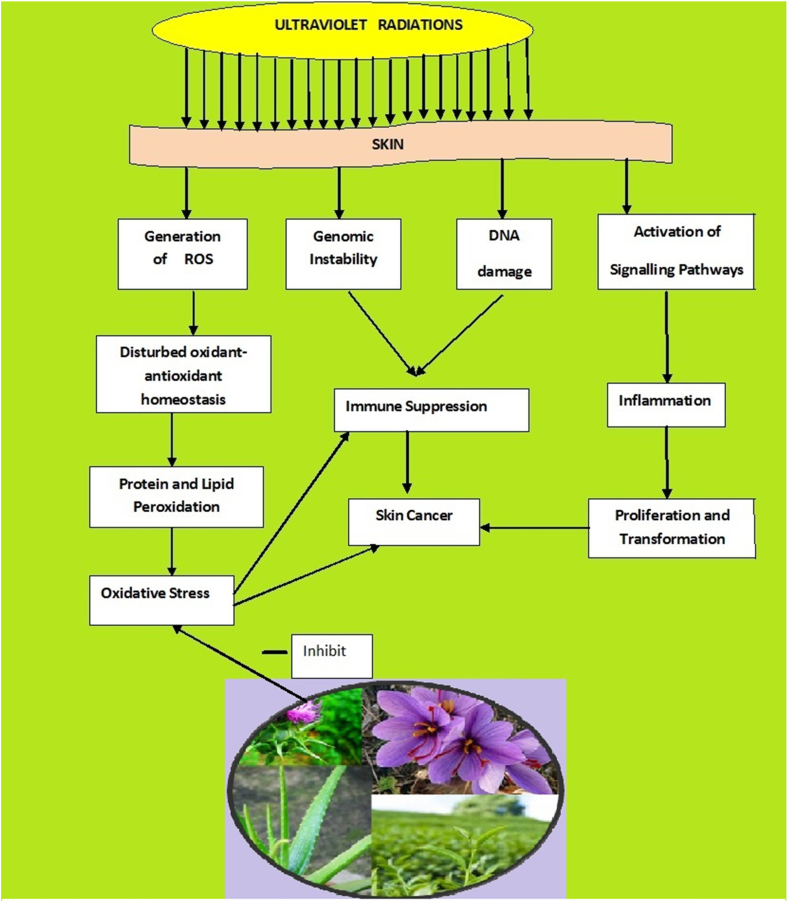
Reactive oxygen species (ROS) are produced as a result of various environmental factors and cellular metabolism reactions creating oxidative stress. The reversible oxidative modification on proteins such as cysteine oxidation may be useful and can play positive role. ROS generated offer some benefits such as cellular signalling and tissue repair when present in low concentration. However, most of the times, these reactive species cause detrimental effects to cell components which leads to various pathological conditions which causes or aggravates diseases due to oxidative stress. The degenerative diseases due to oxidative stress are diabetes, cardiovascular diseases, epilepsy, cancer and aging. Antioxidants are the compounds which scavenge these free radicals and hence neutralize their effects. Research has enabled the use of natural antioxidants as therapeutic agent in the treatment of diseases. Safranal is one such natural agent which is a major volatile component of saffron. Saffron, is the most expensive spice found in limited region of the planet and is also reported to be used in traditional systems of medicine. Chemically, safranal is a monoterpene aldehyde possessing a sweet fragrance. While exploring for the photoprotective properties of safranal, we learnt about the immense antioxidant potential of safranal. Investigation by various research groups established safranal as an anti-inflammatory, antidepressant, anxiolytic, antiasthamatic, antihypertensive, anticonvulsant, anticancer and antitussive and antigenotoxic agent. It has brought researchers over the world to explore the antioxidant benefits of saffron for human health. In the present paper, potential of safranal and its related molecules as radical scavenger in combating oxidative stress, diseased conditions is collated and the underlying mechanisms have been explained. Various cell lines and animal models used for study of Safranal have been discussed.
活性氧(ROS)是由各种环境因素和细胞代谢反应产生的,会造成氧化应激。蛋白质上的可逆氧化修饰,如半胱氨酸氧化,可能是有益的,并能发挥积极作用。低浓度时产生的ROS有一些益处,如细胞信号传导和组织修复。然而,在大多数情况下,这些活性物质会对细胞成分造成有害影响,导致各种病理状况,进而因氧化应激引发或加重疾病。由氧化应激导致的退行性疾病包括糖尿病、心血管疾病、癫痫、癌症和衰老。抗氧化剂是能够清除这些自由基并中和其作用的化合物。研究已使天然抗氧化剂可作为治疗剂用于疾病治疗。藏红花醛就是这样一种天然物质,它是藏红花的主要挥发性成分。藏红花是地球上有限区域内发现的最昂贵的香料,据报道也被用于传统医学体系。从化学角度来看,藏红花醛是一种具有甜味的单萜醛。在探索藏红花醛的光保护特性时,我们了解到了它巨大的抗氧化潜力。多个研究小组的调查证实藏红花醛是一种抗炎、抗抑郁、抗焦虑、抗哮喘、抗高血压、抗惊厥、抗癌、镇咳和抗基因毒性的药物。它吸引了世界各地的研究人员探索藏红花对人类健康的抗氧化益处。在本文中,我们整理了藏红花醛及其相关分子作为自由基清除剂在对抗氧化应激和疾病状况方面的潜力,并解释了其潜在机制。还讨论了用于研究藏红花醛的各种细胞系和动物模型。