Department of Neurosurgery, SanBo Brain Hospital, Capital Medical University, Beijing, 100093, China.
Dalian Medical University, Dalian, 116044, Liaoning, China.
Soc Psychiatry Psychiatr Epidemiol. 2021 Dec;56(12):2275-2286. doi: 10.1007/s00127-021-02046-4. Epub 2021 Feb 22.
To evaluate the prevalence of and risk factors associated with anxiety, depression, and insomnia symptoms during the return-to-work period of coronavirus disease 2019 in China.
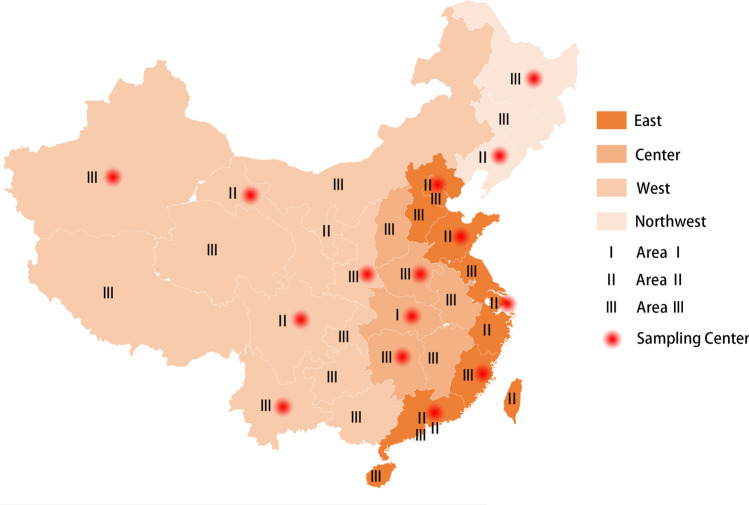
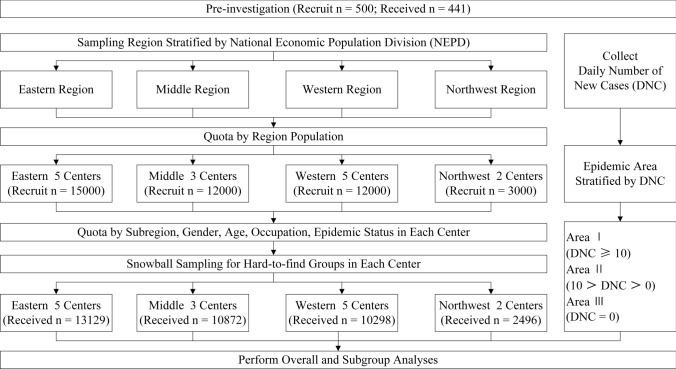
The authors conducted a large-scale, nationwide, multicenter, cross-sectional study in China. A population-based quota and snowball sampling were designed to recruit a representative sample. Online questionnaires and telephone reviews were used to collect characteristics and assess psychological and sleep problems. Anxiety, depression, and insomnia symptoms were measured by the generalized anxiety disorder-7, patient health questionnaire-9, and insomnia severity index tools.
A total of 42,000 participants were recruited from 15 centers, and 36,795 valid questionnaires were received. Generally, 18.3, 14.9, and 17.9% of the participants had anxiety, depression, and insomnia symptoms, respectively, and 2.2-2.7% had severe symptoms. Engaging in outside activity once in ≥ 30 days (OR = 2.719, OR = 2.074, OR = 2.225) and age 50-64 years (OR = 2.431, OR = 1.936, OR = 2.036) were common risk factors for anxiety, depression and insomnia symptoms. Living in Hubei Province (OR = 1.304, OR = 1.242) was a common risk factor for anxiety and insomnia symptoms. Working as frontline medical staff (OR = 2.150) was another risk factor for anxiety symptoms. The health education rate of the samples reached 98.9%. However, the psychological intervention rate was only 16.2%, and 2.5% received targeted interventions.
An increasing number of people might have psychological and sleep problems. However, the current psychological interventions are not sufficient. Efforts should be made to strengthen interventions for high-risk populations.
评估中国新冠肺炎恢复期重返工作岗位期间焦虑、抑郁和失眠症状的流行情况及其相关因素。
作者在中国开展了一项大规模的、全国性的、多中心的、横断面研究。采用基于人群的配额和雪球抽样方法招募具有代表性的样本。通过在线问卷和电话回顾收集特征,并评估心理和睡眠问题。采用广泛性焦虑障碍 7 项量表、患者健康问卷 9 项量表和失眠严重程度指数工具评估焦虑、抑郁和失眠症状。
共从 15 个中心招募了 42000 名参与者,收到了 36795 份有效问卷。一般来说,18.3%、14.9%和 17.9%的参与者分别有焦虑、抑郁和失眠症状,2.2%-2.7%的参与者有严重症状。每月至少参加 1 次户外活动(OR=2.719,OR=2.074,OR=2.225)和年龄在 50-64 岁(OR=2.431,OR=1.936,OR=2.036)是焦虑、抑郁和失眠症状的常见危险因素。居住在湖北省(OR=1.304,OR=1.242)是焦虑和失眠症状的共同危险因素。作为一线医务人员(OR=2.150)是焦虑症状的另一个危险因素。样本的健康教育率达到 98.9%。然而,心理干预率仅为 16.2%,仅有 2.5%的人接受了针对性干预。
越来越多的人可能存在心理和睡眠问题。然而,目前的心理干预措施还不够充分。应努力加强对高危人群的干预。