Biostatistics Unit, Centre for Epidemiology and Biostatistics, Melbourne School of Population and Global Health, University of Melbourne, Parkville, Victoria, Australia.
Cancer Health Services Research Unit, University of Melbourne Centre for Cancer Research and Centre for Health Policy, Melbourne School of Population and Global Health, University of Melbourne, Parkville, Victoria, Australia.
BMC Med Res Methodol. 2021 Feb 22;21(1):39. doi: 10.1186/s12874-021-01211-2.
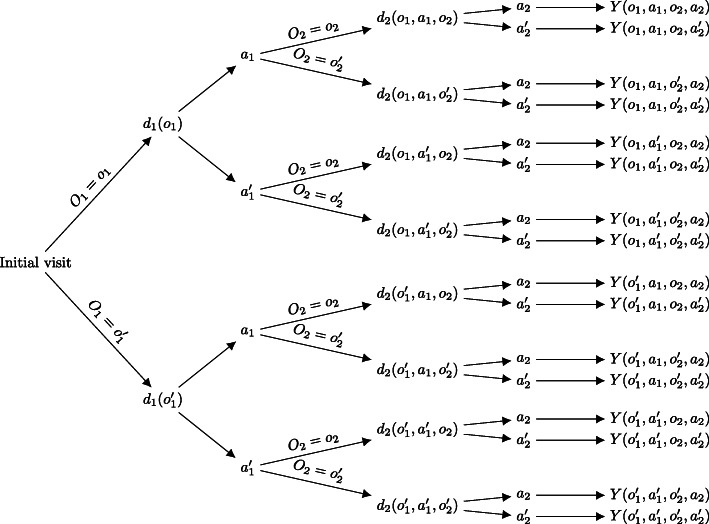
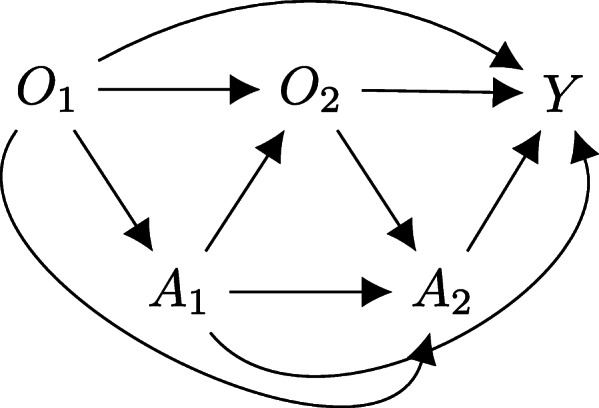
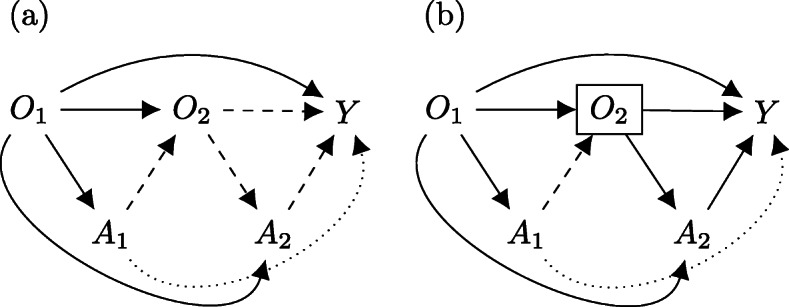
Dynamic treatment regimens (DTRs) formalise the multi-stage and dynamic decision problems that clinicians often face when treating chronic or progressive medical conditions. Compared to randomised controlled trials, using observational data to optimise DTRs may allow a wider range of treatments to be evaluated at a lower cost. This review aimed to provide an overview of how DTRs are optimised with observational data in practice.
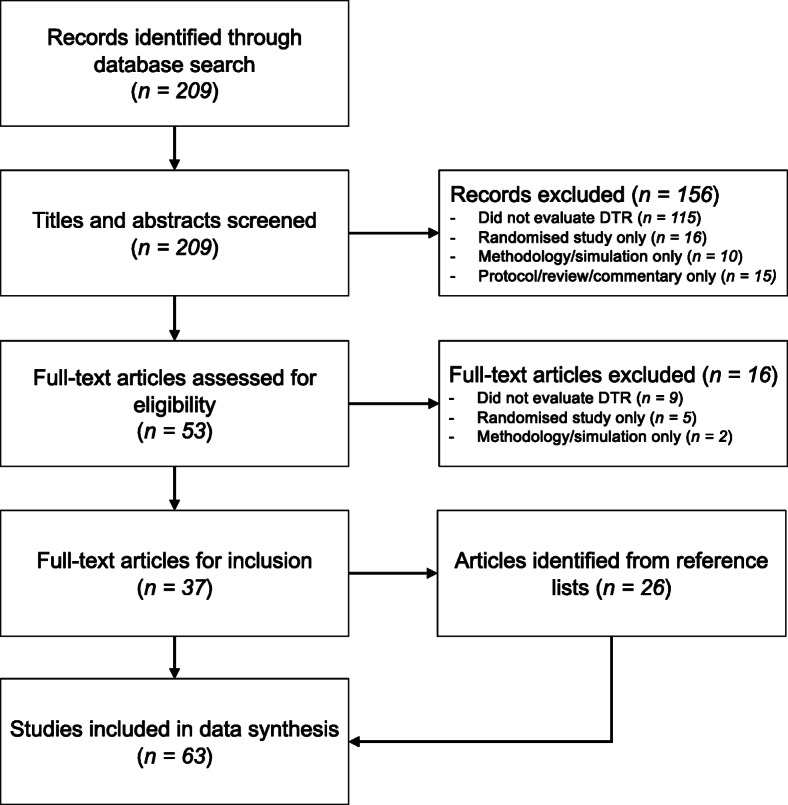
Using the PubMed database, a scoping review of studies in which DTRs were optimised using observational data was performed in October 2020. Data extracted from eligible articles included target medical condition, source and type of data, statistical methods, and translational relevance of the included studies.
From 209 PubMed abstracts, 37 full-text articles were identified, and a further 26 were screened from the reference lists, totalling 63 articles for inclusion in a narrative data synthesis. Observational DTR models are a recent development and their application has been concentrated in a few medical areas, primarily HIV/AIDS (27, 43%), followed by cancer (8, 13%), and diabetes (6, 10%). There was substantial variation in the scope, intent, complexity, and quality between the included studies. Statistical methods that were used included inverse-probability weighting (26, 41%), the parametric G-formula (16, 25%), Q-learning (10, 16%), G-estimation (4, 6%), targeted maximum likelihood/minimum loss-based estimation (4, 6%), regret regression (3, 5%), and other less common approaches (10, 16%). Notably, studies that were primarily intended to address real-world clinical questions (18, 29%) tended to use inverse-probability weighting and the parametric G-formula, relatively well-established methods, along with a large amount of data. Studies focused on methodological developments (45, 71%) tended to be more complicated and included a demonstrative real-world application only.
As chronic and progressive conditions become more common, the need will grow for personalised treatments and methods to estimate the effects of DTRs. Observational DTR studies will be necessary, but so far their use to inform clinical practice has been limited. Focusing on simple DTRs, collecting large and rich clinical datasets, and fostering tight partnerships between content experts and data analysts may result in more clinically relevant observational DTR studies.
动态治疗方案(DTRs)将临床医生在治疗慢性或进行性疾病时经常面临的多阶段和动态决策问题正式化。与随机对照试验相比,使用观察数据来优化 DTR 可能允许以更低的成本评估更广泛的治疗方法。本综述旨在概述如何使用观察数据在实践中优化 DTR。
使用 PubMed 数据库,于 2020 年 10 月对使用观察数据优化 DTR 的研究进行了范围界定综述。从合格文章中提取的数据包括目标医疗条件、数据来源和类型、统计方法以及纳入研究的转化相关性。
从 209 篇 PubMed 摘要中,确定了 37 篇全文文章,并从参考文献中进一步筛选了 26 篇,共计 63 篇文章进行叙述性数据综合。观察性 DTR 模型是一个新的发展,它们的应用主要集中在少数几个医学领域,主要是艾滋病毒/艾滋病(27,43%),其次是癌症(8,13%)和糖尿病(6,10%)。纳入的研究在范围、意图、复杂性和质量方面存在很大差异。使用的统计方法包括逆概率加权(26,41%)、参数 G 公式(16,25%)、Q 学习(10,16%)、G 估计(4,6%)、有针对性的最大似然/最小损失估计(4,6%)、后悔回归(3,5%)和其他较少见的方法(10,16%)。值得注意的是,主要旨在解决实际临床问题的研究(18,29%)往往使用逆概率加权和参数 G 公式等相对成熟的方法以及大量数据。专注于方法学发展的研究(45,71%)往往更加复杂,仅包括一个示范的实际应用。
随着慢性和进行性疾病变得更加普遍,对个性化治疗和估计 DTR 效果的方法的需求将会增加。需要进行观察性 DTR 研究,但迄今为止,它们在为临床实践提供信息方面的应用受到限制。专注于简单的 DTR、收集大型和丰富的临床数据集以及促进内容专家和数据分析人员之间的紧密合作,可能会导致更具临床相关性的观察性 DTR 研究。