Department of Microbiology, Biological Sciences Institute, Federal University of Minas Gerais (UFMG), Belo Horizonte, MG, Brazil.
Department of Computer Science, Federal University of Ouro Preto (UFOP), Ouro Preto, MG, Brazil.
Biosci Rep. 2021 Mar 26;41(3). doi: 10.1042/BSR20202616.
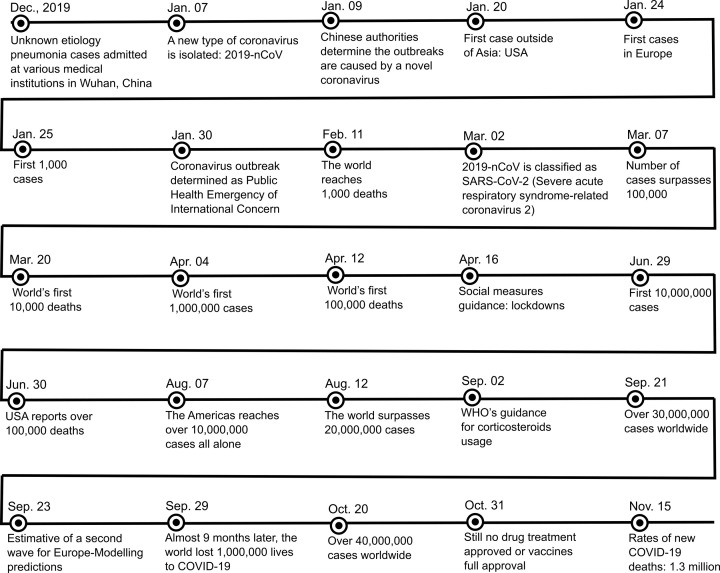
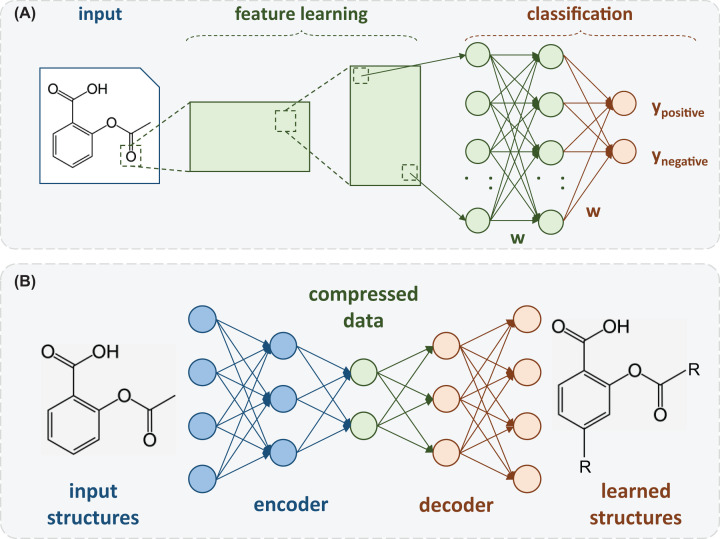
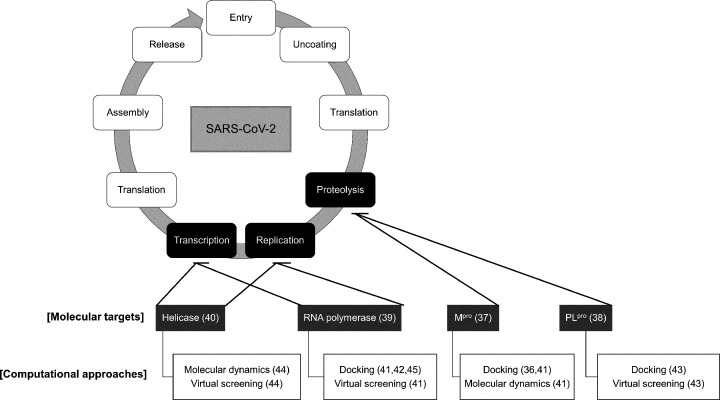
Since the emergence of the new severe acute respiratory syndrome-related coronavirus 2 (SARS-CoV-2) at the end of December 2019 in China, and with the urge of the coronavirus disease 2019 (COVID-19) pandemic, there have been huge efforts of many research teams and governmental institutions worldwide to mitigate the current scenario. Reaching more than 1,377,000 deaths in the world and still with a growing number of infections, SARS-CoV-2 remains a critical issue for global health and economic systems, with an urgency for available therapeutic options. In this scenario, as drug repurposing and discovery remains a challenge, computer-aided drug design (CADD) approaches, including machine learning (ML) techniques, can be useful tools to the design and discovery of novel potential antiviral inhibitors against SARS-CoV-2. In this work, we describe and review the current knowledge on this virus and the pandemic, the latest strategies and computational approaches applied to search for treatment options, as well as the challenges to overcome COVID-19.
自 2019 年 12 月底中国出现新型严重急性呼吸综合征相关冠状病毒 2(SARS-CoV-2)以来,随着 2019 年冠状病毒病(COVID-19)大流行的迫切需要,全球许多研究团队和政府机构都做出了巨大努力来缓解当前的局面。全球已有超过 137.7 万人死亡,感染人数仍在不断增加,SARS-CoV-2 仍然是全球健康和经济体系的一个重大问题,急需现有治疗选择。在这种情况下,由于药物重新定位和发现仍然是一个挑战,计算机辅助药物设计(CADD)方法,包括机器学习(ML)技术,可以成为设计和发现新型潜在抗 SARS-CoV-2 抗病毒抑制剂的有用工具。在这项工作中,我们描述和回顾了有关该病毒和大流行的最新知识,以及用于寻找治疗选择的最新策略和计算方法,以及克服 COVID-19 所面临的挑战。