Department of Pharmacology and Toxicology, University of Toronto, Toronto, ON, M5S 1A8, Canada.
Centre for Addiction and Mental Health, Toronto, ON, M5T 1R8, Canada.
Sci Rep. 2021 Feb 25;11(1):4523. doi: 10.1038/s41598-021-84071-6.
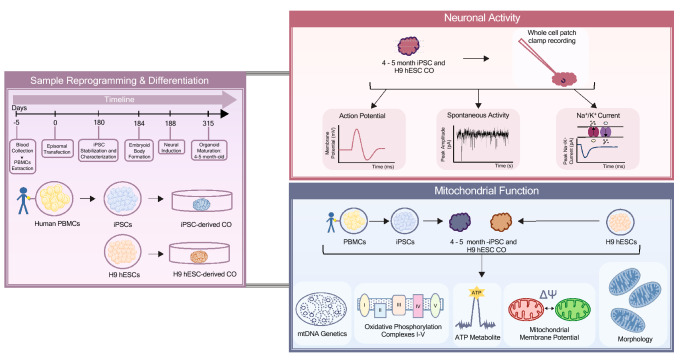
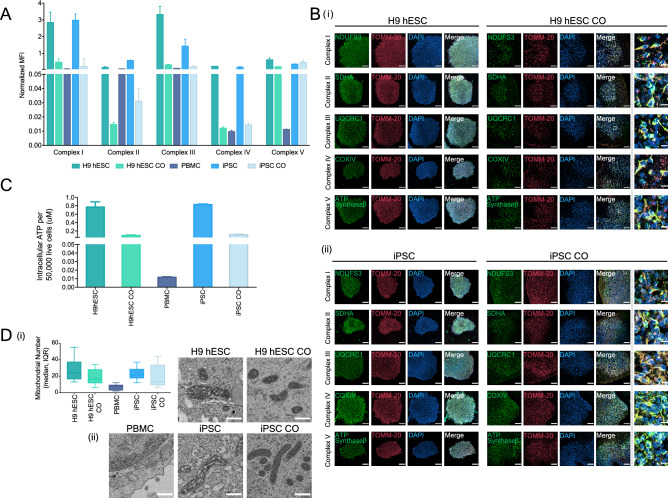
Mitochondrial health plays a crucial role in human brain development and diseases. However, the evaluation of mitochondrial health in the brain is not incorporated into clinical practice due to ethical and logistical concerns. As a result, the development of targeted mitochondrial therapeutics remains a significant challenge due to the lack of appropriate patient-derived brain tissues. To address these unmet needs, we developed cerebral organoids (COs) from induced pluripotent stem cells (iPSCs) derived from human peripheral blood mononuclear cells (PBMCs) and monitored mitochondrial health from the primary, reprogrammed and differentiated stages. Our results show preserved mitochondrial genetics, function and treatment responses across PBMCs to iPSCs to COs, and measurable neuronal activity in the COs. We expect our approach will serve as a model for more widespread evaluation of mitochondrial health relevant to a wide range of human diseases using readily accessible patient peripheral (PBMCs) and stem-cell derived brain tissue samples.
线粒体健康在人类大脑发育和疾病中起着至关重要的作用。然而,由于伦理和后勤方面的考虑,线粒体健康的评估并未纳入临床实践。因此,由于缺乏合适的患者来源的脑组织,靶向线粒体治疗的发展仍然是一个重大挑战。为了解决这些未满足的需求,我们从人外周血单核细胞(PBMCs)衍生的诱导多能干细胞(iPSCs)中开发了大脑类器官(COs),并从原始、重编程和分化阶段监测线粒体健康。我们的结果表明,线粒体遗传学、功能和对 COs 的治疗反应在 PBMCs 到 iPSCs 到 COs 中得到了保留,并且在 COs 中可测量到神经元活动。我们预计我们的方法将成为使用更容易获得的患者外周(PBMCs)和干细胞衍生的脑组织样本,对与广泛的人类疾病相关的线粒体健康进行更广泛评估的模型。