Alqahtani Felwah, Winn Andrea, Orji Rita
Faculty of Computer Science, Dalhousie University, Halifax, NS, Canada.
Faculty of Computer Science, King Khalid University, Abha, Saudi Arabia.
JMIR Form Res. 2021 Feb 26;5(2):e18172. doi: 10.2196/18172.
Recent advances in mobile technology have created opportunities to develop mobile apps to aid and assist people in achieving various health and wellness goals. Mental health apps hold significant potential to assist people affected by various mental health issues at any time they may need it, considering the ubiquitous nature of mobile phones. However, there is a need for research to explore and understand end users' perceptions, needs, and concerns with respect to such technologies.
The aim of this paper is to explore the opinions, perceptions, preferences, and experiences of people who have experienced some form of mental health issues based on self-diagnosis to inform the design of a next-generation mental health app that would be substantially more engaging and effective than the currently available apps to improve mental health and well-being.
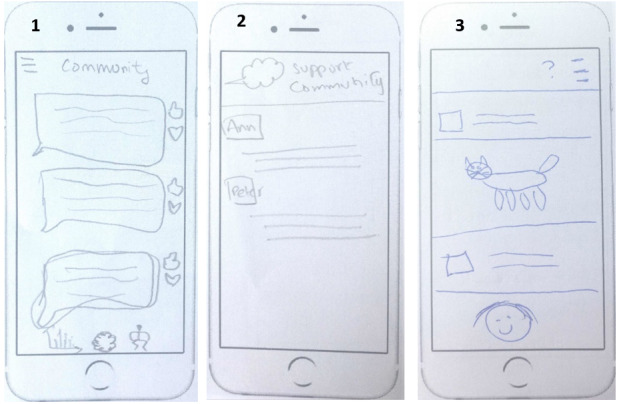
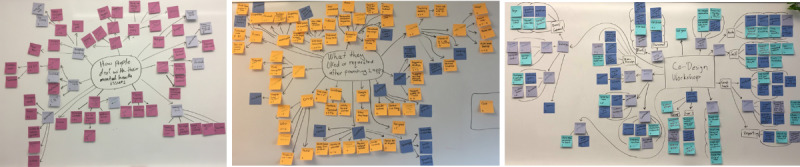
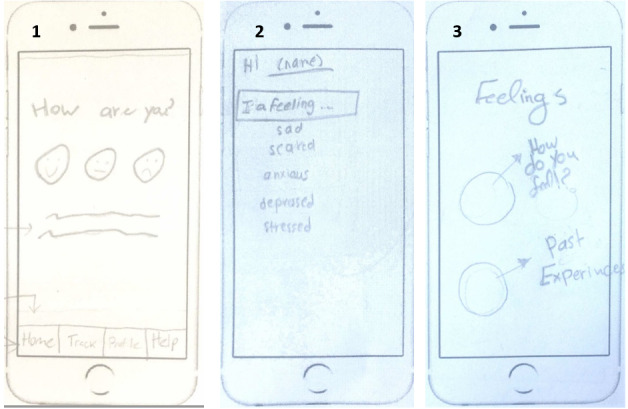
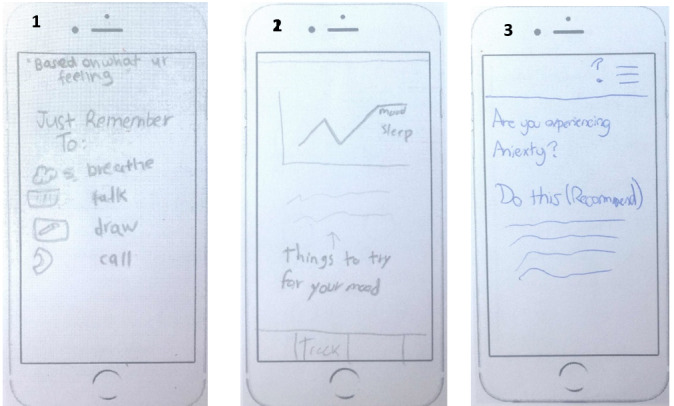
We conducted six focus group sessions with people who had experienced mental health issues based on self-diagnosis (average age 26.7 years, SD 23.63; 16/32, 50% male; 16/32, 50% female). We asked participants about their experiences with mental health issues and their viewpoints regarding two existing mental health apps (the Happify app and the Self-Help Anxiety Management app). Finally, participants were engaged in a design session where they each sketched a design for their ideal mental health and well-being mobile app.
Our findings revealed that participants used strategies to deal with their mental health issues: doing something to distract themselves from their current negative mood, using relaxation exercises and methods to relieve symptoms, interacting with others to share their issues, looking for an external source to solve their problems, and motivating themselves by repeating motivational sentences to support themselves or by following inspirational people. Moreover, regarding the design of mental health apps, participants identified that general design characteristics; personalization of the app, including tracking and feedback, live support, and social community; and providing motivational content and relaxation exercises are the most important features that users want in a mental health app. In contrast, games, relaxation audio, the Google map function, personal assistance to provide suggestions, goal setting, and privacy preservation were surprisingly the least requested features.
Understanding end users' needs and concerns about mental health apps will inform the future design of mental health apps that are useful to and used by many people.
移动技术的最新进展为开发移动应用程序创造了机会,以帮助人们实现各种健康和保健目标。考虑到手机的普及性,心理健康应用程序在人们随时可能需要时,具有协助受各种心理健康问题影响的人的巨大潜力。然而,需要进行研究来探索和了解终端用户对这类技术的看法、需求和担忧。
本文旨在探讨基于自我诊断经历过某种形式心理健康问题的人群的意见、看法、偏好和体验,为下一代心理健康应用程序的设计提供参考,该应用程序将比现有应用程序更具吸引力和有效性,以改善心理健康和幸福感。
我们与基于自我诊断经历过心理健康问题的人群进行了六次焦点小组会议(平均年龄26.7岁,标准差23.63;32人中有16人,50%为男性;32人中有16人,50%为女性)。我们询问了参与者他们在心理健康问题方面的经历以及他们对两款现有心理健康应用程序(Happify应用程序和自助焦虑管理应用程序)的看法。最后,参与者参与了一个设计环节,他们各自为理想的心理健康和幸福移动应用程序绘制了设计图。
我们的研究结果表明,参与者使用策略来应对他们的心理健康问题:做一些事情来分散自己当前的负面情绪,使用放松练习和方法来缓解症状,与他人互动以分享他们的问题,寻找外部资源来解决他们的问题,以及通过重复激励性语句来支持自己或追随鼓舞人心的人来激励自己。此外,关于心理健康应用程序的设计,参与者确定一般设计特征;应用程序的个性化,包括跟踪和反馈、实时支持和社交社区;以及提供激励性内容和放松练习是用户在心理健康应用程序中最想要的最重要功能。相比之下,游戏、放松音频、谷歌地图功能、提供建议的个人协助、目标设定和隐私保护出人意料地是最不受欢迎的功能。
了解终端用户对心理健康应用程序的需求和担忧将为未来设计对许多人有用且被许多人使用的心理健康应用程序提供参考。