School of Psychological Sciences, Monash University, Melbourne, Australia.
Center for Information and Neural Networks (CiNet), National Institute of Information and Communications Technology (NICT), Osaka, Japan.
PLoS Comput Biol. 2021 Feb 26;17(2):e1008722. doi: 10.1371/journal.pcbi.1008722. eCollection 2021 Feb.
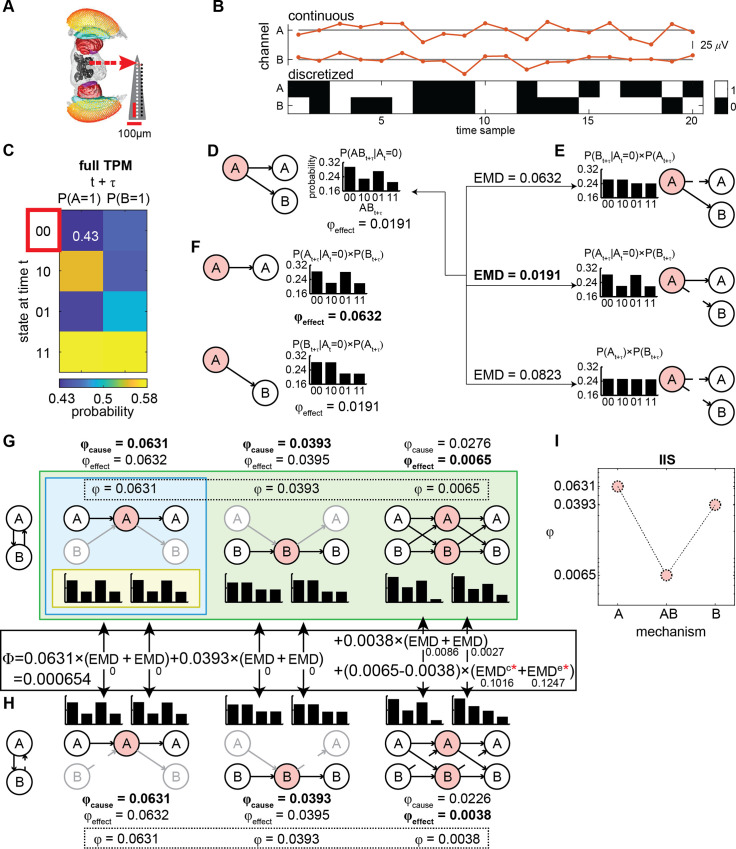
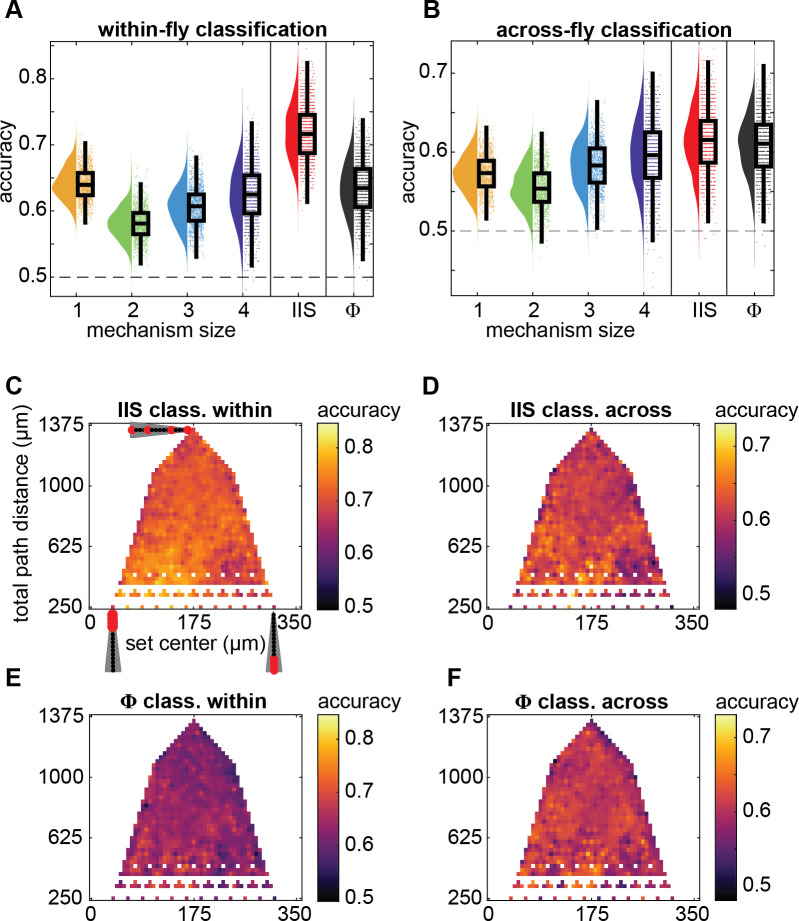
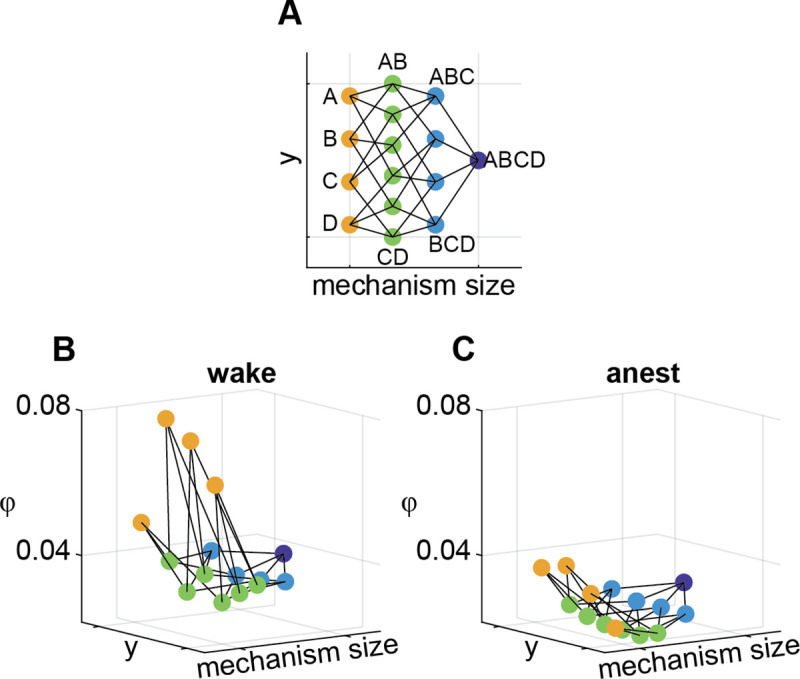
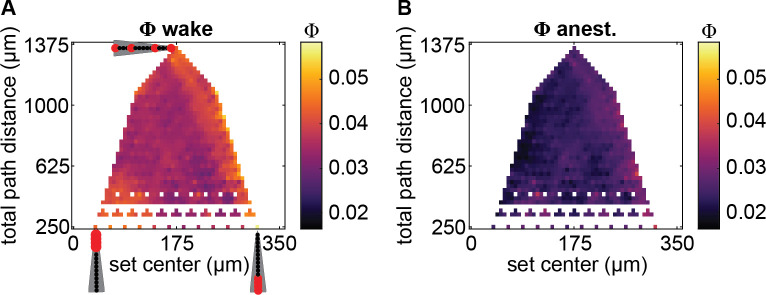
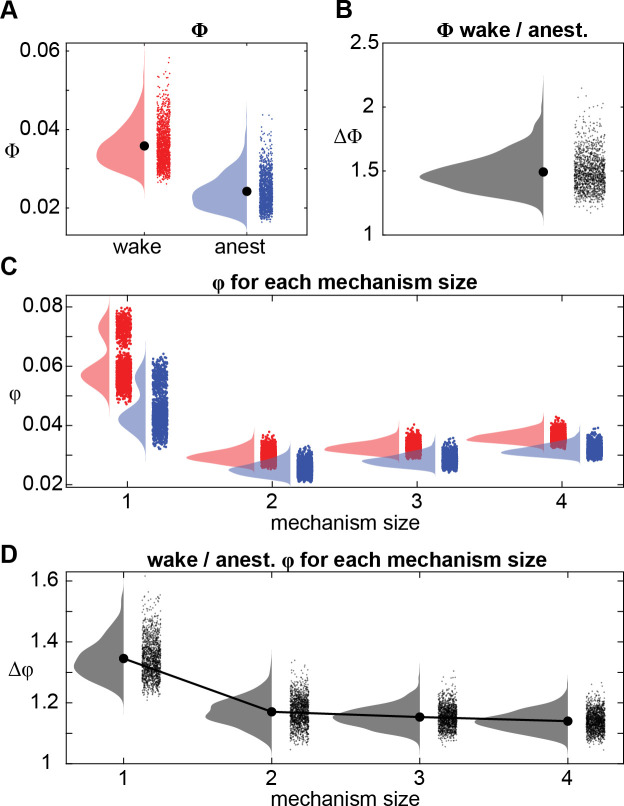
The physical basis of consciousness remains one of the most elusive concepts in current science. One influential conjecture is that consciousness is to do with some form of causality, measurable through information. The integrated information theory of consciousness (IIT) proposes that conscious experience, filled with rich and specific content, corresponds directly to a hierarchically organised, irreducible pattern of causal interactions; i.e. an integrated informational structure among elements of a system. Here, we tested this conjecture in a simple biological system (fruit flies), estimating the information structure of the system during wakefulness and general anesthesia. Consistent with this conjecture, we found that integrated interactions among populations of neurons during wakefulness collapsed to isolated clusters of interactions during anesthesia. We used classification analysis to quantify the accuracy of discrimination between wakeful and anesthetised states, and found that informational structures inferred conscious states with greater accuracy than a scalar summary of the structure, a measure which is generally championed as the main measure of IIT. In stark contrast to a view which assumes feedforward architecture for insect brains, especially fly visual systems, we found rich information structures, which cannot arise from purely feedforward systems, occurred across the fly brain. Further, these information structures collapsed uniformly across the brain during anesthesia. Our results speak to the potential utility of the novel concept of an "informational structure" as a measure for level of consciousness, above and beyond simple scalar values.
意识的物理基础仍然是当前科学中最难以捉摸的概念之一。有一种有影响力的推测认为,意识与某种形式的因果关系有关,可以通过信息来衡量。意识的综合信息理论(IIT)提出,有意识的体验充满了丰富和具体的内容,与一个层次化的、不可约的因果相互作用模式直接对应;即系统元素之间的综合信息结构。在这里,我们在一个简单的生物系统(果蝇)中检验了这一推测,估计了系统在清醒和全身麻醉期间的信息结构。与这一推测一致的是,我们发现,在清醒状态下,神经元群体之间的综合相互作用在麻醉期间崩溃为孤立的相互作用簇。我们使用分类分析来量化清醒和麻醉状态之间区分的准确性,发现推断出的意识状态的信息结构比结构的标量总结更准确,这是一般被认为是 IIT 的主要衡量标准的量度。与假设昆虫大脑(尤其是果蝇视觉系统)具有前馈结构的观点形成鲜明对比的是,我们发现了丰富的信息结构,这些信息结构不可能仅由前馈系统产生,而是出现在整个果蝇大脑中。此外,这些信息结构在麻醉过程中均匀地在整个大脑中崩溃。我们的结果表明,作为衡量意识水平的一种“信息结构”的新概念具有潜在的效用,超过了简单的标量值。