Student Research Committee, School of Public Health and Safety, Shahid Beheshti University of Medical Sciences, Tehran, Iran.
School of Public Health and Safety, Shahid Beheshti University of Medical Sciences, Tehran, Iran.
Asian Pac J Cancer Prev. 2021 Feb 1;22(2):325-332. doi: 10.31557/APJCP.2021.22.2.325.
Amorphous silicon dioxide (A-SiO2) is abundant in the Earth's crust, the A-SiO2 nano and microparticles are released into the air through industrial and manufacturing activities. Due to the limited available toxicological information, the objective of the present study was to evaluate the toxicity of different sizes of A-SiO2 particles on the A549 cell-lines in an in vitro study.
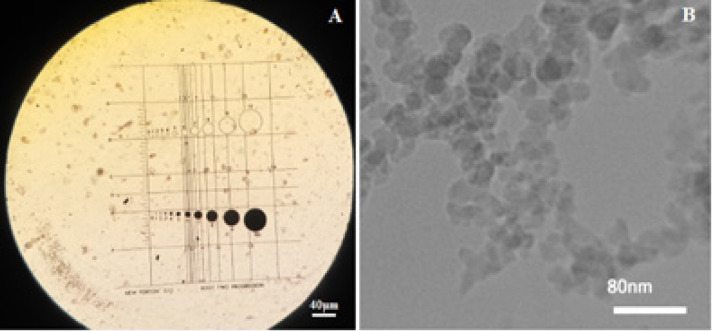
The A-SiO2 particles in two categories of nano (10-100 nm) and micro (< 5um) were used in this study. The human lung A549 cell-line was exposed to either nano- or micro-sized A-SiO2 particles at 10, 50, 100, and 250 μg/ml, and the effects were investigated.
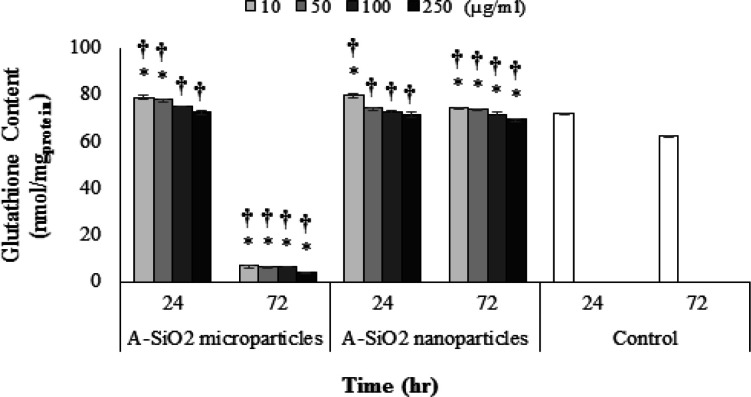
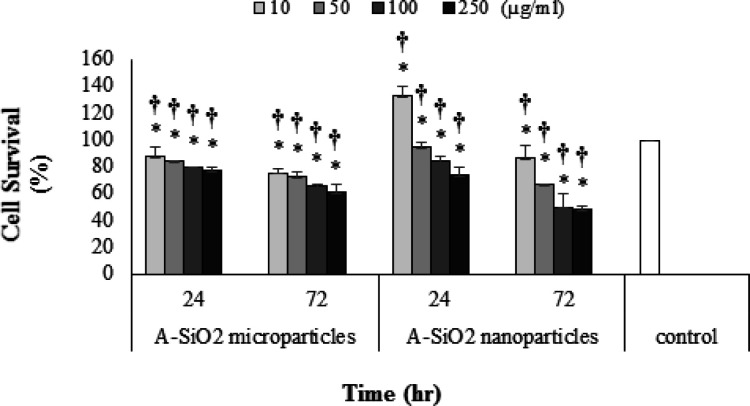
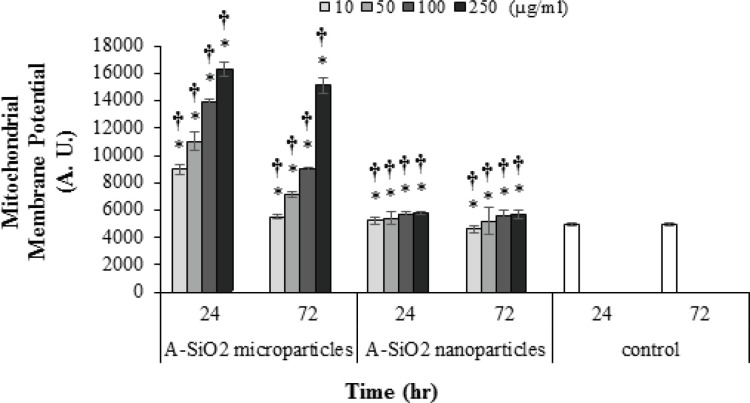
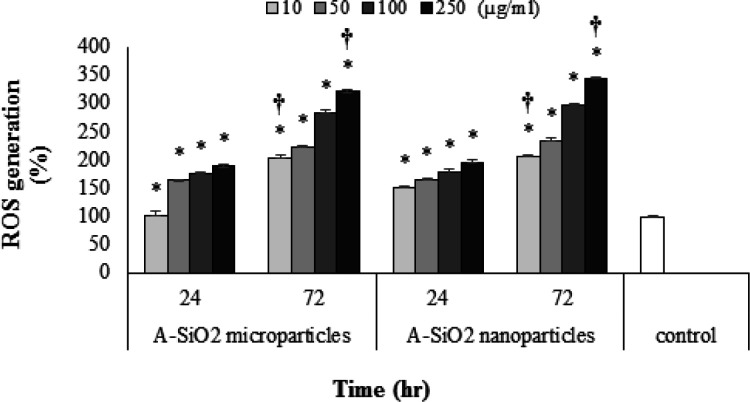
The cytotoxicity of A-SiO2 nano and microparticles in both 24- and 72-hour exposure times resulted in decreased cell survival, mitochondrial membrane potential, and increased ROS generation which was concentration-time dependent (P <0.05) but glutathione content was not affected in a time-dependent manner. Cytotoxicity of nanoparticles, contrary to the previous study, was not higher than microparticles in the comparable dose and exposure times.
The rate of ROS generation in the A549 cell-line exposed to A-SiO2 nanoparticles was higher than microparticles. And at the same time, cell survival for exposed cells to A-SiO2 nano and microparticles were higher for nanoparticles in shorter exposure periods and was inversely concentration- and time-dependent. Further studies on exploring the effect of size and its possible toxic mechanism are recommended to achieve a more credible risk assessment.
非晶态二氧化硅(A-SiO2)在地壳中含量丰富,A-SiO2纳米和微粒子通过工业和制造活动释放到空气中。由于毒理学信息有限,本研究的目的是评估不同尺寸的 A-SiO2 颗粒对体外 A549 细胞系的毒性。
本研究使用了两类 A-SiO2 纳米颗粒(10-100nm)和微颗粒(<5μm)。将人肺 A549 细胞系暴露于纳米或微尺寸的 A-SiO2 颗粒中,浓度分别为 10、50、100 和 250μg/ml,并观察其效果。
A-SiO2 纳米和微颗粒在 24 小时和 72 小时暴露时间内的细胞毒性导致细胞存活率降低,线粒体膜电位降低,ROS 生成增加,呈浓度和时间依赖性(P<0.05),但谷胱甘肽含量无时间依赖性变化。与之前的研究相反,纳米颗粒的细胞毒性在可比剂量和暴露时间内并不高于微颗粒。
暴露于 A-SiO2 纳米颗粒的 A549 细胞系中 ROS 生成速率高于微颗粒。同时,暴露于 A-SiO2 纳米和微颗粒的细胞的细胞存活率在较短的暴露时间内对纳米颗粒更高,呈浓度和时间依赖性反比。建议进一步研究尺寸的影响及其可能的毒性机制,以实现更可信的风险评估。