Cameron Laura, Courchene Dave, Ijaz Sabina, Mauro Ian
Prairie Climate Centre, University of Winnipeg, 599 Portage Ave, Winnipeg, MB R3B 2G3 Canada.
Turtle Lodge, Sagkeeng First Nation, PO Box 1267, Pine Falls, MB R0E 1M0 Canada.
Clim Change. 2021;164(3):43. doi: 10.1007/s10584-021-03000-8. Epub 2021 Feb 15.
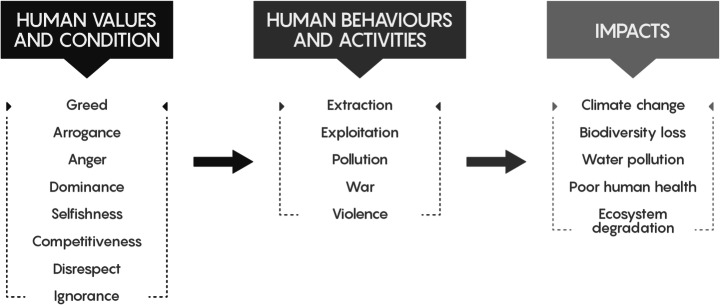
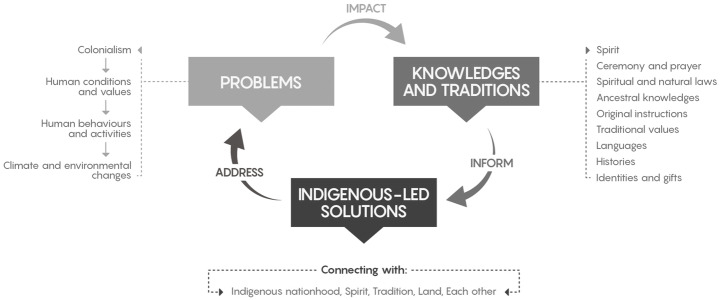
In June 2017, the Turtle Lodge Indigenous knowledge centre convened the Onjisay Aki International Climate Summit, an unparalleled opportunity for cross-cultural dialogue on climate change with environmental leaders and Indigenous Knowledge Keepers from 14 Nations around the world. In collaboration with Turtle Lodge, the Prairie Climate Centre was invited to support the documentation and communication of knowledge shared at the Summit. This process of Indigenous-led community-based research took an inter-epistemological approach, using roundtable discussions within a ceremonial context and collaborative written and video methods. The Summit brought forward an understanding of climate change as a symptom of a much larger problem with how colonialism has altered the human condition. The Knowledge Keepers suggested that, in order to effectively address climate change, humanity needs a shift in values and behaviours that ground our collective existence in a balanced relationship with the natural world and its laws. They emphasized that their diverse knowledges and traditions can provide inspiration and guidance for this cultural shift. This underscores the need for a new approach to engaging with Indigenous knowledge in climate research, which acknowledges it not only as a source of environmental observations, but a wealth of values, philosophies, and worldviews which can inform and guide action and research more broadly. In this light, Onjisay Aki makes significant contributions to the literature on Indigenous knowledge on climate change in Canada and internationally, as well as the ways in which this knowledge is gathered, documented, and shared through the leadership of the Knowledge Keepers.
The online version contains supplementary material available at 10.1007/s10584-021-03000-8.
2017年6月,龟屋原住民知识中心召开了翁吉赛阿基国际气候峰会,这是一个与来自全球14个国家的环境领袖和原住民知识守护者就气候变化进行跨文化对话的绝佳机会。草原气候中心与龟屋合作,受邀支持对峰会上分享的知识进行记录和传播。这个由原住民主导的基于社区的研究过程采用了跨认识论方法,在仪式背景下进行圆桌讨论,并采用协作式书面和视频方法。峰会提出了一种理解,即气候变化是殖民主义如何改变人类状况这一更大问题的一个症状。知识守护者们表示,为了有效应对气候变化,人类需要价值观和行为的转变,使我们的集体生存基于与自然世界及其规律的平衡关系。他们强调,他们多样的知识和传统可以为这种文化转变提供灵感和指导。这凸显了在气候研究中采用新方法来运用原住民知识的必要性,这种方法不仅承认它是环境观测的来源,更是丰富的价值观、哲学和世界观的宝库,能够更广泛地为行动和研究提供信息并加以指导。有鉴于此,翁吉赛阿基对加拿大和国际上关于原住民气候变化知识的文献,以及通过知识守护者的引领来收集、记录和分享这些知识的方式做出了重大贡献。
在线版本包含可在10.1007/s10584 - 021 - 03000 - 8获取的补充材料。