Centre for Immunobiology, University of Glasgow, Glasgow, G12 8TA, United Kingdom.
Department of Biochemistry and Genetics, La Trobe Institute for Molecular Science, La Trobe University, VIC 3083, Melbourne, Australia.
Proc Natl Acad Sci U S A. 2021 Mar 9;118(10). doi: 10.1073/pnas.2009579118.
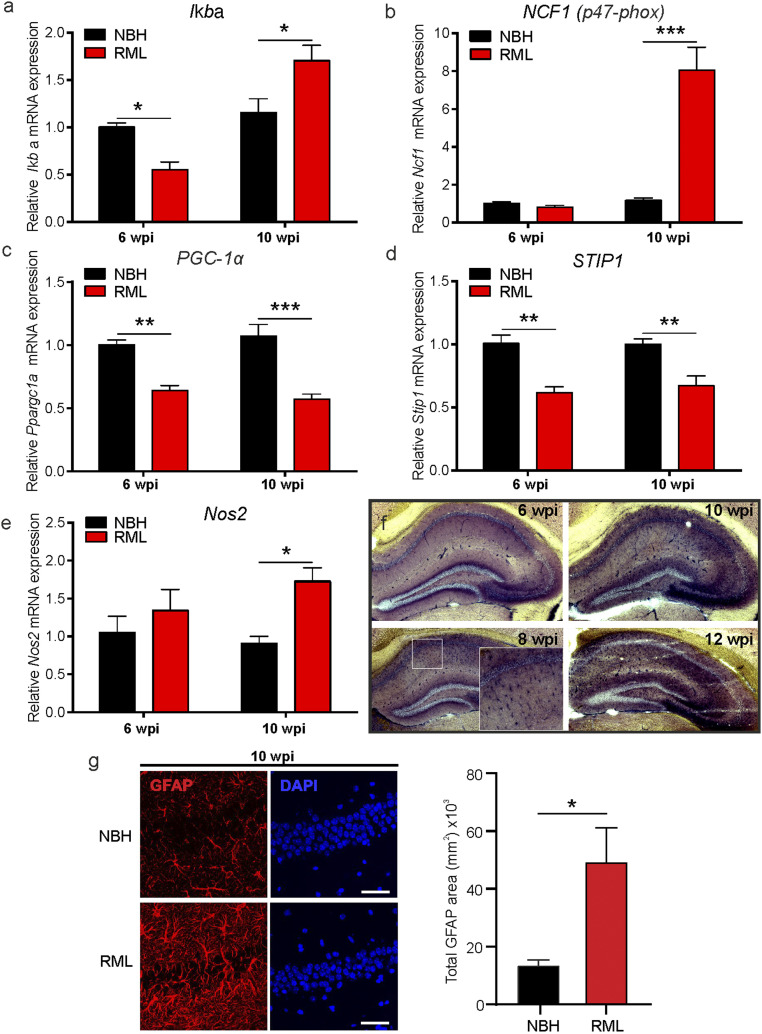
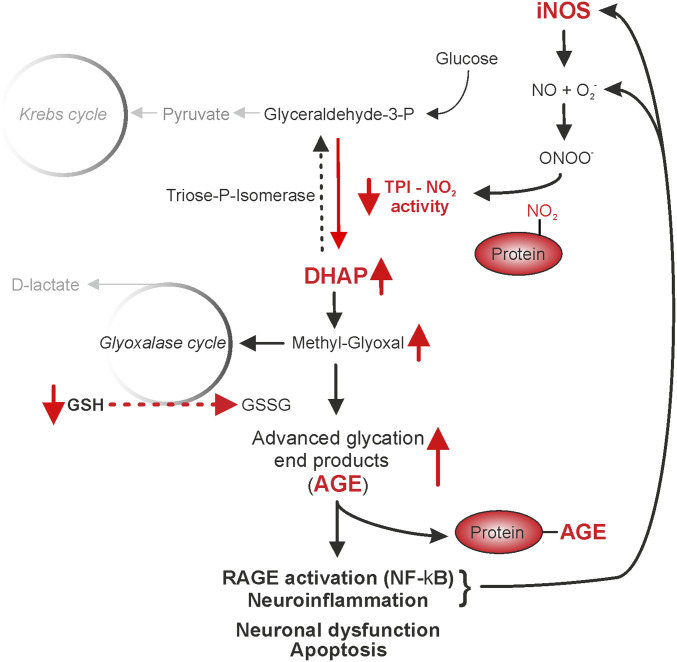
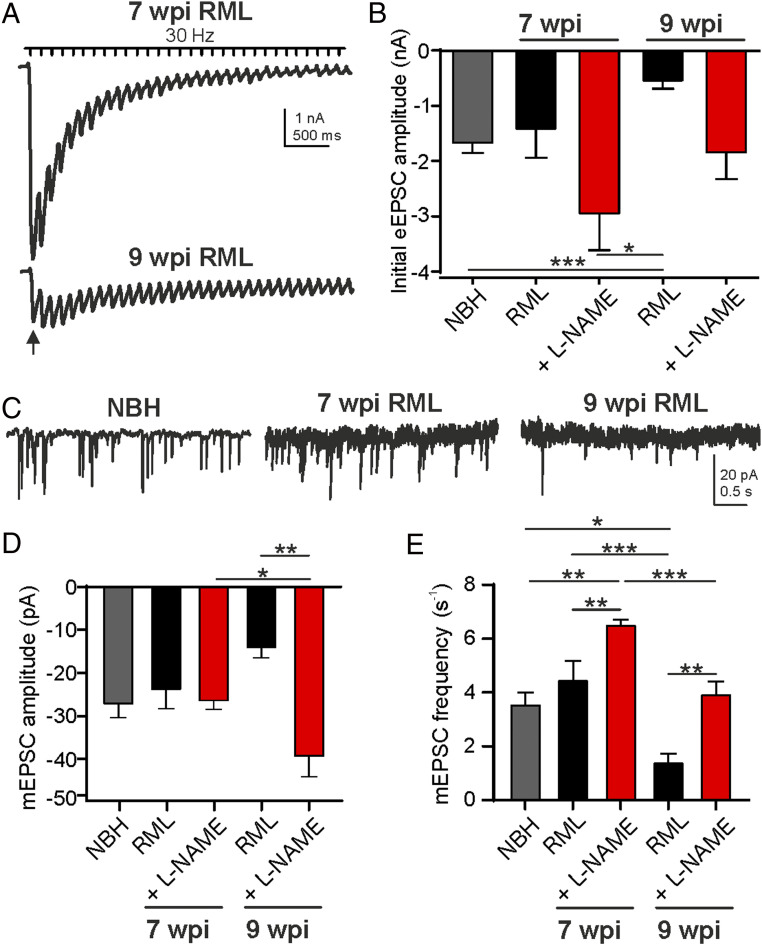
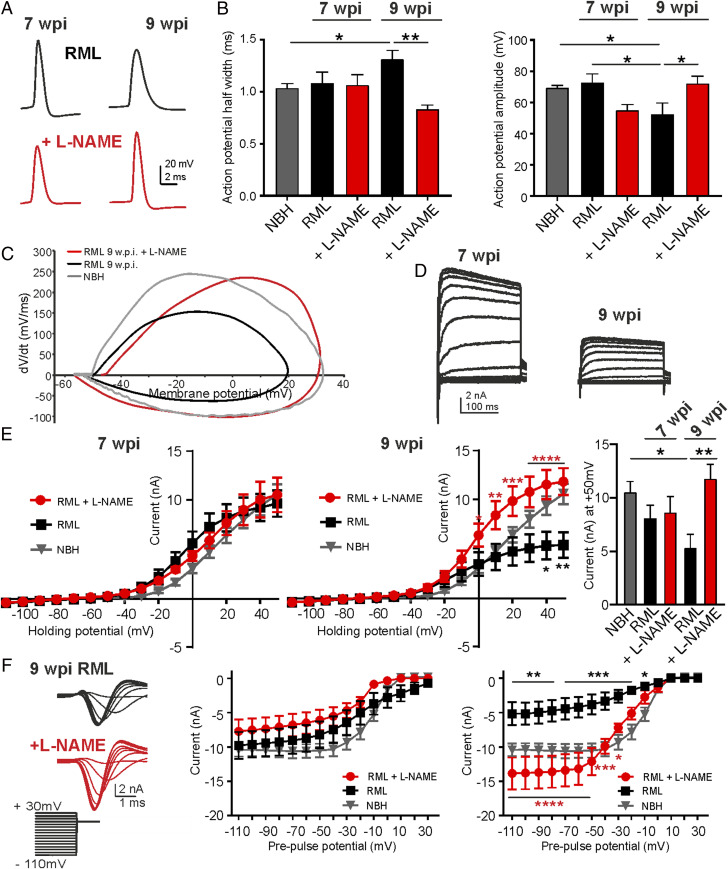
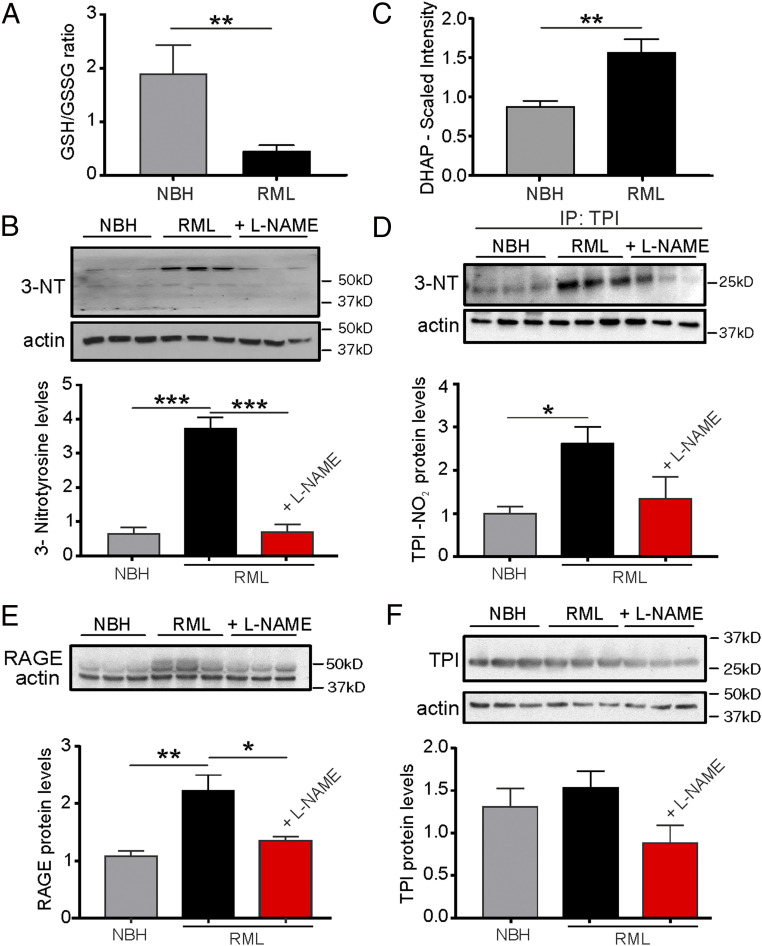
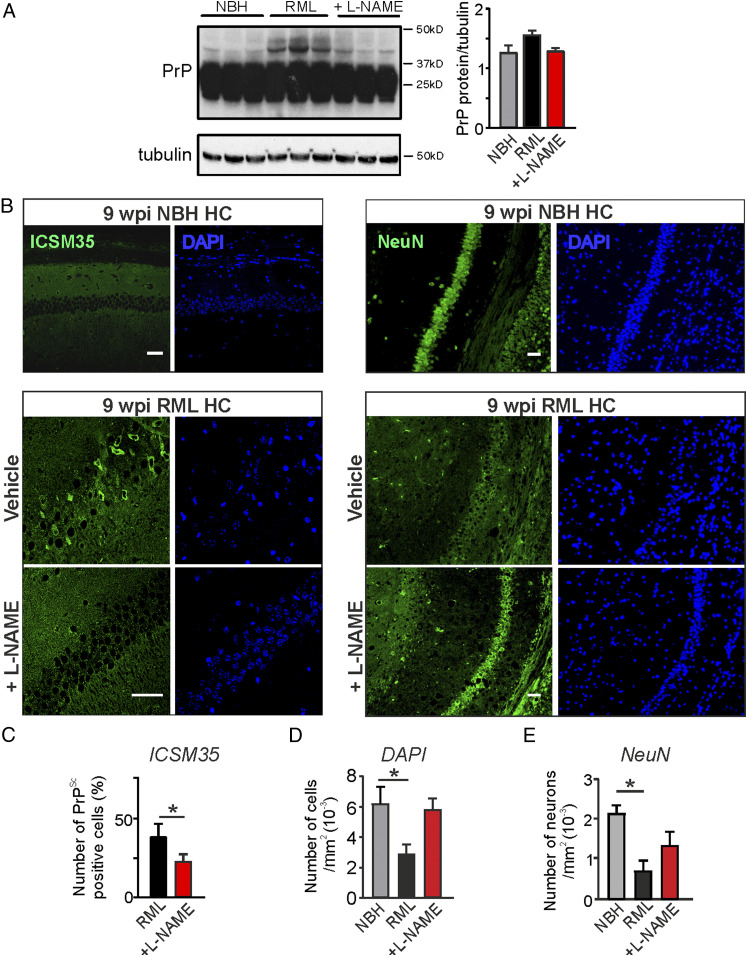
Several neurodegenerative diseases associated with protein misfolding (Alzheimer's and Parkinson's disease) exhibit oxidative and nitrergic stress following initiation of neuroinflammatory pathways. Associated nitric oxide (NO)-mediated posttranslational modifications impact upon protein functions that can exacerbate pathology. Nonenzymatic and irreversible glycation signaling has been implicated as an underlying pathway that promotes protein misfolding, but the direct interactions between both pathways are poorly understood. Here we investigated the therapeutic potential of pharmacologically suppressing neuroinflammatory NO signaling during early disease progression of prion-infected mice. Mice were injected daily with an NO synthase (NOS) inhibitor at early disease stages, hippocampal gene and protein expression levels of oxidative and nitrergic stress markers were analyzed, and electrophysiological characterization of pyramidal CA1 neurons was performed. Increased neuroinflammatory signaling was observed in mice between 6 and 10 wk postinoculation (w.p.i.) with scrapie prion protein. Their hippocampi were characterized by enhanced nitrergic stress associated with a decline in neuronal function by 9 w.p.i. Daily in vivo administration of the NOS inhibitor L-NAME between 6 and 9 w.p.i. at 20 mg/kg prevented the functional degeneration of hippocampal neurons in prion-diseased mice. We further found that this intervention in diseased mice reduced 3-nitrotyrosination of triose-phosphate isomerase, an enzyme involved in the formation of disease-associated glycation. Furthermore, L-NAME application led to a reduced expression of the receptor for advanced glycation end-products and the diminished accumulation of hippocampal prion misfolding. Our data suggest that suppressing neuroinflammatory NO signaling slows functional neurodegeneration and reduces nitrergic and glycation-associated cellular stress.
几种与蛋白质错误折叠相关的神经退行性疾病(阿尔茨海默病和帕金森病)在神经炎症途径启动后表现出氧化和硝化应激。相关的一氧化氮(NO)介导的翻译后修饰会影响蛋白质功能,从而加剧病理学。非酶促和不可逆的糖基化信号已被认为是促进蛋白质错误折叠的潜在途径,但这两条途径之间的直接相互作用知之甚少。在这里,我们研究了在朊病毒感染小鼠疾病早期进展过程中,通过药理学抑制神经炎症 NO 信号传递的治疗潜力。在疾病早期阶段,每天给小鼠注射一氧化氮合酶(NOS)抑制剂,分析氧化应激和硝化应激标志物的海马基因和蛋白表达水平,并对 CA1 锥体神经元进行电生理特性分析。在感染朊病毒蛋白后 6 至 10 周(w.p.i.),观察到小鼠的神经炎症信号增加。它们的海马区表现出增强的硝化应激,伴随着神经元功能下降,到 9 w.p.i.时更为明显。在 6 至 9 w.p.i.期间,每天以 20mg/kg 的剂量对患病小鼠进行体内给予 NOS 抑制剂 L-NAME,可以防止海马神经元的功能退化。我们进一步发现,这种干预措施可以减少糖基化相关疾病的 3-硝基酪氨酸化,该酶涉及三磷酸甘油醛异构酶的形成。此外,L-NAME 的应用导致晚期糖基化终产物受体的表达减少,以及海马朊病毒错误折叠的积累减少。我们的数据表明,抑制神经炎症 NO 信号传递可减缓功能神经退行性变,并减少硝化应激和糖基化相关的细胞应激。