Department of Systems Biology, Harvard Medical School, Boston, MA, 02115, USA.
Wyss Institute for Biologically Inspired Engineering at Harvard, Boston, MA, 02115, USA.
Sci Rep. 2021 Mar 2;11(1):4951. doi: 10.1038/s41598-021-84329-z.
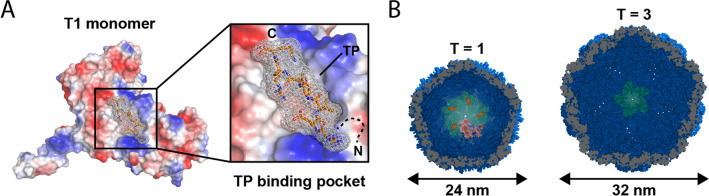
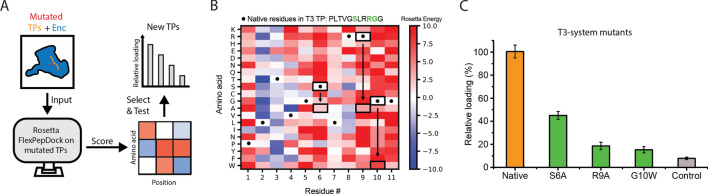
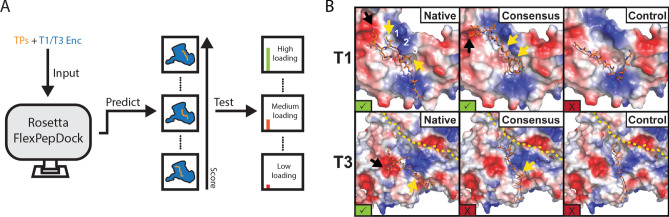
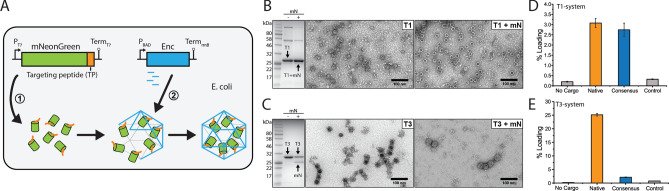
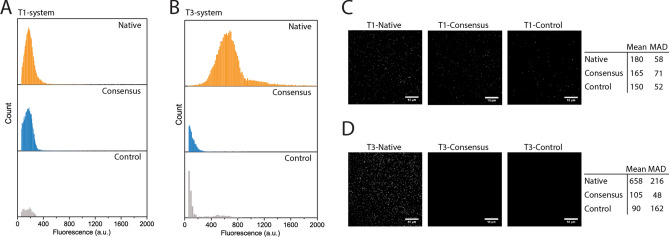
Encapsulins are recently discovered protein compartments able to specifically encapsulate cargo proteins in vivo. Encapsulation is dependent on C-terminal targeting peptides (TPs). Here, we characterize and engineer TP-shell interactions in the Thermotoga maritima and Myxococcus xanthus encapsulin systems. Using force-field modeling and particle fluorescence measurements we show that TPs vary in native specificity and binding strength, and that TP-shell interactions are determined by hydrophobic and ionic interactions as well as TP flexibility. We design a set of TPs with a variety of predicted binding strengths and experimentally characterize these designs. This yields a set of TPs with novel binding characteristics representing a potentially useful toolbox for future nanoreactor engineering aimed at controlling cargo loading efficiency and the relative stoichiometry of multiple concurrently loaded cargo proteins.
囊泡是最近发现的一种蛋白质隔室,能够在体内特异性地包裹货物蛋白。包裹是依赖于 C 末端靶向肽(TP)的。在这里,我们在 Thermotoga maritima 和 Myxococcus xanthus 囊泡系统中对 TP-壳相互作用进行了表征和工程改造。通过力场建模和粒子荧光测量,我们表明 TPs 在天然特异性和结合强度上存在差异,并且 TP-壳相互作用由疏水性和离子相互作用以及 TP 的灵活性决定。我们设计了一组具有各种预测结合强度的 TPs,并对这些设计进行了实验表征。这得到了一组具有新颖结合特性的 TPs,它们代表了未来用于控制货物加载效率和同时加载的多个货物蛋白的相对化学计量的纳米反应器工程的潜在有用工具包。