Department of Pharmacy, Beijing Anzhen Hospital, Capital Medical University, Beijing, 100029, People's Republic of China.
Department of Endocrinology and Metabolism, Beijing Anzhen Hospital, Capital Medical University, Beijing, 100029, People's Republic of China.
Drug Des Devel Ther. 2021 Feb 23;15:803-812. doi: 10.2147/DDDT.S288728. eCollection 2021.
As the primary immune cells, macrophages play a key role in atherosclerotic progression. M2 macrophage polarization has been reported to promote tissue repair and attenuate plaque formation upon the expression of anti-inflammatory factors. Convallatoxin (CNT) is a natural cardiac glycoside with anti-inflammatory pharmacological properties. However, whether CNT protects against atherosclerosis (AS) and underlying mechanisms is unknown. This work was designed to explore the potential effects of CNT on atherosclerosis.
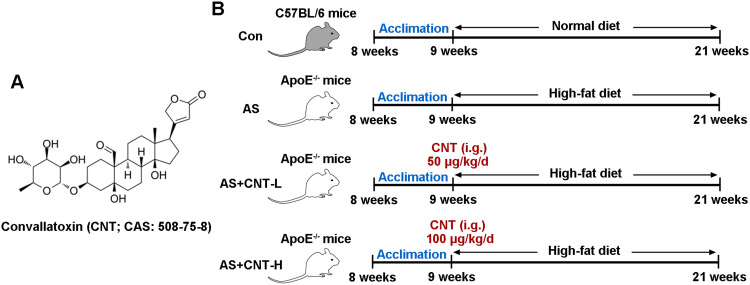
In this study, Apolipoprotein E deficiency (ApoE) mice fed with high-fat diet were established, and CNT (50 or 100 μg/kg) were intragastrically administrated for 12 weeks every day. In vitro, RAW264.7 macrophages stimulated with ox-LDL were treated with CNT (50 or 100 nM) for 24 h. The specific PPARγ antagonist, GW9662, was used to block the PPARγ signaling pathway in vitro. Then, the atherosclerotic lesions, macrophage polarization markers, inflammatory cytokines and PPARγ signaling pathway were examined in further examinations.
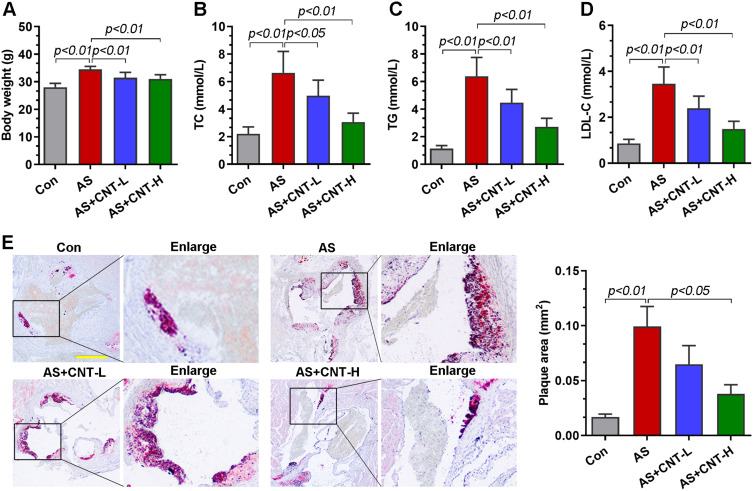
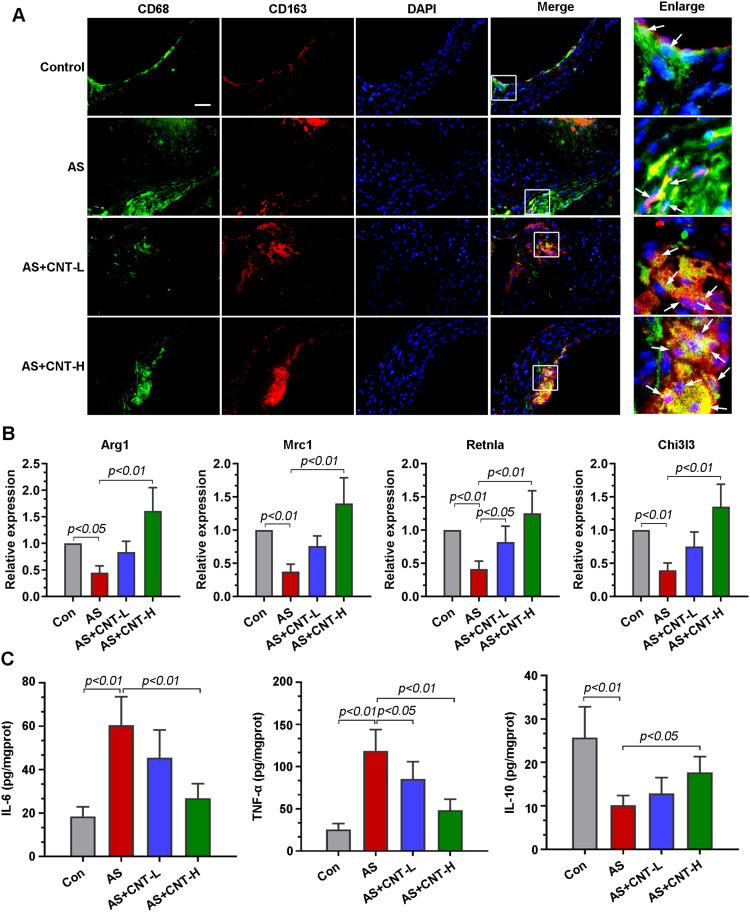
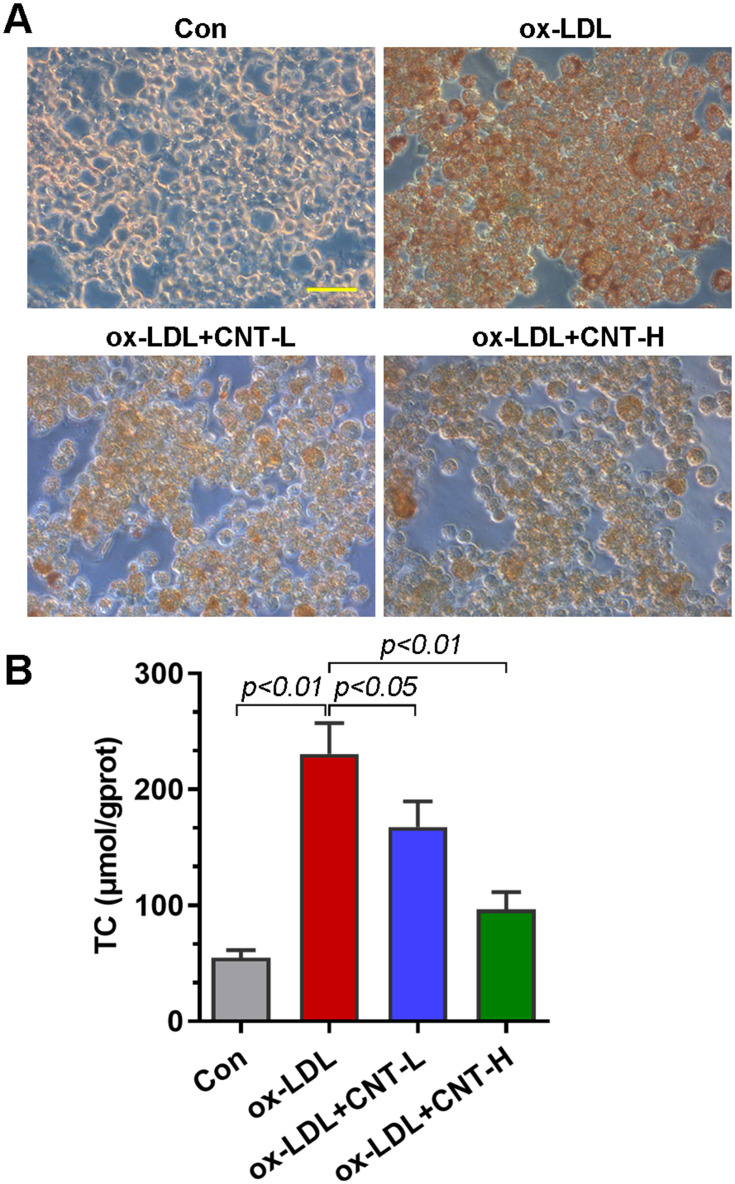
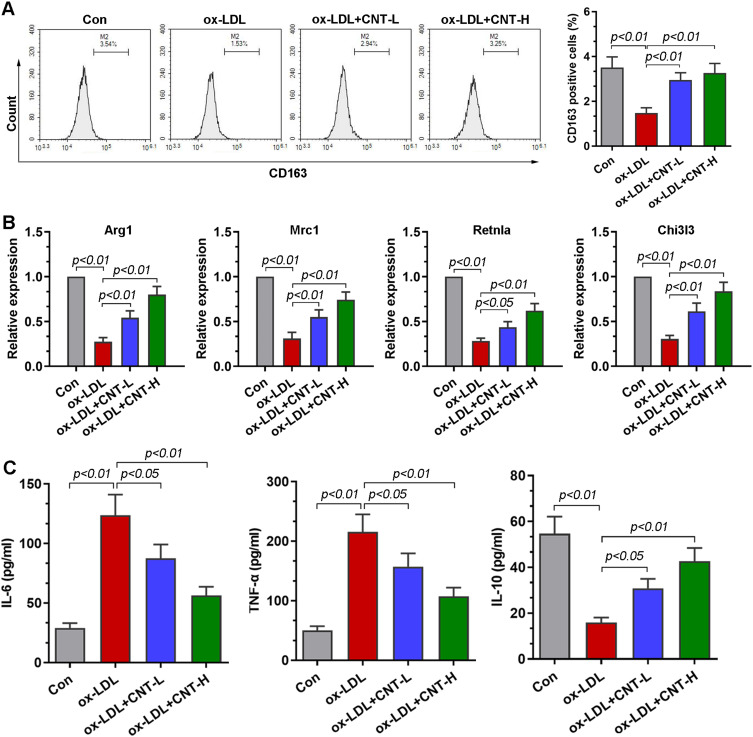
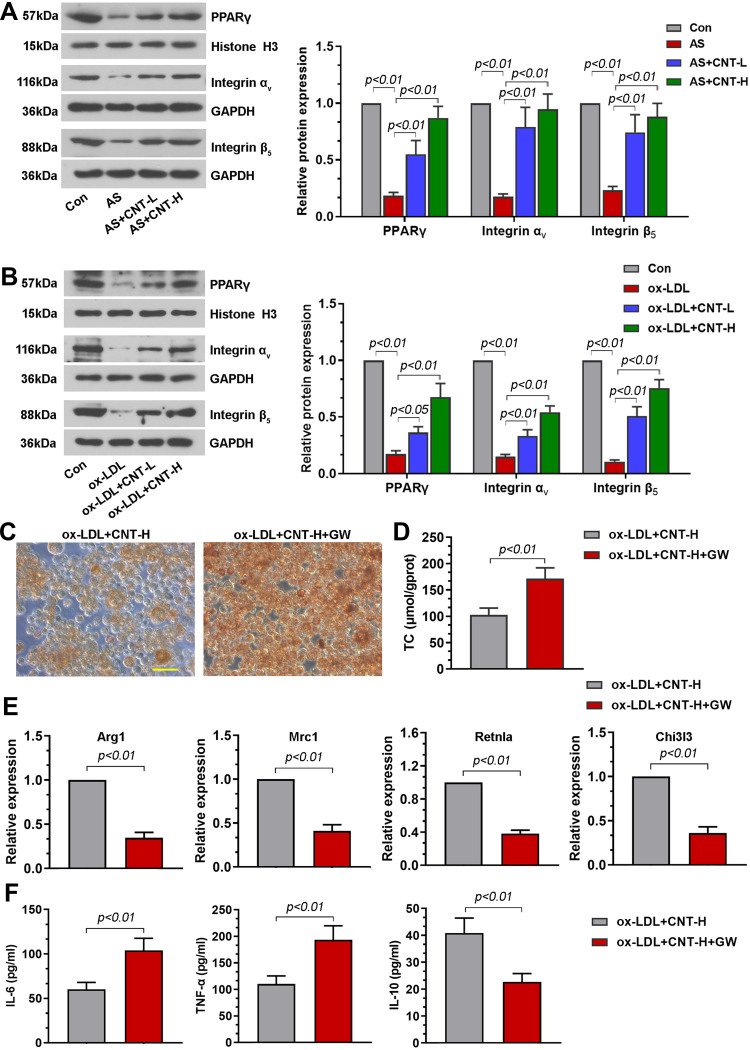
Our results showed that the atherosclerotic lesions were reduced by CNT, as demonstrated by the downregulation of serum lipid level and aortic plaque area in AS mice. Furthermore, we found that CNT treatment promoted the expression of M2 macrophage markers (Arg1, Mrc1, Retnla and Chi3l3), and decreased the levels of pro-inflammatory cytokines (IL-6 and TNF-α), accompanied by the increase of anti-inflammatory factor (IL-10) in aortic vessels of AS mice. In ox-LDL-induced RAW264.7 cells, CNT administration also facilitated macrophages polarizing towards M2 subtype and inhibited inflammatory responses. Furthermore, both the in vivo and in vitro experiments showed CNT could increase the expression of PPARγ, Integrin α and Integrin β, and GW9662 could block CNT-induced M2 macrophage polarization.
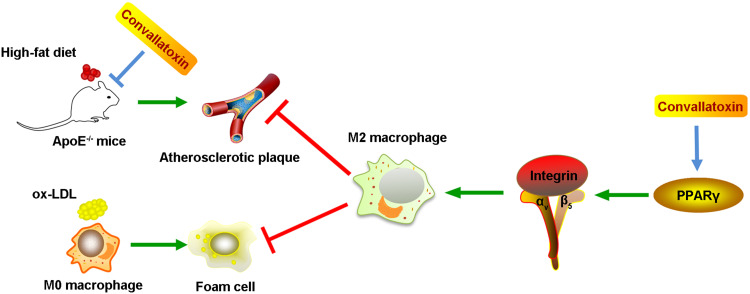
Taken together, these data suggest that CNT may promote M2 macrophage polarization to exert an anti-atherosclerotic effect, partially through activating PPARγ-Integrin αβ signaling pathway.
作为主要的免疫细胞,巨噬细胞在动脉粥样硬化的进展中起着关键作用。已经报道 M2 巨噬细胞极化通过表达抗炎因子促进组织修复和减轻斑块形成。铃兰毒苷(CNT)是一种具有抗炎药理作用的天然强心苷。然而,CNT 是否能预防动脉粥样硬化(AS)以及潜在机制尚不清楚。本工作旨在探讨 CNT 对动脉粥样硬化的潜在作用。
本研究建立了载脂蛋白 E 缺陷(ApoE)小鼠高脂饮食喂养模型,每天给予 CNT(50 或 100μg/kg)灌胃 12 周。体外,用 ox-LDL 刺激 RAW264.7 巨噬细胞,用 CNT(50 或 100nM)处理 24 小时。体外实验中用特异性过氧化物酶体增殖物激活受体γ(PPARγ)拮抗剂 GW9662 阻断 PPARγ 信号通路。然后进一步检测动脉粥样硬化病变、巨噬细胞极化标志物、炎症细胞因子和 PPARγ 信号通路。
结果表明,CNT 可减少动脉粥样硬化病变,表现为 AS 小鼠血清脂质水平和主动脉斑块面积降低。此外,我们发现 CNT 处理促进了 M2 巨噬细胞标志物(Arg1、Mrc1、Retnla 和 Chi3l3)的表达,降低了促炎细胞因子(IL-6 和 TNF-α)的水平,并伴有 AS 小鼠主动脉中抗炎因子(IL-10)的增加。在 ox-LDL 诱导的 RAW264.7 细胞中,CNT 给药也促进了巨噬细胞向 M2 亚型极化,并抑制了炎症反应。此外,体内和体外实验均表明 CNT 可增加 PPARγ、整合素α和整合素β的表达,GW9662 可阻断 CNT 诱导的 M2 巨噬细胞极化。
综上所述,这些数据表明 CNT 可能通过激活 PPARγ-整合素αβ信号通路促进 M2 巨噬细胞极化发挥抗动脉粥样硬化作用。