Institute of Biomedical Ethics and History of Medicine, University of Zurich, Zürich, Switzerland.
PLoS One. 2021 Mar 3;16(3):e0247642. doi: 10.1371/journal.pone.0247642. eCollection 2021.
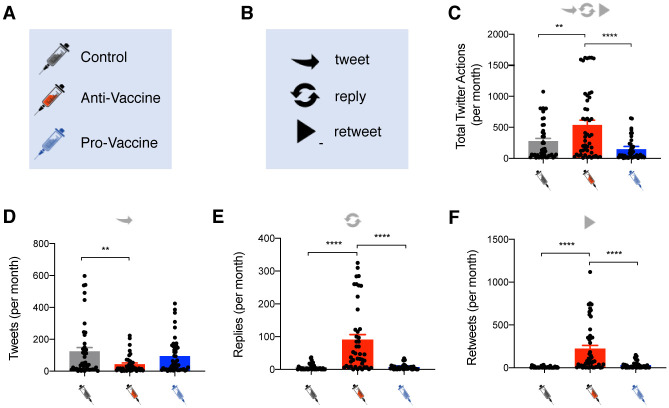
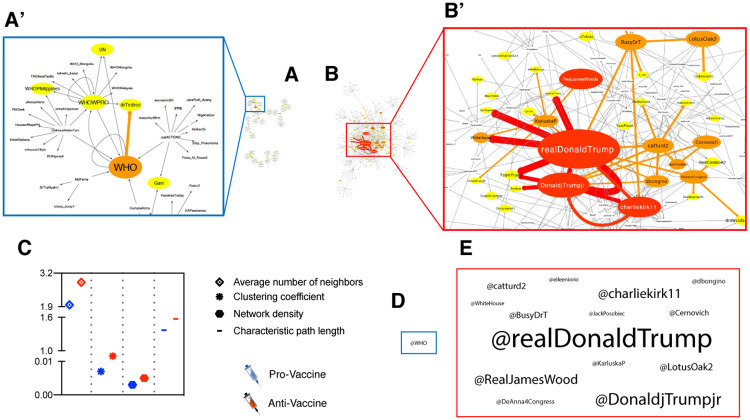
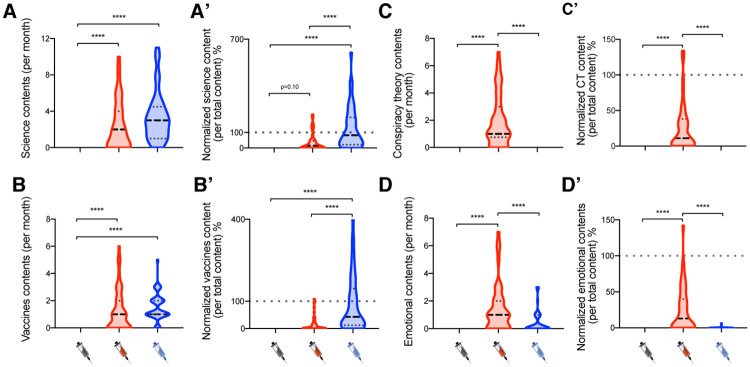
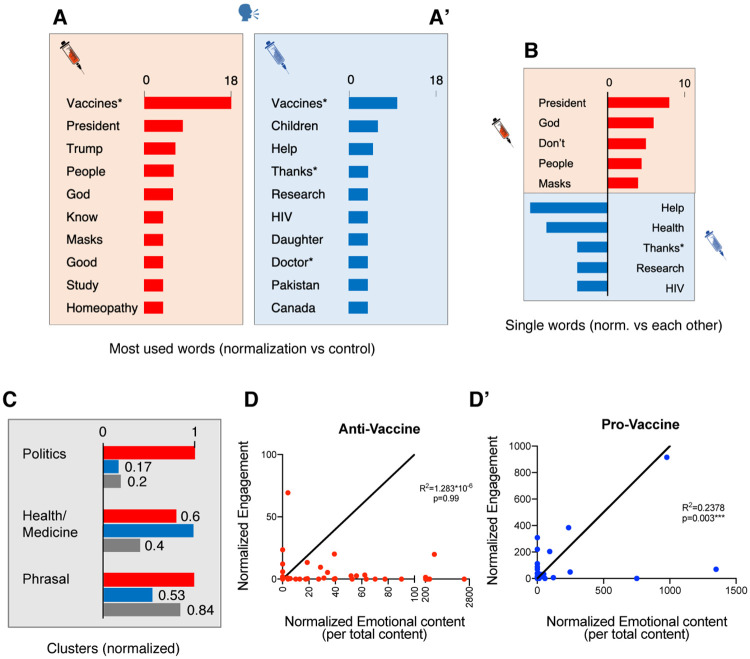
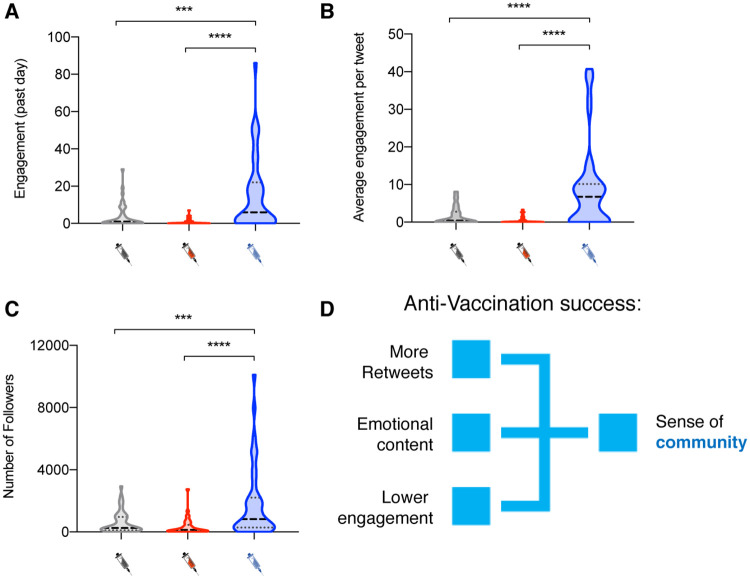
Vaccinations are without doubt one of the greatest achievements of modern medicine, and there is hope that they can constitute a solution to halt the ongoing COVID-19 pandemic. However, the anti-vaccination movement is currently on the rise, spreading online misinformation about vaccine safety and causing a worrying reduction in vaccination rates worldwide. In this historical time, it is imperative to understand the reasons of vaccine hesitancy, and to find effective strategies to dismantle the rhetoric of anti-vaccination supporters. For this reason, we analyzed the behavior of anti-vaccination supporters on the platform Twitter. Here we identify that anti-vaccination supporters, in comparison with pro-vaccination supporters, share conspiracy theories and make use of emotional language. We demonstrate that anti-vaccination supporters are more engaged in discussions on Twitter and share their contents from a pull of strong influencers. We show that the movement's success relies on a strong sense of community, based on the contents produced by a small fraction of profiles, with the community at large serving as a sounding board for anti-vaccination discourse to circulate online. Our data demonstrate that Donald Trump, before his profile was suspended, was the main driver of vaccine misinformation on Twitter. Based on these results, we welcome policies that aim at halting the circulation of false information about vaccines by targeting the anti-vaccination community on Twitter. Based on our data, we also propose solutions to improve the communication strategy of health organizations and build a community of engaged influencers that support the dissemination of scientific insights, including issues related to vaccines and their safety.
疫苗接种无疑是现代医学的最伟大成就之一,人们希望它们能够成为阻止当前 COVID-19 大流行的解决方案。然而,反疫苗运动目前正在抬头,在网上传播有关疫苗安全性的错误信息,导致全球疫苗接种率令人担忧地下降。在这个历史时刻,了解疫苗犹豫的原因,并找到有效策略来瓦解反疫苗支持者的言论至关重要。出于这个原因,我们分析了反疫苗支持者在 Twitter 平台上的行为。在这里,我们发现与支持疫苗接种者相比,反疫苗接种者分享阴谋论并使用情绪化语言。我们证明,反疫苗接种者在 Twitter 上更积极地参与讨论,并从强有力的影响者那里分享他们的内容。我们表明,该运动的成功依赖于强烈的社区意识,其内容是由一小部分个人资料制作的,而广大社区则是反疫苗言论在网上传播的扩音器。我们的数据表明,唐纳德·特朗普(Donald Trump)在其个人资料被暂停之前,是 Twitter 上疫苗错误信息的主要传播者。基于这些结果,我们欢迎旨在通过针对 Twitter 上的反疫苗群体来阻止疫苗错误信息传播的政策。基于我们的数据,我们还提出了一些解决方案,以改善卫生组织的沟通策略,并建立一个支持传播科学见解的积极影响者社区,包括与疫苗及其安全性相关的问题。