Isherwood Zoey J, Joyce Daniel S, Parthasarathy Mohana Kuppuswamy, Webster Michael A
Department of Psychology, University of Nevada, Reno, NV, USA.
Fac Rev. 2020 Nov 13;9:8. doi: 10.12703/b/9-8. eCollection 2020.
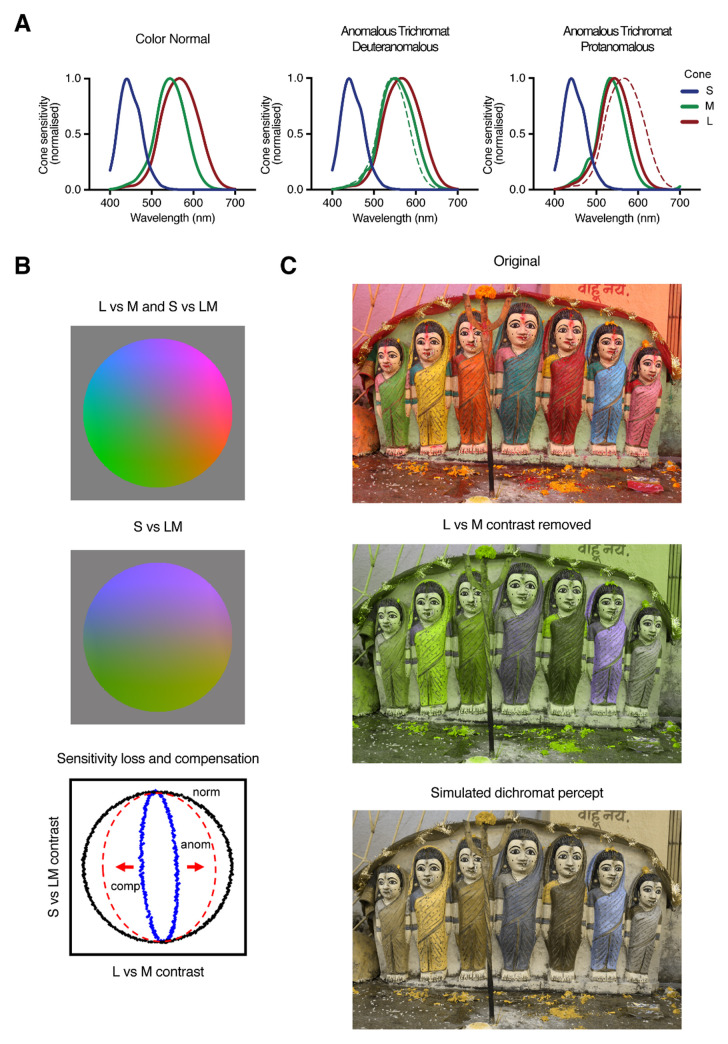
Inherited color vision deficiencies typically result from a loss or alteration of the visual photopigments absorbing light and thus impact the very first step of seeing. There is growing interest in how subsequent steps in the visual pathway might be calibrated to compensate for the altered receptor signals, with the possibility that color coding and color percepts might be less severely impacted than the receptor differences predict. These compensatory adjustments provide important insights into general questions about sensory plasticity and the sensory and cognitive processes underlying how we experience color.
遗传性色觉缺陷通常是由于吸收光线的视觉光色素缺失或改变所致,从而影响视觉的第一步。人们越来越关注视觉通路的后续步骤如何进行校准,以补偿改变的受体信号,因为颜色编码和颜色感知受到的影响可能比受体差异所预测的要小。这些补偿性调整为关于感觉可塑性以及我们体验颜色背后的感觉和认知过程的一般性问题提供了重要见解。