Aleidi Shereen M, Dahabiyeh Lina A, Gu Xinyun, Al Dubayee Mohammed, Alshahrani Awad, Benabdelkamel Hicham, Mujammami Muhammad, Li Liang, Aljada Ahmad, Abdel Rahman Anas M
Department of Biopharmaceutics and Clinical Pharmacy, School of Pharmacy, The University of Jordan, Amman, Jordan.
Department of Pharmaceutical Sciences, School of Pharmacy, The University of Jordan, Amman, Jordan.
Front Pharmacol. 2021 Feb 16;11:616157. doi: 10.3389/fphar.2020.616157. eCollection 2020.
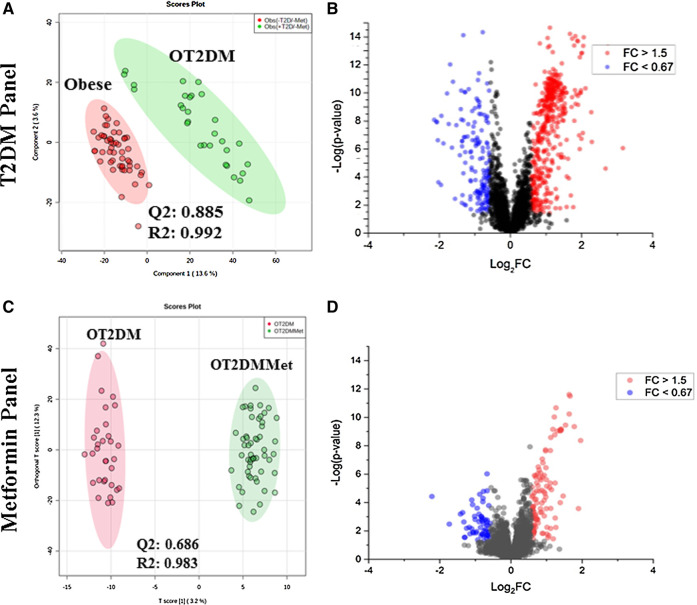
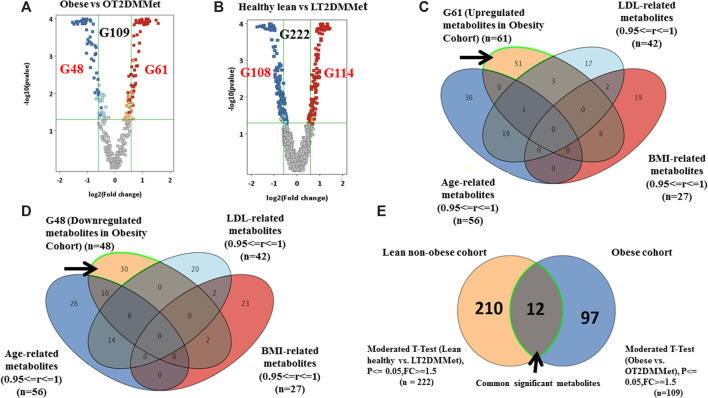
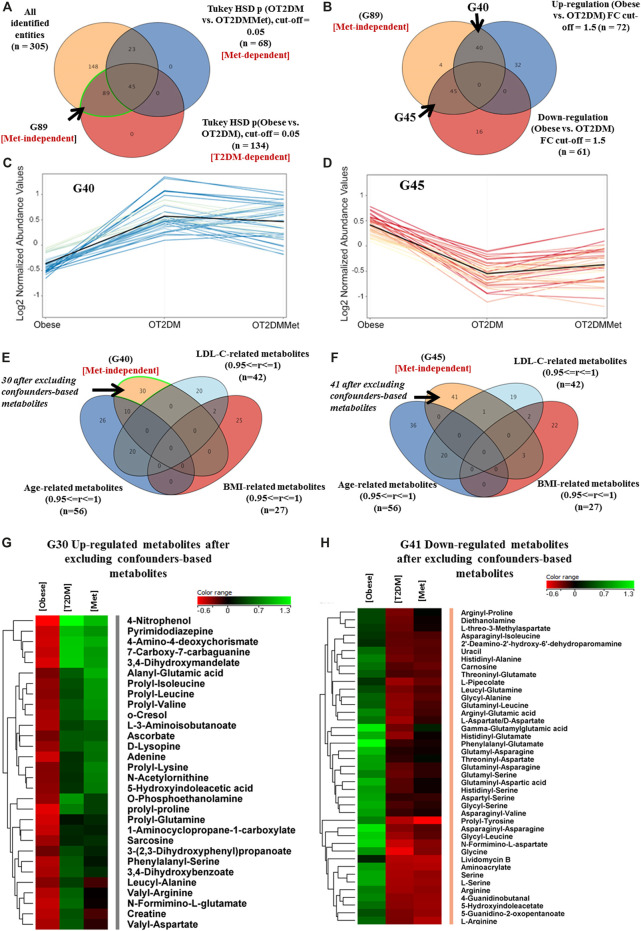
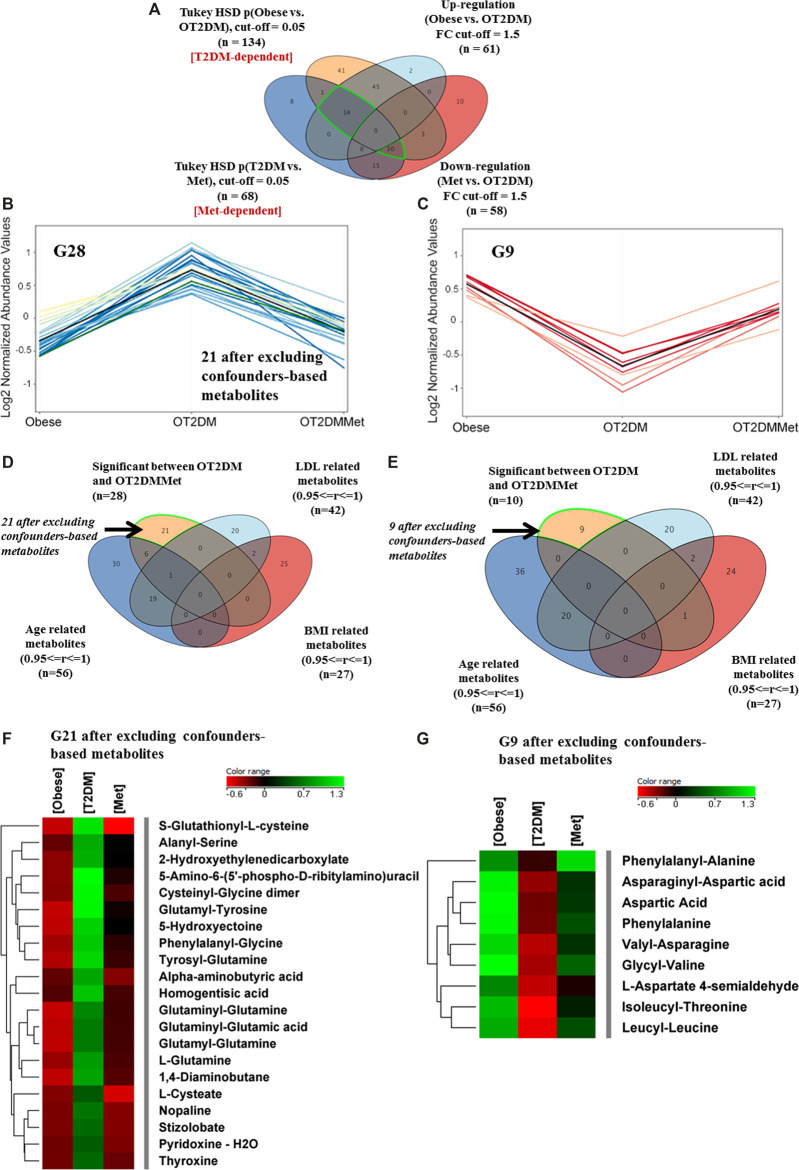
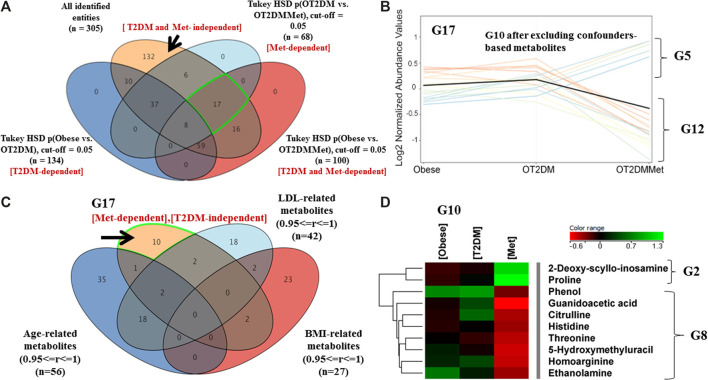
Metformin is widely used in the treatment of Type 2 Diabetes Mellitus (T2DM). However, it is known to have beneficial effects in many other conditions, including obesity and cancer. In this study, we aimed to investigate the metabolic effect of metformin in T2DM and its impact on obesity. A mass spectrometry (MS)-based metabolomics approach was used to analyze samples from two cohorts, including healthy lean and obese control, and lean as well as obese T2DM patients on metformin regimen in the last 6 months. The results show a clear group separation and sample clustering between the study groups due to both T2DM and metformin administration. Seventy-one metabolites were dysregulated in diabetic obese patients (30 up-regulated and 41 down-regulated), and their levels were unchanged with metformin administration. However, 30 metabolites were dysregulated (21 were up-regulated and 9 were down-regulated) and then restored to obese control levels by metformin administration in obese diabetic patients. Furthermore, in obese diabetic patients, the level of 10 metabolites was dysregulated only after metformin administration. Most of these dysregulated metabolites were dipeptides, aliphatic amino acids, nucleic acid derivatives, and urea cycle components. The metabolic pattern of 62 metabolites was persistent, and their levels were affected by neither T2DM nor metformin in obesity. Interestingly, 9 metabolites were significantly dysregulated between lean and obese cohorts due to T2DM and metformin regardless of the obesity status. These include arginine, citrulline, guanidoacetic acid, proline, alanine, taurine, 5-hydroxyindoleacetic acid, and 5-hydroxymethyluracil. Understanding the metabolic alterations taking place upon metformin treatment would shed light on possible molecular targets of metformin, especially in conditions like T2DM and obesity.
二甲双胍广泛用于治疗2型糖尿病(T2DM)。然而,已知它在许多其他病症中也有有益作用,包括肥胖症和癌症。在本研究中,我们旨在研究二甲双胍对T2DM的代谢作用及其对肥胖症的影响。采用基于质谱(MS)的代谢组学方法分析了两个队列的样本,包括健康瘦人和肥胖对照,以及过去6个月内接受二甲双胍治疗方案的瘦型和肥胖型T2DM患者。结果显示,由于T2DM和二甲双胍的使用,研究组之间存在明显的分组分离和样本聚类。糖尿病肥胖患者中有71种代谢物失调(30种上调,41种下调),二甲双胍治疗后其水平未发生变化。然而,肥胖糖尿病患者中有30种代谢物失调(21种上调,9种下调),二甲双胍治疗后恢复到肥胖对照水平。此外,在肥胖糖尿病患者中,10种代谢物的水平仅在服用二甲双胍后失调。这些失调的代谢物大多是二肽、脂肪族氨基酸、核酸衍生物和尿素循环成分。62种代谢物的代谢模式持续存在,其水平在肥胖症中不受T2DM和二甲双胍的影响。有趣的是,无论肥胖状态如何,由于T2DM和二甲双胍的作用,瘦型和肥胖型队列之间有9种代谢物明显失调。这些代谢物包括精氨酸、瓜氨酸、胍乙酸、脯氨酸、丙氨酸、牛磺酸、5-羟吲哚乙酸和5-羟甲基尿嘧啶。了解二甲双胍治疗时发生的代谢改变将有助于揭示二甲双胍可能的分子靶点,尤其是在T2DM和肥胖症等病症中。