Jiao Delong, Wang Jing, Yu Wenting, Zhang Ning, Zhang Ke, Bai Yuxing
Institute of Dental Research, Beijing Stomatological Hospital & School of Stomatology, Capital Medical University, Beijing 100050, China.
Department of Orthodontics, Beijing Stomatological Hospital & School of Stomatology, Capital Medical University, Beijing 100050, China.
Materials (Basel). 2021 Feb 24;14(5):1053. doi: 10.3390/ma14051053.
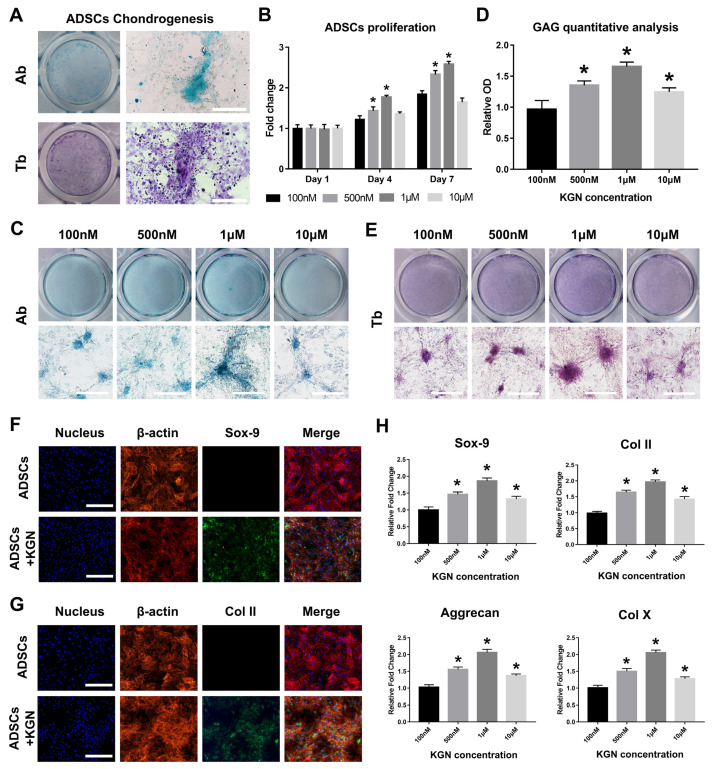
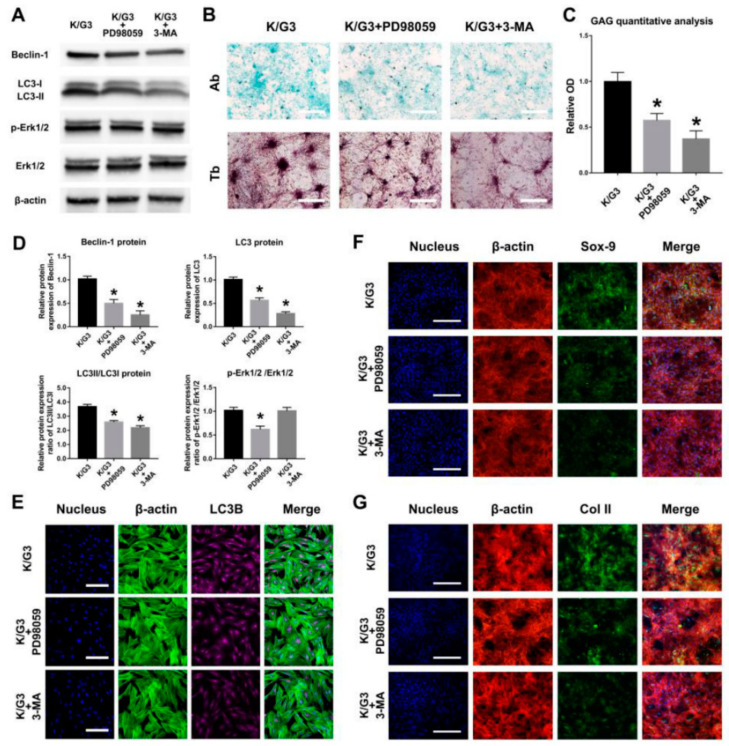
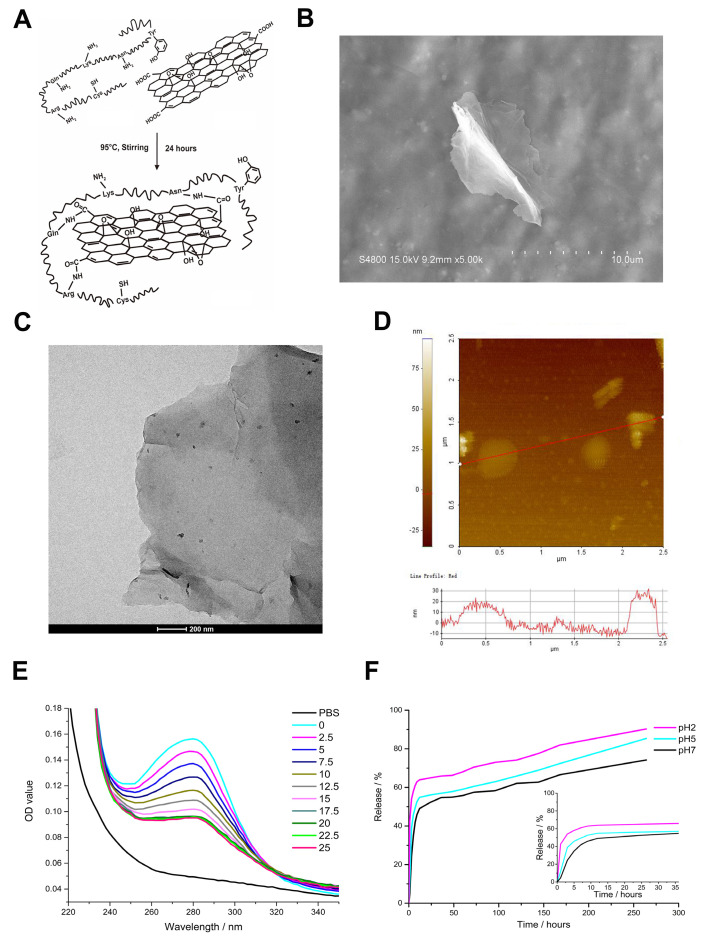
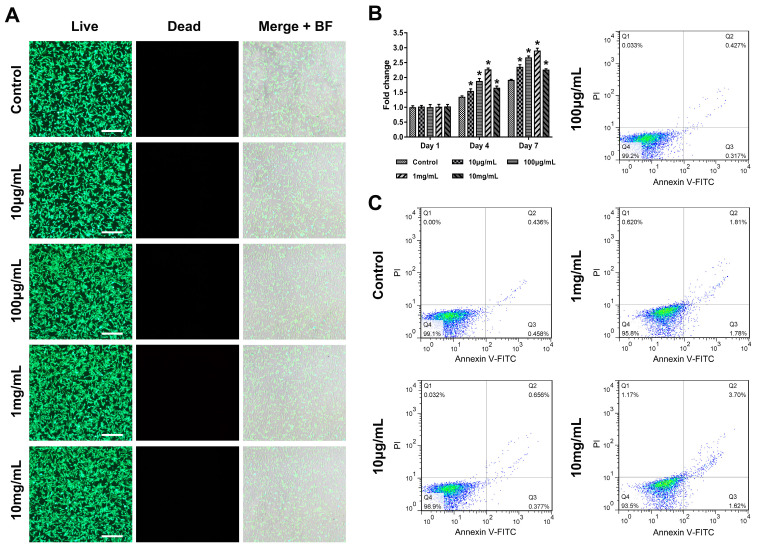
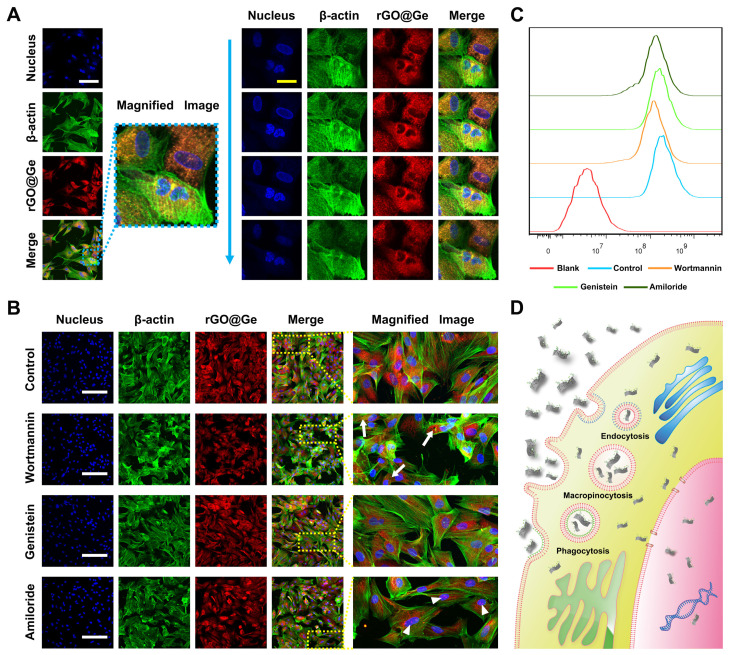
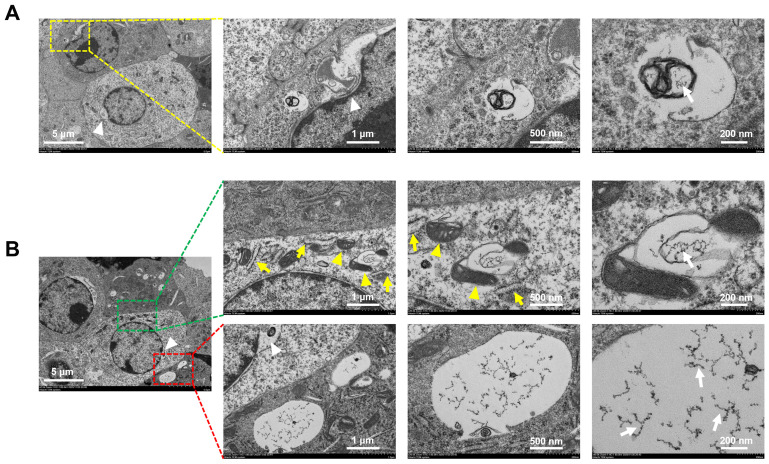
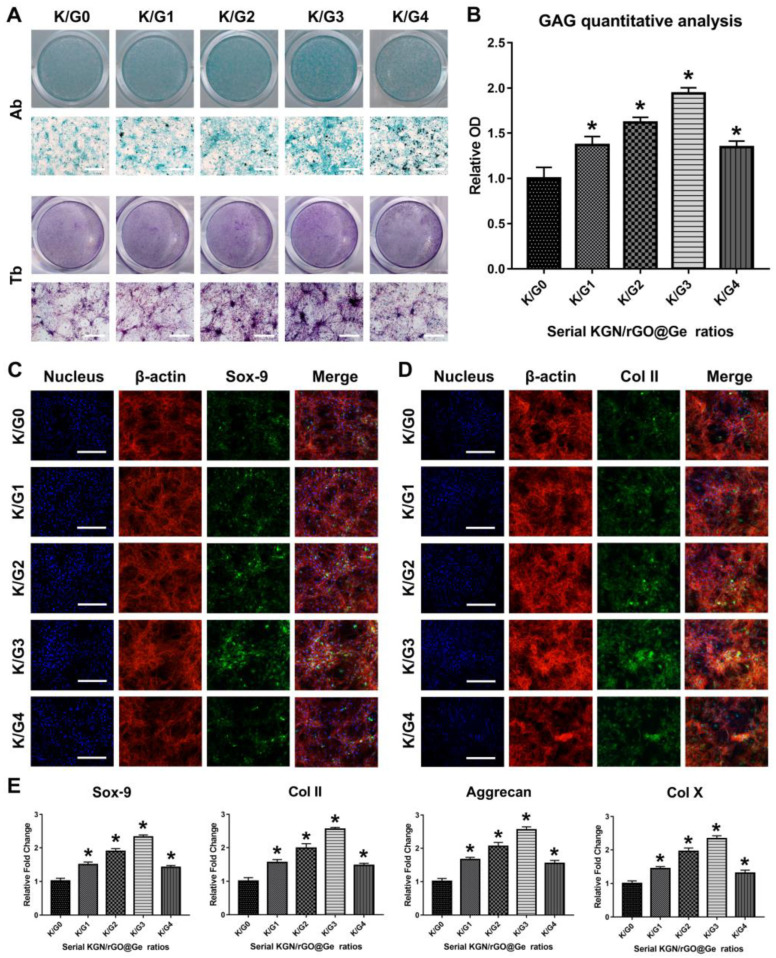
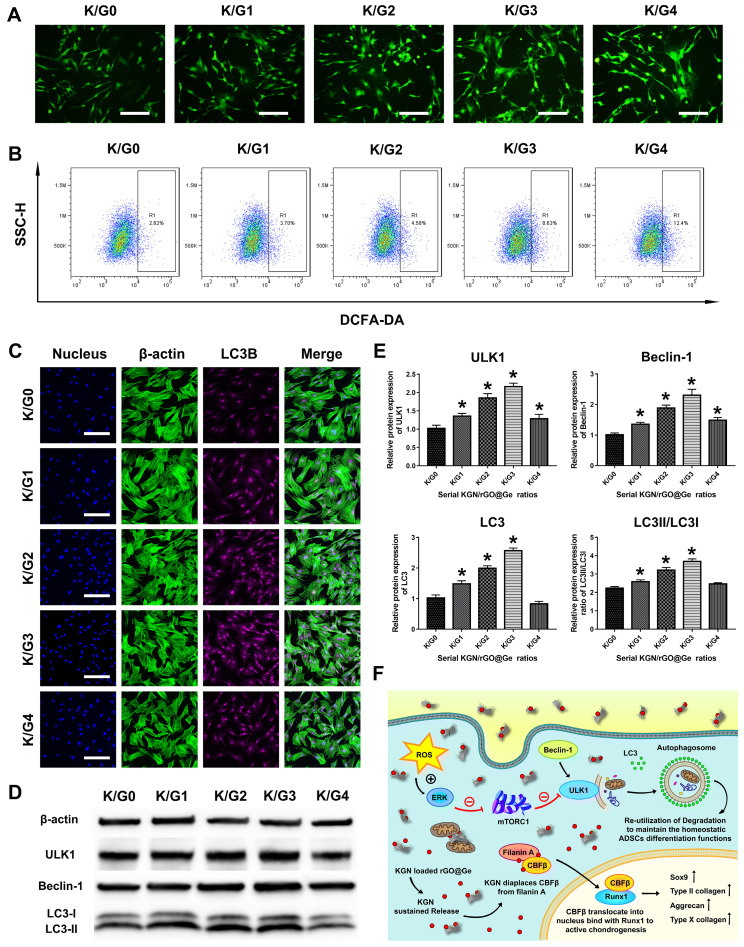
Biocompatible reduced graphene oxide (rGO) could deliver drugs for synergistically stimulating stem cells directed differentiation with influences on specific cellular activities. Here, we prepared a biodegradable gelatin reduced graphene oxide (rGO@Ge) to evaluate its functions in promoting rat adipose derived mesenchymal stem cells (ADSCs) chondrogenic differentiation through delivering kartogenin (KGN) into the stem cell efficiently. The optimum KGN concentration (approximately 1 μM) that promoted the proliferation and chondrogenic differentiation of ADSCs was clarified by a series of experiments, including immunofluorescent (IF) staining (Sox-9, Col II), alcian blue (Ab) staining, toluidine blue (Tb) staining and real-time quantitative PCR analysis of the chondrogenic markers. Meanwhile, the biocompatibility of rGO@Ge was evaluated to clearly define the nonhazardous concentration range, and the drug loading and releasing properties of rGO@Ge were tested with KGN for its further application in inducing ADSCs chondrogenic differentiation. Furthermore, the mechanism of rGO@Ge entering ADSCs was investigated by the different inhibitors that are involved in the endocytosis of the nanocarrier, and the degradation of the rGO@Ge in ADSCs was observed by transmission electron microscopy (TEM). The synergistic promoting effect of rGO@Ge nanocarrier on ADSCs chondrogenesis with KGN was also studied by the IF, Ab, Tb stainings and PCR analysis of the chondrogenic markers. Finally, the intracellular Reactive Oxygen Species (ROS) and autophagy induced by KGN/rGO@Ge complex composites were tested in details for clarification on the correlation between the autophagy and chondrogenesis in ADSCs induced by rGO@Ge. All the results show that rGO@Ge as a biocompatible nanocarrier can deliver KGN into ADSCs for exerting a pro-chondrogenic effect and assist the drug to promote ADSCs chondrogenesis synergistically through modification of the autophagy in vitro, which promised its further application in repairing cartilage defect in vivo.
生物相容性还原氧化石墨烯(rGO)可递送药物,协同刺激干细胞定向分化,并影响特定细胞活动。在此,我们制备了一种可生物降解的明胶还原氧化石墨烯(rGO@Ge),以评估其通过将软骨生成素(KGN)高效递送至干细胞来促进大鼠脂肪来源间充质干细胞(ADSCs)软骨分化的功能。通过一系列实验,包括免疫荧光(IF)染色(Sox-9、Col II)、阿尔辛蓝(Ab)染色、甲苯胺蓝(Tb)染色以及软骨生成标志物的实时定量PCR分析,明确了促进ADSCs增殖和软骨分化的最佳KGN浓度(约1 μM)。同时,评估了rGO@Ge的生物相容性以明确其无危害浓度范围,并测试了rGO@Ge与KGN的载药和释药特性,以便其在诱导ADSCs软骨分化方面进一步应用。此外,通过参与纳米载体胞吞作用的不同抑制剂研究了rGO@Ge进入ADSCs的机制,并通过透射电子显微镜(TEM)观察了rGO@Ge在ADSCs中的降解情况。还通过IF、Ab、Tb染色以及软骨生成标志物的PCR分析研究了rGO@Ge纳米载体与KGN对ADSCs软骨生成的协同促进作用。最后,详细测试了KGN/rGO@Ge复合复合物诱导的细胞内活性氧(ROS)和自噬,以阐明rGO@Ge诱导的ADSCs自噬与软骨生成之间的相关性。所有结果表明,rGO@Ge作为一种生物相容性纳米载体,可将KGN递送至ADSCs以发挥促软骨作用,并通过体外自噬修饰协同辅助药物促进ADSCs软骨生成,这为其在体内修复软骨缺损中的进一步应用提供了前景。