Borges Daniel, Guzman-Novoa Ernesto, Goodwin Paul H
Ontario Beekeepers' Association Technology Transfer Program, 5420 Hwy 6 N, Suite 185, Orchard Park Office, Guelph, ON N1H 6J2, Canada.
School of Environmental Sciences, University of Guelph, 50 Stone Road East, Guelph, ON N1G 2W1, Canada.
Microorganisms. 2021 Feb 25;9(3):481. doi: 10.3390/microorganisms9030481.
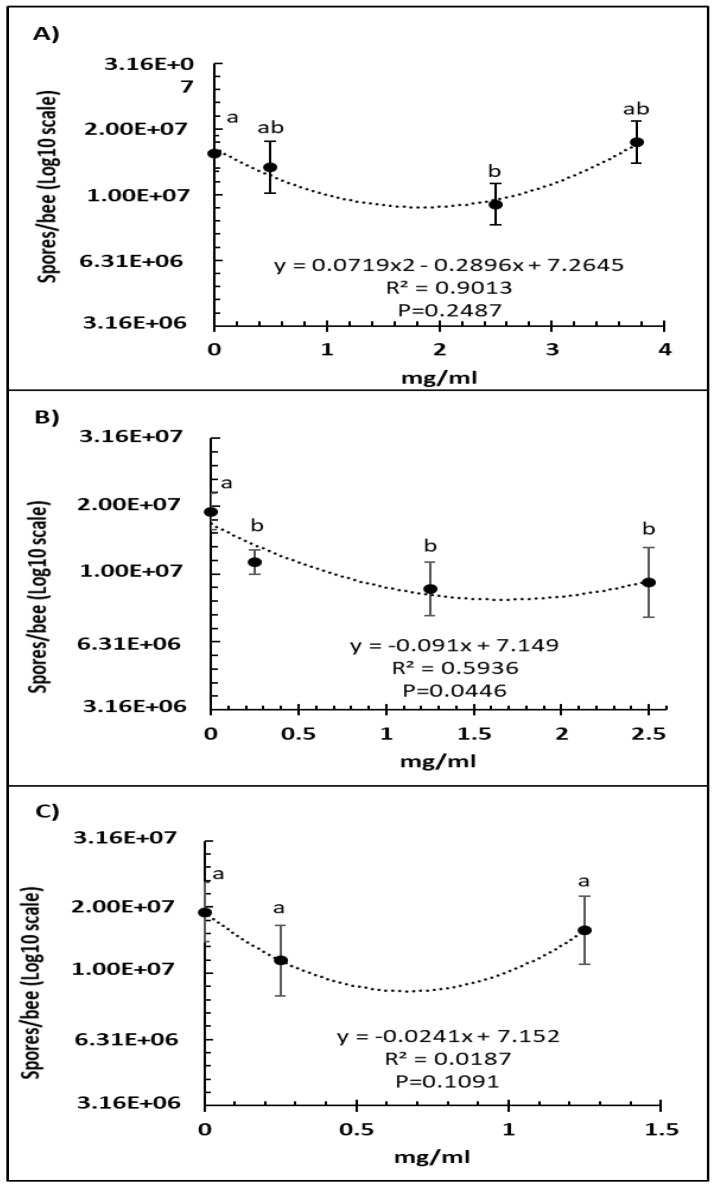
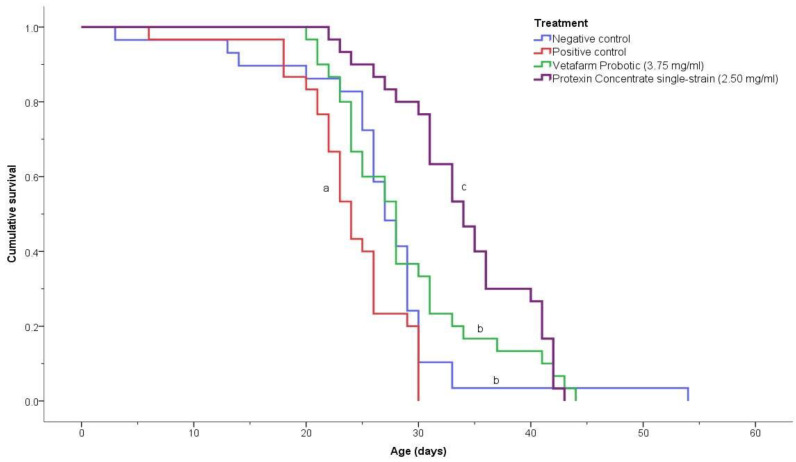
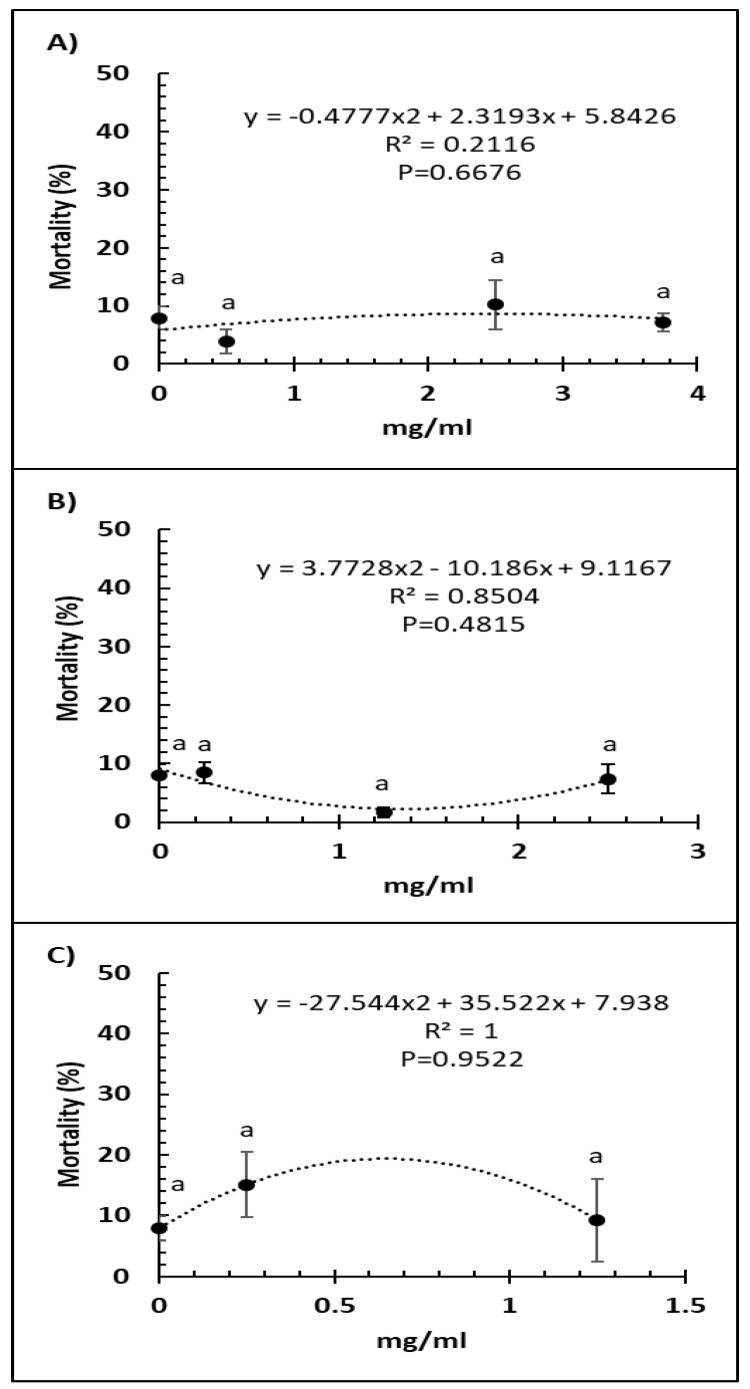
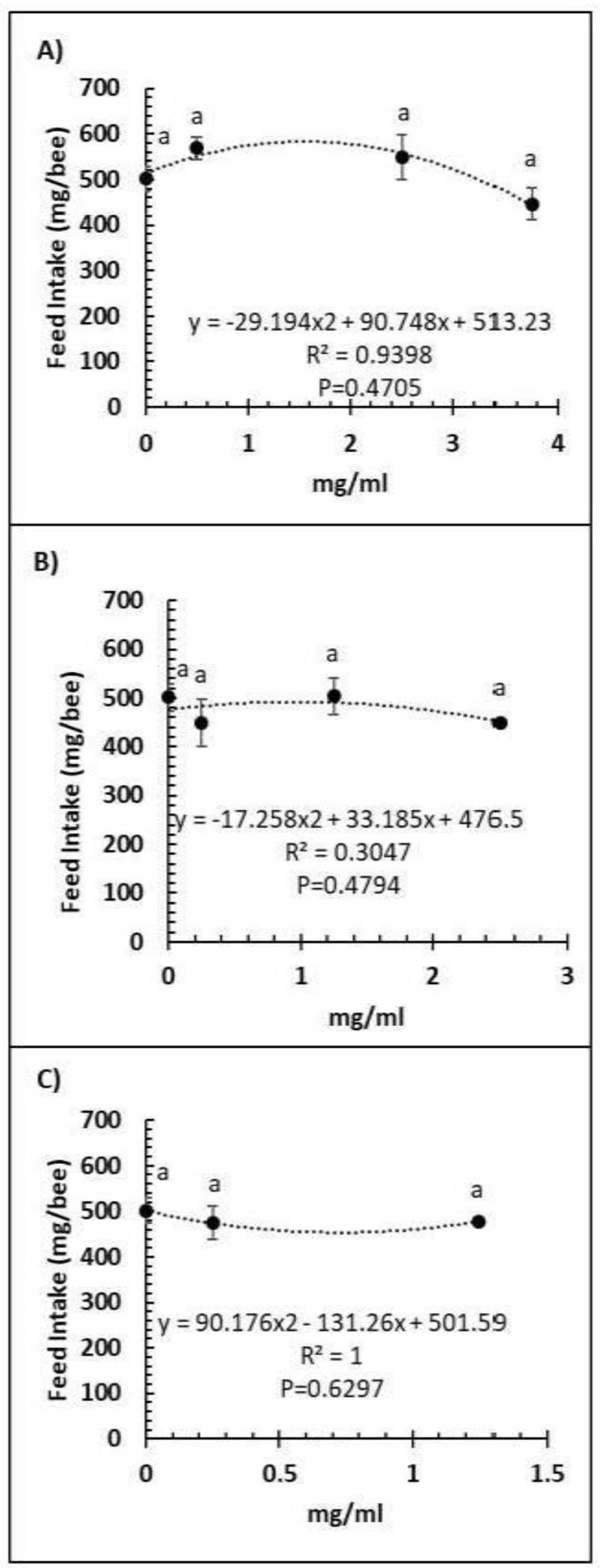
is a microsporidian fungus that parasitizes the midgut epithelial cells of honey bees, . Due to the role that midgut microorganisms play in bee health and immunity, food supplementation with prebiotics and probiotics may assist in the control of . The dietary fiber prebiotics acacia gum, inulin, and fructooligosaccharides, as well as the commercial probiotics Vetafarm Probotic, Protexin Concentrate single-strain (), and Protexin Concentrate multi-strain (, , , , , , and ) were tested for their effect on spore loads and honey bee survivorship. Bees kept in cages were inoculated with spores and single-dose treatments were administered in sugar syrup. Acacia gum caused the greatest reduction in spore numbers (67%) but also significantly increased bee mortality (62.2%). However, Protexin Concentrate single-strain gave similarly reduced spore numbers (59%) without affecting the mortality. In a second experiment, multiple doses of the probiotics revealed significantly reduced spore numbers with 2.50 mg/mL Vetafarm Probotic, and 0.25, 1.25, and 2.50 mg/mL Protexin Concentrate single-strain. Mortality was also significantly reduced with 1.25 mg/mL Protexin Concentrate single-strain. -inoculated bees fed 3.75 mg/mL Vetafarm Probotic had higher survival than -inoculated bees, which was similar to that of non-inoculated bees, while -inoculated bees fed 2.50 mg/mL Protexin Concentrate single-strain, had significantly higher survival than both -inoculated and non-inoculated bees. Protexin Concentrate single-strain is promising as it can reduce proliferation and increase bee survivorship of infected bees, even compared to healthy, non-infected bees.
是一种寄生在蜜蜂中肠上皮细胞的微孢子虫真菌。由于中肠微生物在蜜蜂健康和免疫中所起的作用,用益生元和益生菌进行食物补充可能有助于控制(该微孢子虫)。对膳食纤维益生元阿拉伯胶、菊粉和低聚果糖,以及商业益生菌Vetafarm Probotic、Protexin Concentrate单菌株()和Protexin Concentrate多菌株(、、、、、和)进行了测试,以观察它们对(微孢子虫)孢子载量和蜜蜂存活率的影响。将饲养在笼子里的蜜蜂接种(微孢子虫)孢子,并在糖浆中进行单剂量处理。阿拉伯胶使(微孢子虫)孢子数量减少最多(67%),但也显著增加了蜜蜂死亡率(62.2%)。然而,Protexin Concentrate单菌株使孢子数量同样减少(59%),且不影响死亡率。在第二个实验中,多剂量的益生菌显示,2.50 mg/mL的Vetafarm Probotic以及0.25、1.25和2.50 mg/mL的Protexin Concentrate单菌株使孢子数量显著减少。1.25 mg/mL的Protexin Concentrate单菌株也使死亡率显著降低。喂食3.75 mg/mL Vetafarm Probotic的接种(微孢子虫)蜜蜂比接种(微孢子虫)蜜蜂的存活率更高,这与未接种蜜蜂的存活率相似,而喂食2.50 mg/mL Protexin Concentrate单菌株的接种(微孢子虫)蜜蜂的存活率显著高于接种(微孢子虫)蜜蜂和未接种蜜蜂。Protexin Concentrate单菌株很有前景,因为它可以减少(微孢子虫)增殖,并提高受感染蜜蜂的存活率,甚至与健康、未受感染的蜜蜂相比也是如此。