School of Exercise and Nutritional Sciences, San Diego State University, ENS Building, Room 302 5500 Campanile Drive San Diego, San Diego, CA 92182, USA.
Department of Psychology, University of Georgia, Athens, GA 30602, USA.
Nutrients. 2021 Feb 19;13(2):671. doi: 10.3390/nu13020671.
Cross-sectional analyses have shown increased obesogenic behaviors and a potential for weight gain during COVID-19 related peak-lockdown (March-May 2020), but longitudinal data are lacking. This study assessed longitudinal changes in body weight and lifestyle behaviors in the US adults during the pandemic.
We used Qualtrics survey to collect self-reported data on body weight, dietary, physical activity, and psychological variables ( = 727) during the peak-lockdown (April/May) and at post-lockdown (September/October). Peak-lockdown weight data were categorized based on the magnitude of weight gained, maintained, or lost, and behavioral differences were examined between categories at two time points.
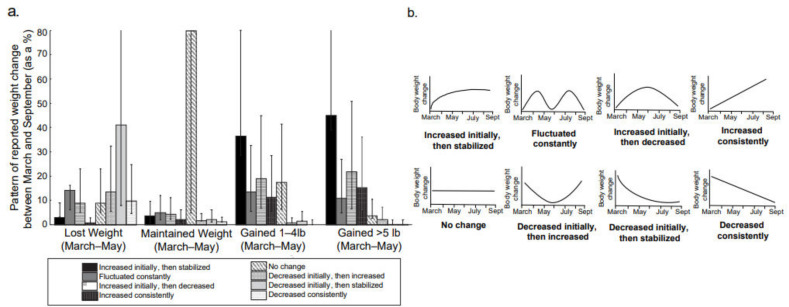
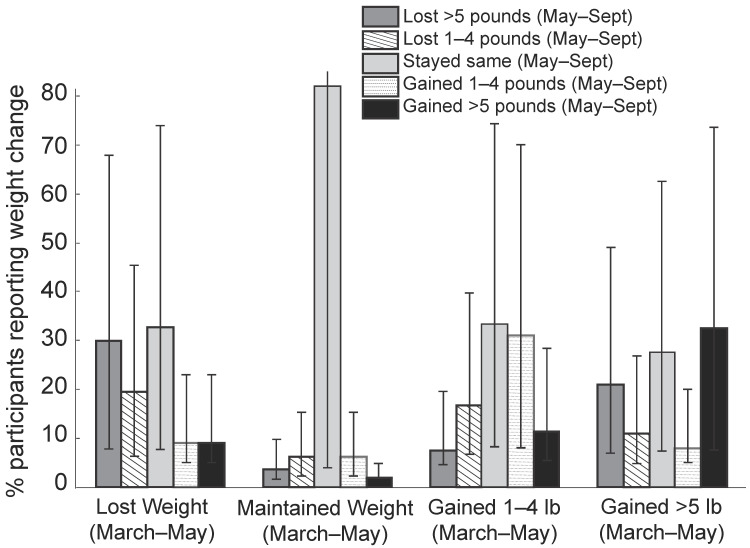
Body weight increased (+0.62 kg; < 0.05) at the post-lockdown period. The body mass index also increased (26.38 ± 5.98 kg/m vs. 26.12 ± 5.81 kg/m; < 0.01) at the post-lockdown period vs. peak-lockdown period. Close to 40% of participants reported gaining either 1-4 lbs or >5 lbs of body weight during the peak-lockdown, while 18.2% lost weight. Weight-gainers engaged in riskier dietary behaviors such as frequent ultra-processed food intake ( < 0.01) and snacking ( < 0.001), were less active, and reported high stress and less craving control during peak-lockdown. Of those gaining >5 lbs, 33% continued to gain weight after the lockdown eased, while 28% maintain higher body weight. In weight-gainers, takeout meal frequency increased, and high ultra-processed food intake and stress, and low craving control continued to persist after the lockdown eased.
We show that the COVID-19 lockdown periods disrupted weight management among many Americans and that associated health effects are likely to persist.
横断面分析显示,在与 COVID-19 相关的高峰封锁期间(2020 年 3 月至 5 月),肥胖行为增加,体重有增加的趋势,但缺乏纵向数据。本研究评估了美国成年人在大流行期间体重和生活方式行为的纵向变化。
我们使用 Qualtrics 调查收集了在高峰封锁(4 月/ 5 月)和封锁后(9 月/ 10 月)期间自我报告的体重、饮食、身体活动和心理变量的数据(n = 727)。根据体重增加、维持或减轻的幅度对高峰封锁期间的体重数据进行分类,并在两个时间点检查类别之间的行为差异。
封锁后体重增加(+0.62kg;<0.05)。与高峰封锁期相比,体重指数也在封锁后期间增加(26.38 ± 5.98kg/m2 vs. 26.12 ± 5.81kg/m2;<0.01)。近 40%的参与者报告在高峰封锁期间体重增加了 1-4 磅或超过 5 磅,而 18.2%的人体重减轻。体重增加者的饮食行为更具风险,例如经常食用超加工食品(<0.01)和吃零食(<0.001),活动量较少,高峰封锁期间压力较大,控制食欲的能力较低。在体重增加者中,33%的人在封锁缓解后继续增加体重,而 28%的人保持较高的体重。在体重增加者中,外卖餐的频率增加,高超加工食品摄入和压力以及低食欲控制在封锁缓解后仍持续存在。
我们表明,COVID-19 封锁期扰乱了许多美国人的体重管理,相关的健康影响可能会持续存在。