3rd Department of Pediatrics, Hippokration General Hospital, 49 Konstantinoupoleos Str, Aristotle University of Thessaloniki, GR-54642 Thessaloniki, Greece.
Department of Nutritional Sciences & Dietetics, Faculty of Health Sciences, International Hellenic University, Alexander Campus, Sindos, P.O. Box 141, GR-57400 Thessaloniki, Greece.
Nutrients. 2021 Feb 19;13(2):674. doi: 10.3390/nu13020674.
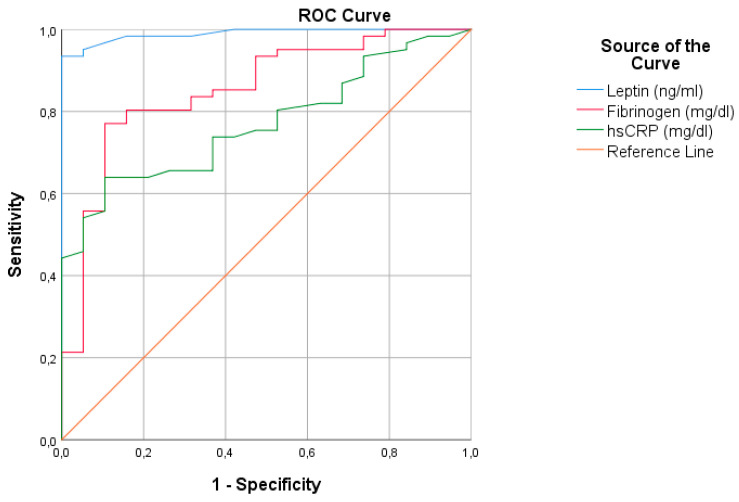
Obesity is defined as abnormal or excessive fat accumulation that presents a risk to health. The ability to exercise is affected by adiposity, and this mechanism involves low-grade chronic inflammation and homeostatic stress produced mainly in adipocytes, which can result in abnormal adipokine secretion. To date, the gold standard for cardiorespiratory fitness assessment is considered to be the maximum oxygen uptake (VO). The aim of the present study was to assess the prognostic value of hematological parameters of childhood obesity, as potential predictors of cardiorespiratory fitness (VO), using a sample of children and adolescents with obesity and risk for diabetes. A total of 84 clinically healthy children and adolescents were recruited, of which 21 were considered lean, 22 overweight and 41 obese, with a mean age of 12.0 ± 1.9, 11.4 ± 2.0, and 11.2 ± 2.1 years old, in each weight status category, respectively. Age and sex did not differ between groups. Hematologic testing was performed after 12 h of fasting including glucose, serum lipids, insulin, hc-CRP, adiponectin, leptin and fibrinogen levels. Cardiorespiratory capacity for exercise was assessed to determine VO, using a cycle ergometer. The VO was negatively correlated with progressive strength to the BMIz (-0.656, ≤ 0.001), hs-CRP (r = -0.341, ≤ 0.002), glucose (r = -0.404, ≤ 0.001) and insulin levels (r = -0.348, ≤ 0.001), the homeostasis model assessment of insulin resistance (HOMA-IR) (r = -0.345, ≤ 0.002), as well as to the leptin (r = -0.639, ≤ 0.001) and fibrinogen concentrations (r = -0.520, ≤ 0.001). The multivariate analysis revealed that only leptin and fibrinogen concentrations could predict the VO adjusted for the BMIz of participants. The receiver operating characteristic (ROC) curve for the diagnostic accuracy of leptin, hs-CRP and fibrinogen concentrations for the prediction of VO revealed a good diagnostic ability for all parameters, with leptin being the most promising one (area under the curve (AUC): 99%). The results verify that in children with obesity, VO may be predicted from hematological parameters (leptin and fibrinogen), possibly bypassing more invasive methods.
肥胖被定义为异常或过多的脂肪积累,会对健康造成风险。运动能力会受到肥胖的影响,这种机制涉及主要在脂肪细胞中产生的低度慢性炎症和体内平衡应激,这可能导致异常的脂肪细胞因子分泌。迄今为止,心肺适能评估的金标准被认为是最大摄氧量(VO)。本研究的目的是评估儿童肥胖的血液学参数作为心肺适能(VO)的潜在预测因子的预后价值,使用患有肥胖和糖尿病风险的儿童和青少年样本。共招募了 84 名临床健康的儿童和青少年,其中 21 名被认为是瘦体重,22 名超重,41 名肥胖,平均年龄分别为 12.0 ± 1.9、11.4 ± 2.0 和 11.2 ± 2.1 岁。年龄和性别在各组之间没有差异。在禁食 12 小时后进行血液检查,包括血糖、血清脂质、胰岛素、hs-CRP、脂联素、瘦素和纤维蛋白原水平。使用自行车测力计评估运动时的心肺能力以确定 VO。VO 与 BMIz 的逐渐增加呈负相关(-0.656, ≤ 0.001),与 hs-CRP(r = -0.341, ≤ 0.002)、葡萄糖(r = -0.404, ≤ 0.001)和胰岛素水平(r = -0.348, ≤ 0.001)、胰岛素抵抗的稳态模型评估(HOMA-IR)(r = -0.345, ≤ 0.002),以及瘦素(r = -0.639, ≤ 0.001)和纤维蛋白原浓度(r = -0.520, ≤ 0.001)。多元分析显示,只有瘦素和纤维蛋白原浓度可以预测参与者 BMIz 调整后的 VO。用于预测 VO 的瘦素、hs-CRP 和纤维蛋白原浓度的诊断准确性的受试者工作特征(ROC)曲线显示所有参数均具有良好的诊断能力,其中瘦素最有前途(曲线下面积(AUC):99%)。结果验证了在肥胖儿童中,VO 可以通过血液学参数(瘦素和纤维蛋白原)来预测,可能绕过更具侵入性的方法。