Deidda Irene, Russo Roberta, Bonaventura Rosa, Costa Caterina, Zito Francesca, Lampiasi Nadia
Istituto per la Ricerca e l'Innovazione Biomedica IRIB, Consiglio Nazionale delle Ricerche, Via Ugo La Malfa 153, 90146 Palermo, Italy.
Biology (Basel). 2021 Feb 18;10(2):161. doi: 10.3390/biology10020161.
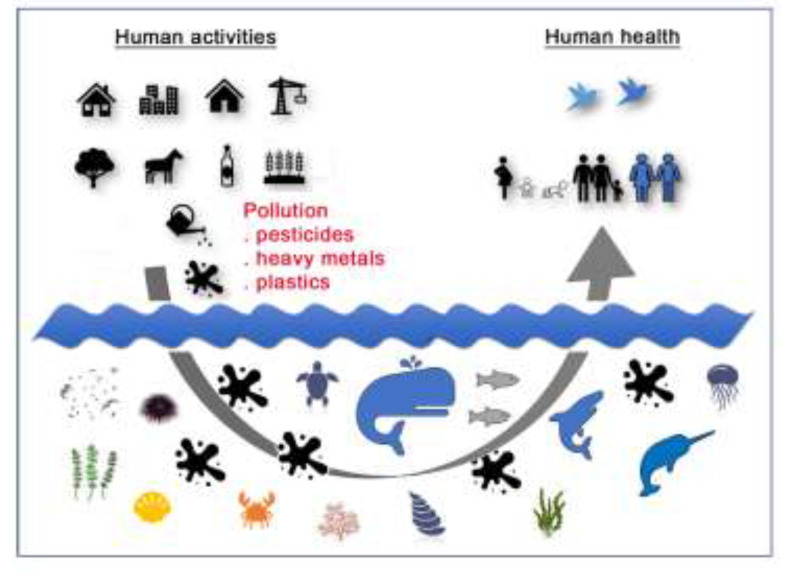
Invertebrates represent about 95% of existing species, and most of them belong to aquatic ecosystems. Marine invertebrates are found at intermediate levels of the food chain and, therefore, they play a central role in the biodiversity of ecosystems. Furthermore, these organisms have a short life cycle, easy laboratory manipulation, and high sensitivity to marine pollution and, therefore, they are considered to be optimal bioindicators for assessing detrimental chemical agents that are related to the marine environment and with potential toxicity to human health, including neurotoxicity. In general, albeit simple, the nervous system of marine invertebrates is composed of neuronal and glial cells, and it exhibits biochemical and functional similarities with the vertebrate nervous system, including humans. In recent decades, new genetic and transcriptomic technologies have made the identification of many neural genes and transcription factors homologous to those in humans possible. Neuroinflammation, oxidative stress, and altered levels of neurotransmitters are some of the aspects of neurotoxic effects that can also occur in marine invertebrate organisms. The purpose of this review is to provide an overview of major marine pollutants, such as heavy metals, pesticides, and micro and nano-plastics, with a focus on their neurotoxic effects in marine invertebrate organisms. This review could be a stimulus to bio-research towards the use of invertebrate model systems other than traditional, ethically questionable, time-consuming, and highly expensive mammalian models.
无脊椎动物约占现存物种的95%,其中大多数属于水生生态系统。海洋无脊椎动物处于食物链的中间层级,因此,它们在生态系统的生物多样性中发挥着核心作用。此外,这些生物生命周期短,易于在实验室操作,且对海洋污染高度敏感,所以它们被认为是评估与海洋环境相关且对人类健康具有潜在毒性(包括神经毒性)的有害化学物质的最佳生物指示物。一般来说,尽管海洋无脊椎动物的神经系统结构简单,但它由神经元和神经胶质细胞组成,并且在生化和功能方面与包括人类在内的脊椎动物神经系统存在相似性。近几十年来,新的基因和转录组技术使得识别许多与人类同源的神经基因和转录因子成为可能。神经炎症、氧化应激以及神经递质水平的改变是在海洋无脊椎动物中也可能出现的神经毒性效应的一些方面。本综述的目的是概述主要的海洋污染物,如重金属、农药以及微塑料和纳米塑料,重点关注它们对海洋无脊椎动物的神经毒性作用。本综述可能会刺激生物研究朝着使用除传统的、存在伦理问题、耗时且成本高昂的哺乳动物模型之外的无脊椎动物模型系统发展。