Wan Jusoh Wan Nurshamimi, Matori Khamirul Amin, Mohd Zaid Mohd Hafiz, Zainuddin Norhazlin, Ahmad Khiri Mohammad Zulhasif, Abdul Rahman Nadia Asyikin, Abdul Jalil Rohaniah, Kul Esra
Department of Physics, Faculty of Science, Universiti Putra Malaysia, UPM Serdang, Selangor 43400, Malaysia.
Material Synthesis and Characterization Laboratory, Institute of Advanced Technology, Universiti Putra Malaysia, UPM Serdang, Selangor 43400, Malaysia.
Materials (Basel). 2021 Feb 18;14(4):954. doi: 10.3390/ma14040954.
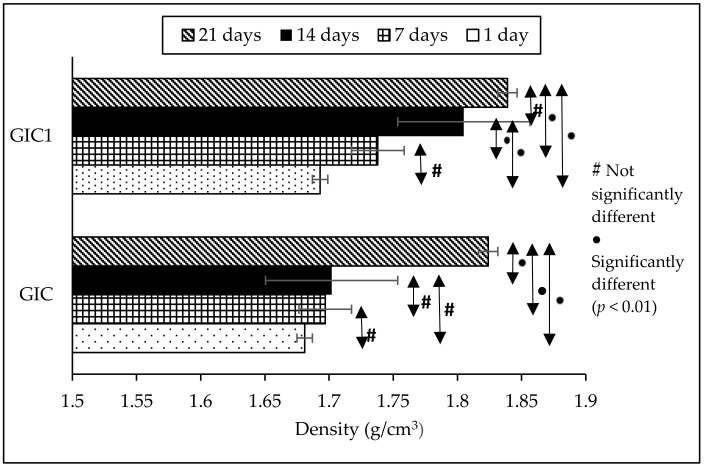
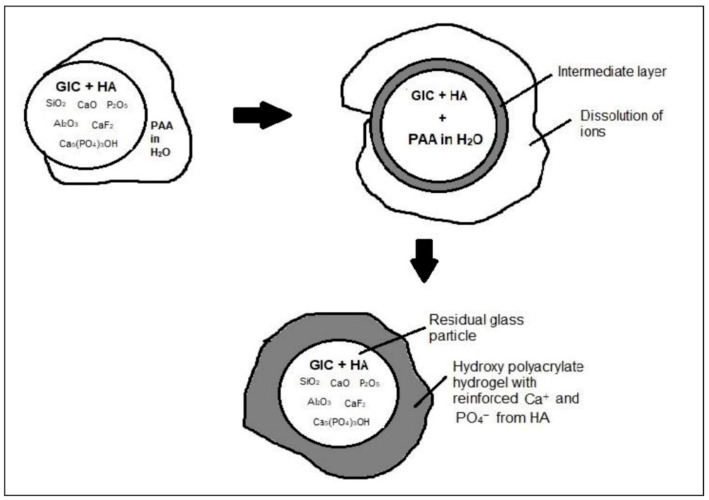
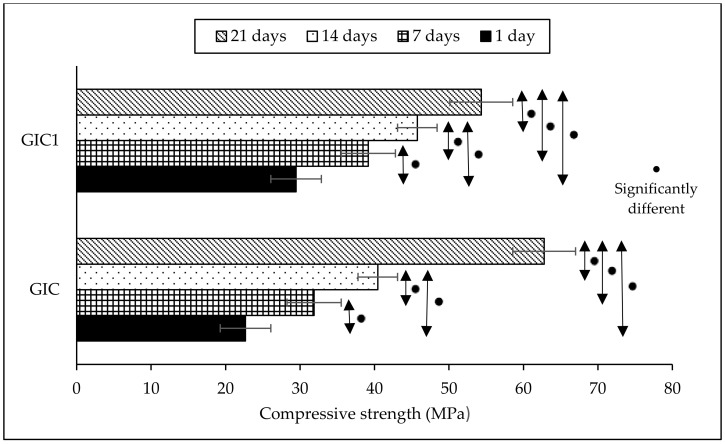
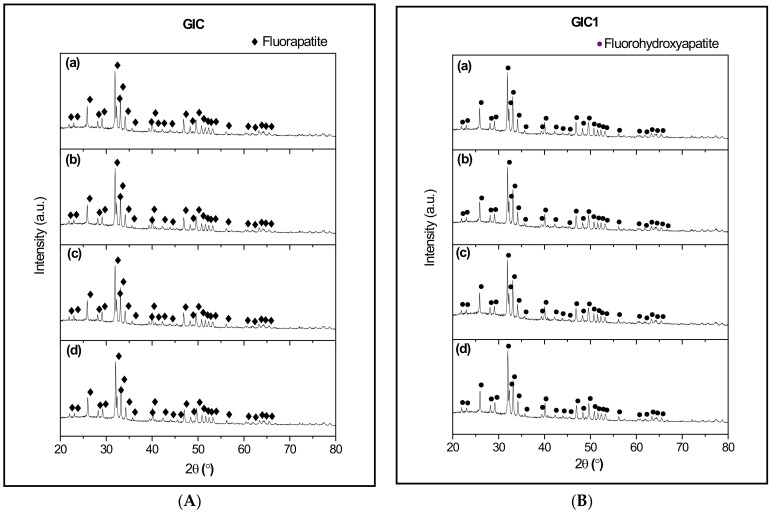
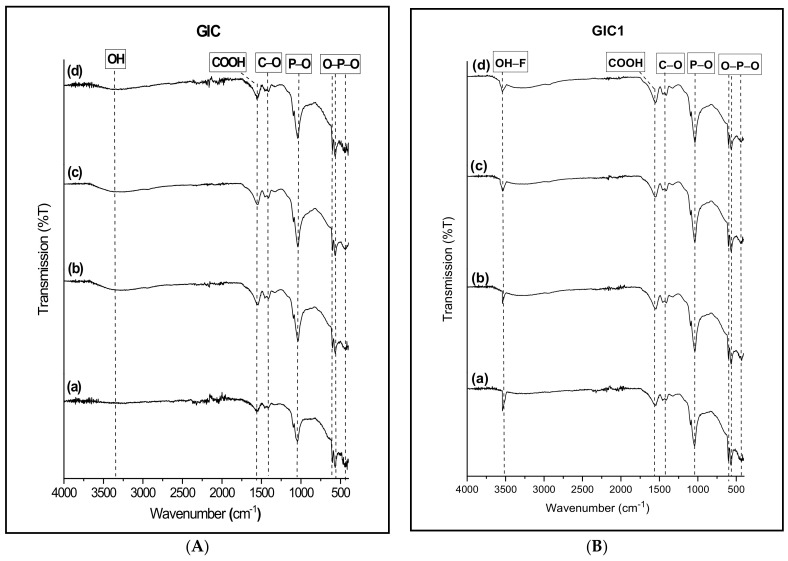
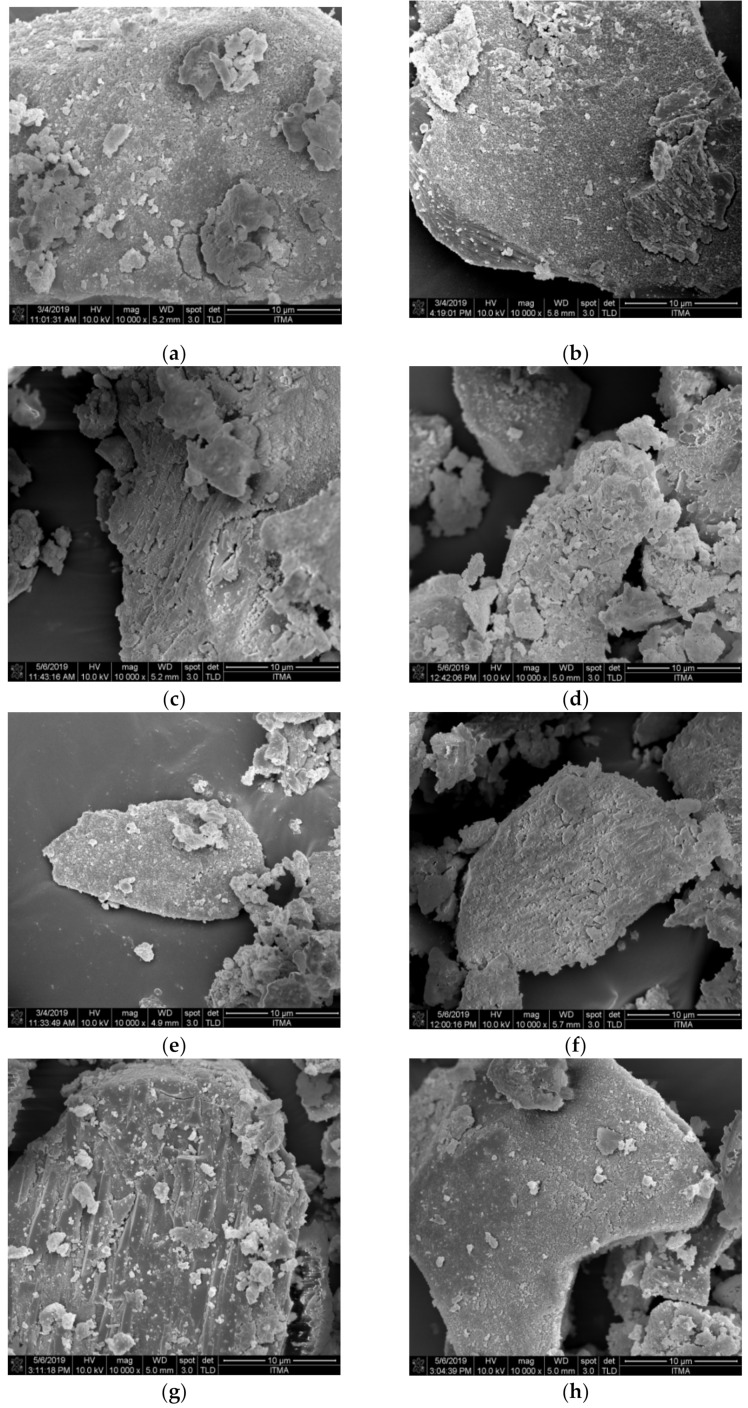
Glass ionomer cement (GIC) is a well-known restorative material applied in dentistry. The present work aims to study the effect of hydroxyapatite (HA) addition into GIC based on physical, mechanical and structural properties. The utilization of waste materials namely clam shell (CS) and soda lime silica (SLS) glass as replacements for the respective CaO and SiO sources in the fabrication of alumino-silicate-fluoride (ASF) glass ceramics powder. GIC was formulated based on ASF glass ceramics, polyacrylic acid (PAA) and deionized water, while 1 wt.% of HA powder was added to enhance the properties of the cement samples. The cement samples were subjected to four different ageing times before being analyzed. In this study, the addition of HA caused an increment in density and compressive strength results along with ageing time. Besides, X-ray Diffraction (XRD) revealed the formation of fluorohydroxyapatite (FHA) phase in HA-added GIC samples and it was confirmed by Fourier Transform Infrared (FTIR) analysis which detected OH‒F vibration mode. In addition, needle-like and agglomeration of spherical shapes owned by apatite crystals were observed from Field Emission Scanning Electron Microscopy (FESEM). Based on Energy Dispersive X-ray (EDX) analysis, the detection of chemical elements in the cement samples were originated from chemical compounds used in the preparation of glass ceramics powder and also the polyacid utilized in initiating the reaction of GIC.
玻璃离子水门汀(GIC)是牙科领域应用广泛的一种修复材料。本研究旨在基于物理、力学和结构性能,研究向GIC中添加羟基磷灰石(HA)的效果。利用废弃材料,即蛤壳(CS)和钠钙硅(SLS)玻璃,替代铝硅酸盐氟化物(ASF)玻璃陶瓷粉末制备过程中各自的CaO和SiO来源。GIC是基于ASF玻璃陶瓷、聚丙烯酸(PAA)和去离子水配制而成,同时添加1 wt.%的HA粉末以增强水泥样品的性能。在进行分析之前,对水泥样品进行了四种不同时效时间的处理。在本研究中,随着时效时间的增加,HA的添加导致密度和抗压强度增加。此外,X射线衍射(XRD)显示添加HA的GIC样品中形成了氟羟基磷灰石(FHA)相,傅里叶变换红外光谱(FTIR)分析检测到OH‒F振动模式,证实了这一点。此外,通过场发射扫描电子显微镜(FESEM)观察到磷灰石晶体呈针状和球形团聚。基于能量色散X射线(EDX)分析,水泥样品中化学元素的检测源自玻璃陶瓷粉末制备中使用的化合物以及引发GIC反应的多元酸。