Department of Mathematics and Statistics, San Diego State University, San Diego, CA 92182, USA.
Department of Mechanical Engineering, San Diego State University, San Diego, CA 92182, USA.
Sensors (Basel). 2021 Feb 17;21(4):1393. doi: 10.3390/s21041393.
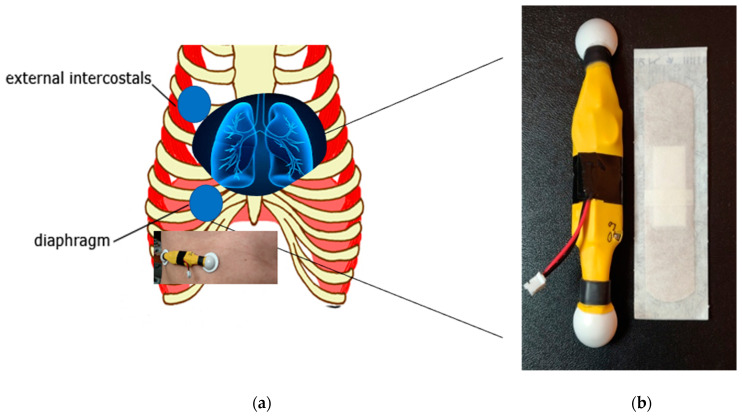
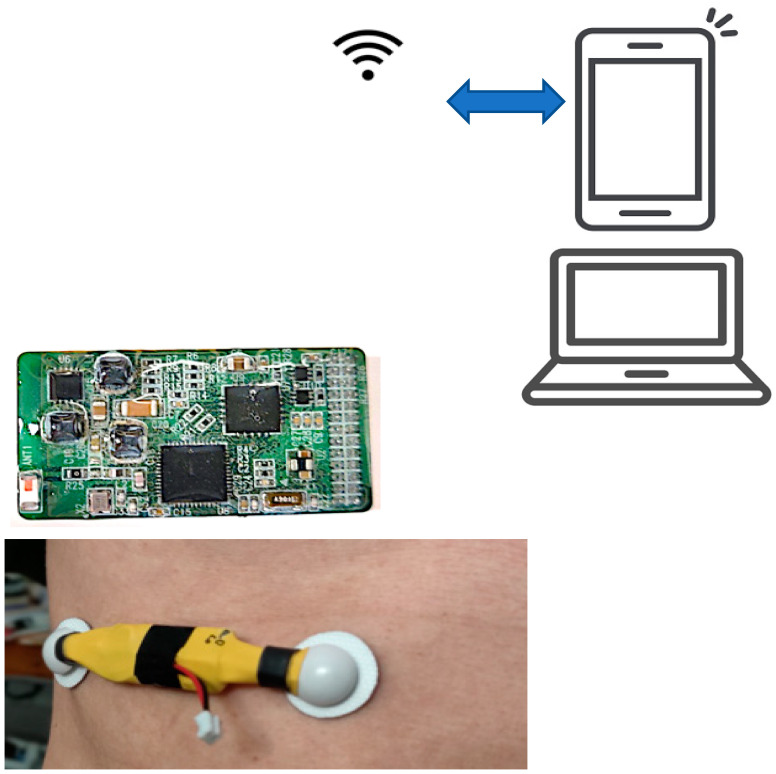
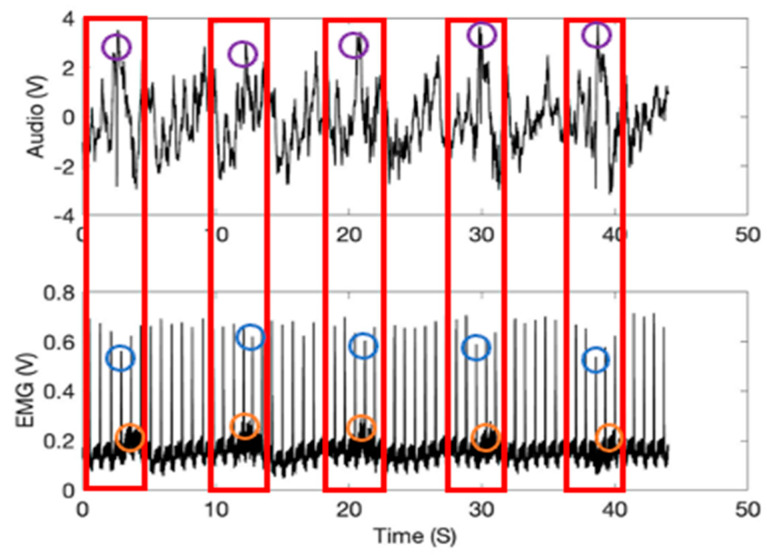
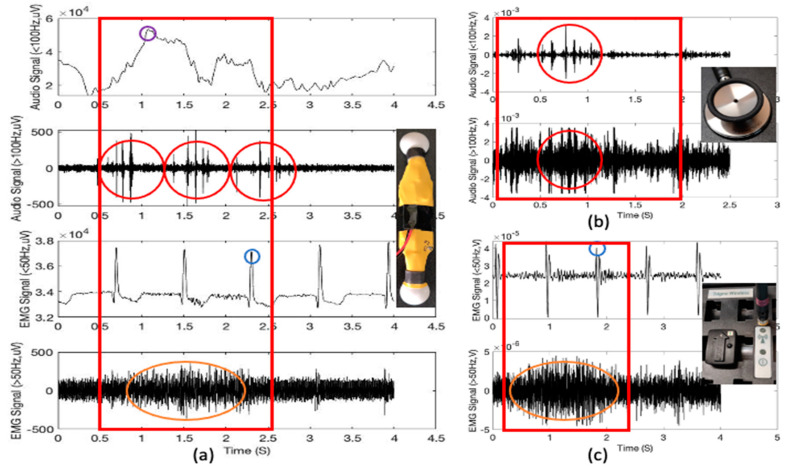
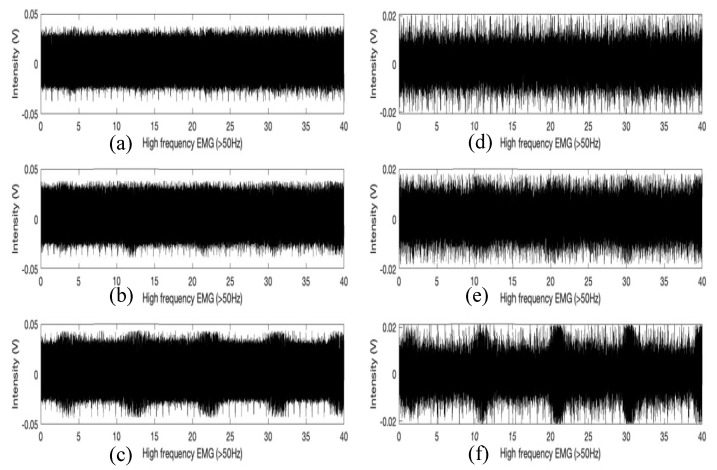
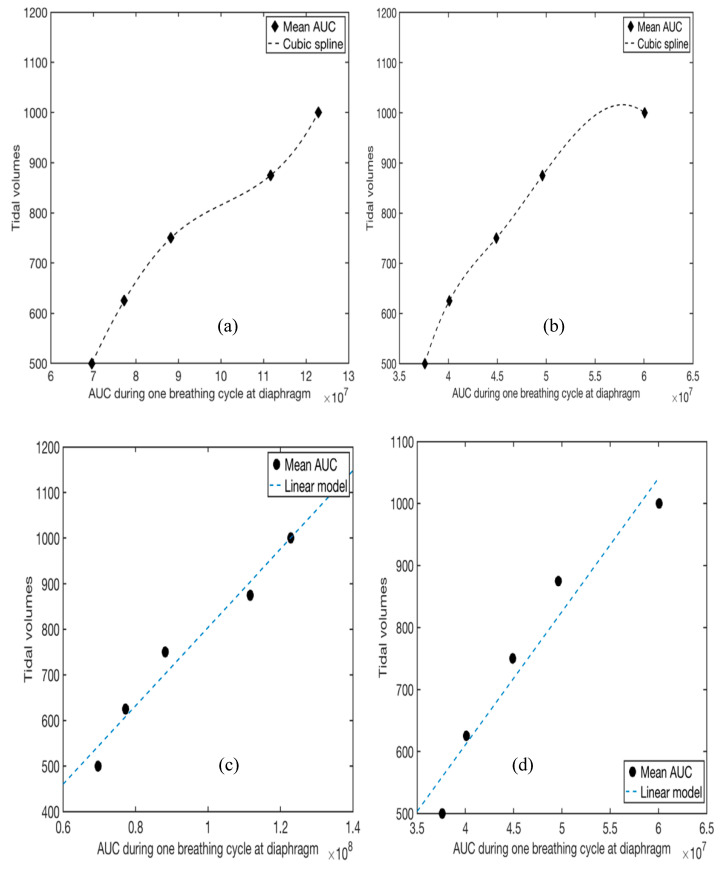
Respiratory activity is an important vital sign of life that can indicate health status. Diseases such as bronchitis, emphysema, pneumonia and coronavirus cause respiratory disorders that affect the respiratory systems. Typically, the diagnosis of these diseases is facilitated by pulmonary auscultation using a stethoscope. We present a new attempt to develop a lightweight, comprehensive wearable sensor system to monitor respiration using a multi-sensor approach. We employed new wearable sensor technology using a novel integration of acoustics and biopotentials to monitor various vital signs on two volunteers. In this study, a new method to monitor lung function, such as respiration rate and tidal volume, is presented using the multi-sensor approach. Using the new sensor, we obtained lung sound, electrocardiogram (ECG), and electromyogram (EMG) measurements at the external intercostal muscles (EIM) and at the diaphragm during breathing cycles with 500 mL, 625 mL, 750 mL, 875 mL, and 1000 mL tidal volume. The tidal volumes were controlled with a spirometer. The duration of each breathing cycle was 8 s and was timed using a metronome. For each of the different tidal volumes, the EMG data was plotted against time and the area under the curve (AUC) was calculated. The AUC calculated from EMG data obtained at the diaphragm and EIM represent the expansion of the diaphragm and EIM respectively. AUC obtained from EMG data collected at the diaphragm had a lower variance between samples per tidal volume compared to those monitored at the EIM. Using cubic spline interpolation, we built a model for computing tidal volume from EMG data at the diaphragm. Our findings show that the new sensor can be used to measure respiration rate and variations thereof and holds potential to estimate tidal lung volume from EMG measurements obtained from the diaphragm.
呼吸活动是生命的重要生命体征,可以指示健康状况。支气管炎、肺气肿、肺炎和冠状病毒等疾病会导致影响呼吸系统的呼吸障碍。通常,这些疾病的诊断是通过使用听诊器进行肺部听诊来辅助的。我们提出了一种新的尝试,即开发一种轻量级、综合的可穿戴传感器系统,通过多传感器方法监测呼吸。我们使用新的可穿戴传感器技术,采用声学和生物电势的新颖集成,在两名志愿者身上监测各种生命体征。在这项研究中,提出了一种使用多传感器方法监测肺功能(例如呼吸频率和潮气量)的新方法。使用新传感器,我们在呼吸周期内获得了肺部声音、心电图 (ECG) 和外部肋间肌 (EIM) 和横膈膜的肌电图 (EMG) 测量值,潮气量为 500 毫升、625 毫升、750 毫升、875 毫升和 1000 毫升。使用肺活量计控制潮气量。每个呼吸周期的持续时间为 8 秒,并使用节拍器计时。对于每个不同的潮气量,将 EMG 数据绘制为时间图,并计算曲线下面积 (AUC)。从横膈膜和 EIM 获得的 EMG 数据计算出的 AUC 分别代表横膈膜和 EIM 的扩张。与在 EIM 监测相比,从横膈膜获得的 EMG 数据计算出的 AUC 每个潮气量的样本之间的方差更小。使用三次样条插值,我们为从横膈膜的 EMG 数据计算潮气量构建了一个模型。我们的研究结果表明,新传感器可用于测量呼吸频率及其变化,并有可能从横膈膜获得的 EMG 测量值估算潮气量。