Institute of Human Movement Science, Sport and Health, University of Graz, A-8010 Graz, Austria.
Institute for Human Movement and Medical Sciences, Niigata University of Health and Welfare, 1398 Shimami-cho, Kita-ku, Niigata 950-3198, Japan.
Int J Environ Res Public Health. 2021 Feb 17;18(4):1936. doi: 10.3390/ijerph18041936.
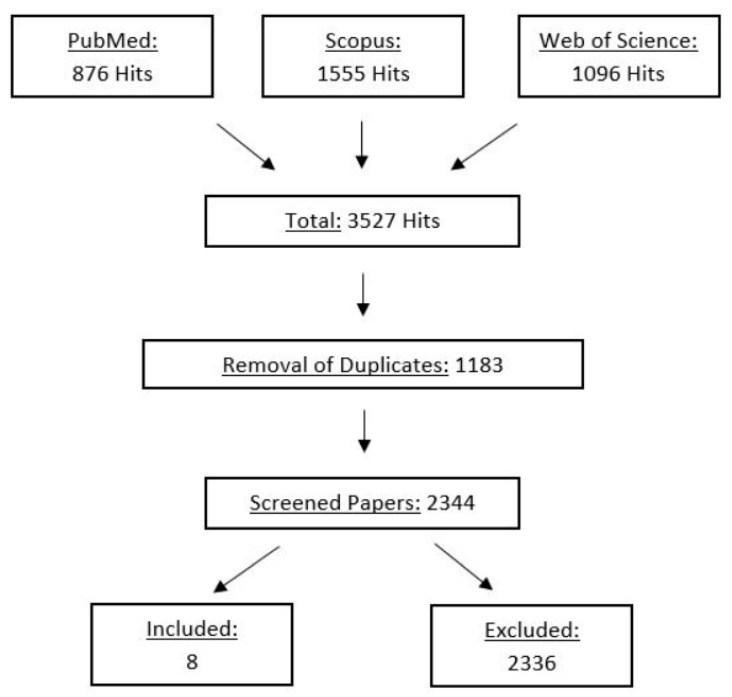
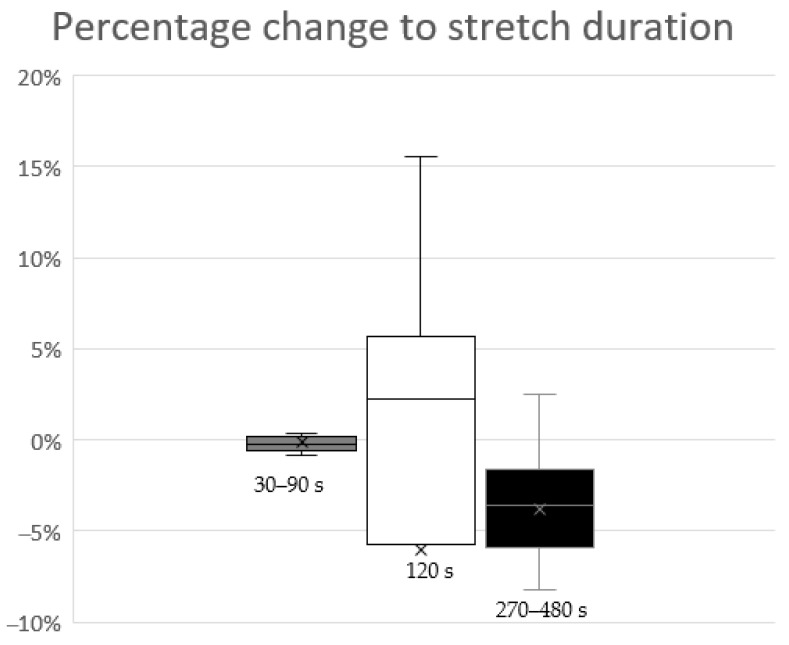
The hip flexor muscles are major contributors to lumbar spine stability. Tight hip flexors can lead to pain in the lumbar spine, and hence to an impairment in performance. Moreover, sedentary behavior is a common problem and a major contributor to restricted hip extension flexibility. Stretching can be a tool to reduce muscle tightness and to overcome the aforementioned problems. Therefore, the purpose of this systematic review with meta-analysis was to determine the effects of a single hip flexor stretching exercise on performance parameters. The online search was performed in the following three databases: PubMed, Scopus, and Web of Science. Eight studies were included in this review with a total of 165 subjects (male: 111; female 54). In contrast to other muscle groups (e.g., plantar flexors), where 120 s of stretching likely decreases force production, it seems that isolated hip flexor stretching of up to 120 s has no effect or even a positive impact on performance-related parameters. A comparison of the effects on performance between the three defined stretch durations (30-90 s; 120 s; 270-480 s) revealed a significantly different change in performance ( = 0.02) between the studies with the lowest hip flexor stretch duration (30-90 s; weighted mean performance change: -0.12%; CI (95%): -0.49 to 0.41) and the studies with the highest hip flexor stretch duration (270-480 s; performance change: -3.59%; CI (95%): -5.92 to -2.04). Meta-analysis revealed a significant (but trivial) impairment in the highest hip flexor stretch duration of 270-480 s (SMD effect size = -0.19; CI (95%) -0.379 to 0.000; Z = -1.959; = 0.05; I = 0.62%), but not in the lowest stretch duration (30-90 s). This indicates a dose-response relationship in the hip flexor muscles. Although the evidence is based on a small number of studies, this information will be of great importance for both athletes and coaches.
髋关节屈肌是腰椎稳定性的主要贡献者。髋关节屈肌紧张会导致腰椎疼痛,从而影响表现。此外,久坐行为是一个常见问题,也是髋关节伸展灵活性受限的主要原因。伸展运动可以减少肌肉紧张并克服上述问题。因此,本系统评价和荟萃分析的目的是确定单次髋关节屈肌伸展运动对运动表现参数的影响。在线搜索在以下三个数据库中进行:PubMed、Scopus 和 Web of Science。本综述纳入了八项研究,共有 165 名受试者(男性 111 名;女性 54 名)。与其他肌肉群(例如,跖屈肌)不同,120 秒的伸展运动可能会降低力量产生,似乎长达 120 秒的孤立髋关节屈肌伸展运动对与性能相关的参数没有影响,甚至有积极影响。对三种定义的伸展持续时间(30-90 s;120 s;270-480 s)之间的影响进行比较,结果显示伸展持续时间最短(30-90 s)的研究与伸展持续时间最长(270-480 s)的研究之间的性能变化有显著差异( = 0.02)(-0.12%;95%CI(95%):-0.49 至 0.41)。荟萃分析显示,伸展持续时间最长的髋关节屈肌(270-480 s)有显著(但微不足道)的损伤(SMD 效应大小=-0.19;95%CI(95%):-0.379 至 0.000;Z=-1.959; = 0.05;I=0.62%),而伸展持续时间最短的髋关节屈肌(30-90 s)则没有。这表明髋关节屈肌存在剂量反应关系。尽管证据基于少数研究,但这些信息对运动员和教练都非常重要。