Montaño-Machado Vanessa, Chevallier Pascale, Bonilla-Gameros Linda, Copes Francesco, Quarta Chiara, Kú-Herrera José de Jesús, Soriano Florentino, Padilla-Gainza Victoria, Morales Graciela, Mantovani Diego
Laboratory for Biomaterials and Bioengineering (CRC-I), Department of Min-Met-Materials Engineering & CHU de Quebec Research Center, Laval University, Quebec City, QC G1V0A6, Canada.
Centro de Investigación en Química Aplicada, Blvd. Enrique Reyna 140, Saltillo CP 25294, Coah, Mexico.
Materials (Basel). 2021 Feb 23;14(4):1047. doi: 10.3390/ma14041047.
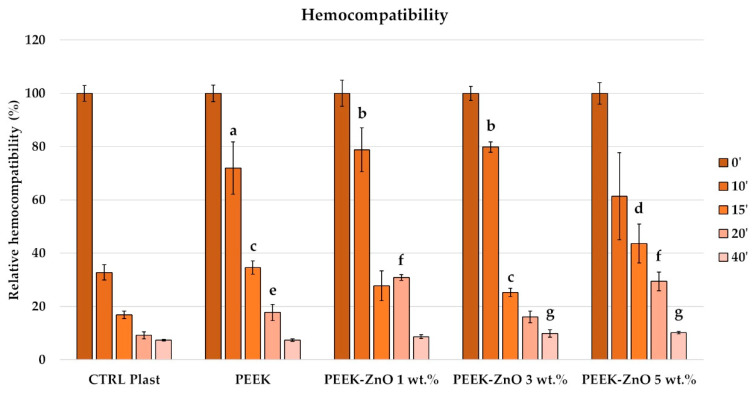
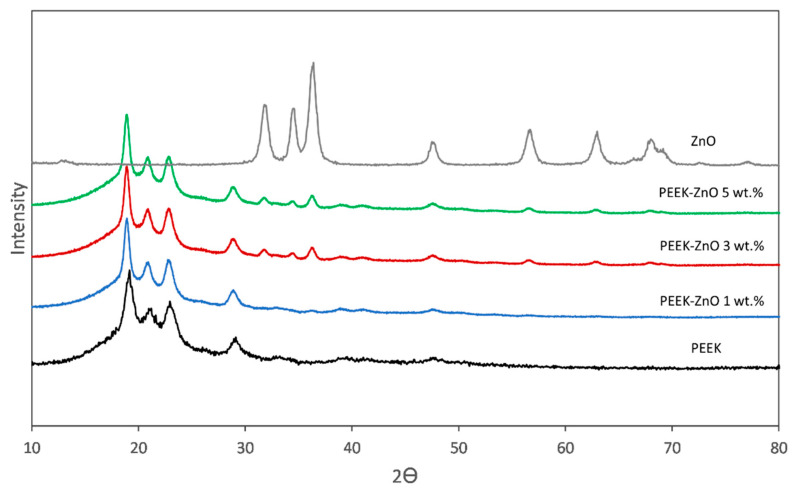
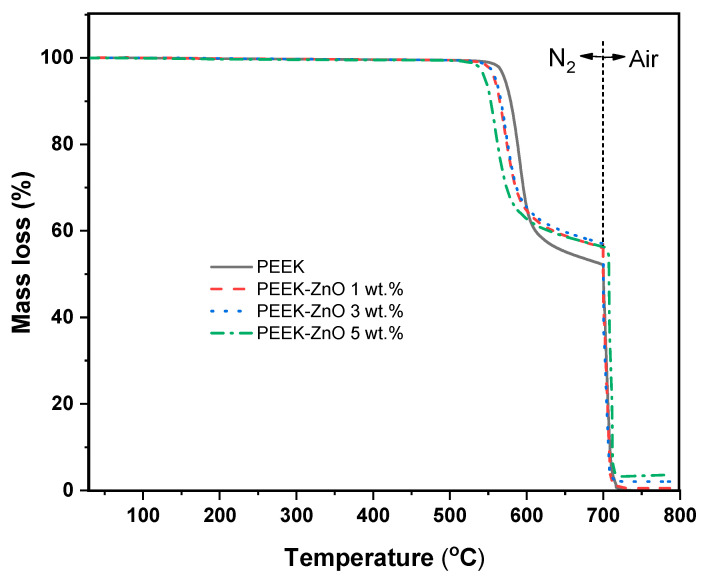
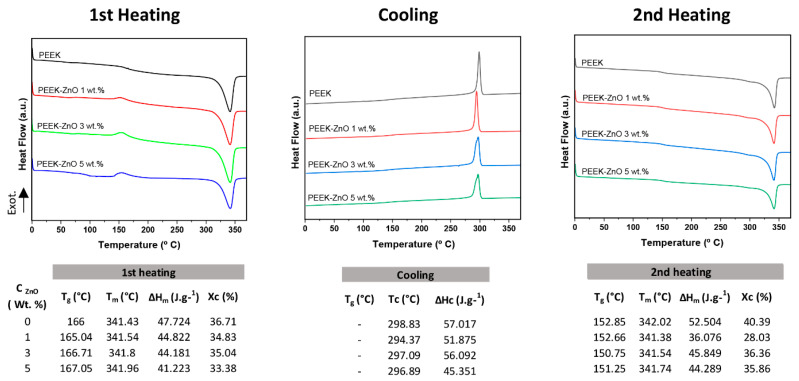
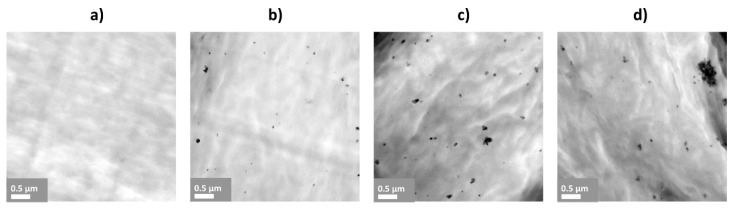
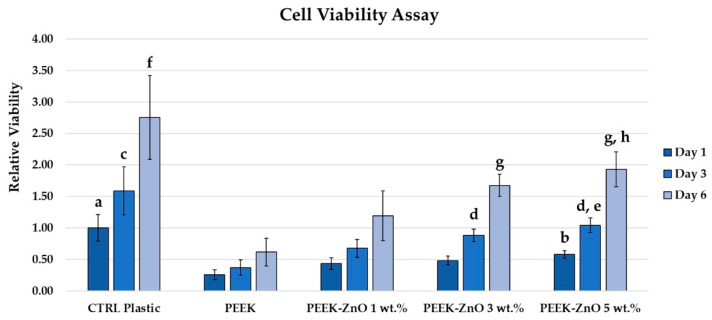
The main target for the future of materials in dentistry aims to develop dental implants that will have optimal integration with the surrounding tissues, while preventing or avoiding bacterial infections. In this project, poly(ether ether ketone) (PEEK), known for its suitable biocompa-tibility and mechanical properties for dental applications, was loaded with 1, 3, and 5 wt.% ZnO nanoparticles to provide antibacterial properties and improve interaction with cells. Sample cha-racterization by X-ray diffraction (XRD), thermogravimetric analysis (TGA), and differential scanning calorimetry (DSC) as well as mechanical properties showed the presence of the nanoparticles and their effect in PEEK matrices, preserving their relevant properties for dental applications. Al-though, the incorporation of ZnO nanoparticles did not improve the mechanical properties and a slight decrease in the thermal stability of the materials was observed. Hemocompatibility and osteoblasts-like cell viability tests showed improved biological performances when ZnO was present, demonstrating high potential for dental implant applications.
牙科材料未来的主要目标是开发出能与周围组织实现最佳整合,同时预防或避免细菌感染的牙科植入物。在本项目中,聚醚醚酮(PEEK)因其在牙科应用中具有合适的生物相容性和机械性能而闻名,该材料负载了1 wt.%、3 wt.%和5 wt.%的ZnO纳米颗粒,以提供抗菌性能并改善与细胞的相互作用。通过X射线衍射(XRD)、热重分析(TGA)和差示扫描量热法(DSC)对样品进行表征以及对机械性能进行测试,结果表明纳米颗粒的存在及其在PEEK基体中的作用,同时保留了它们在牙科应用中的相关性能。不过,ZnO纳米颗粒的加入并没有改善材料的机械性能,并且观察到材料的热稳定性略有下降。血液相容性和成骨样细胞活力测试表明,当存在ZnO时,材料的生物学性能得到改善,这证明了其在牙科植入物应用方面具有很高的潜力。