Robertson Christopher G, Hardman Ned J
Endurica LLC., Findlay, OH 45840, USA.
Monolith Materials, Monolith Technical Center, Lincoln, NE 68522, USA.
Polymers (Basel). 2021 Feb 12;13(4):538. doi: 10.3390/polym13040538.
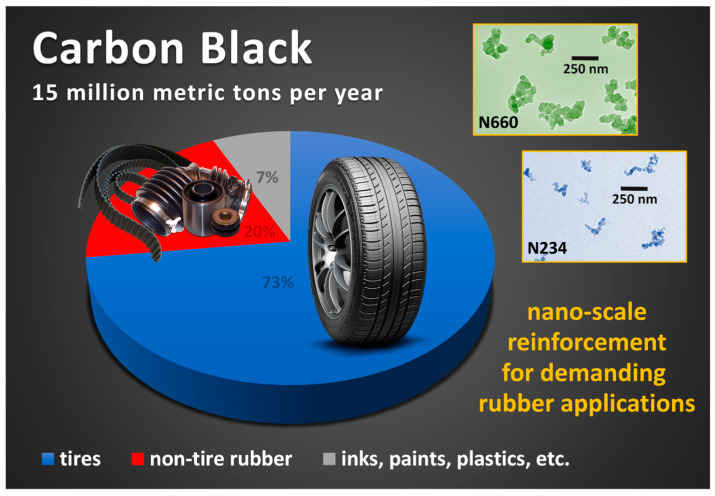
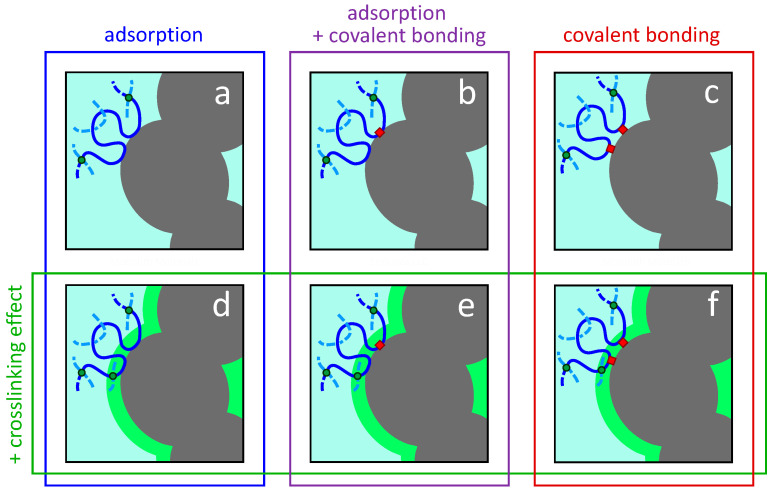
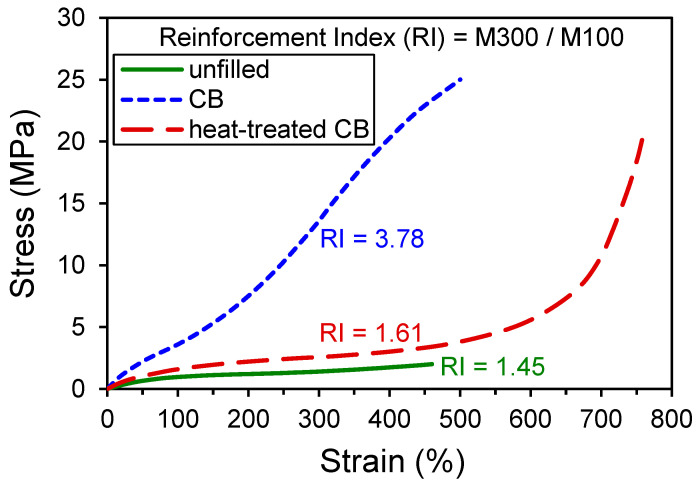
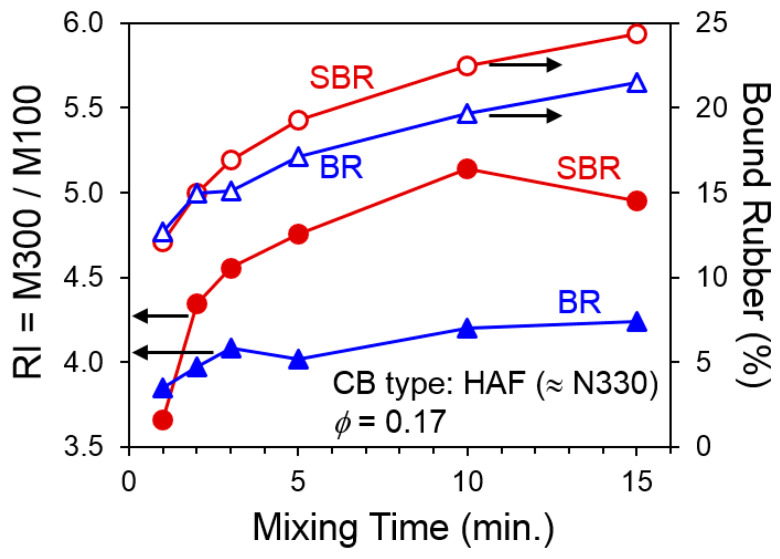
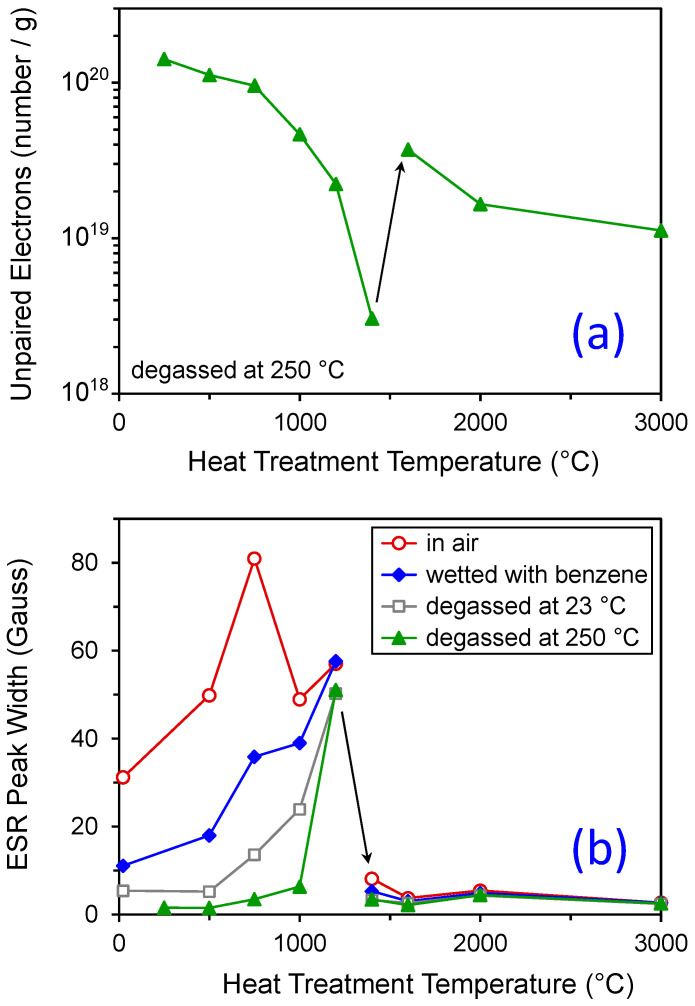
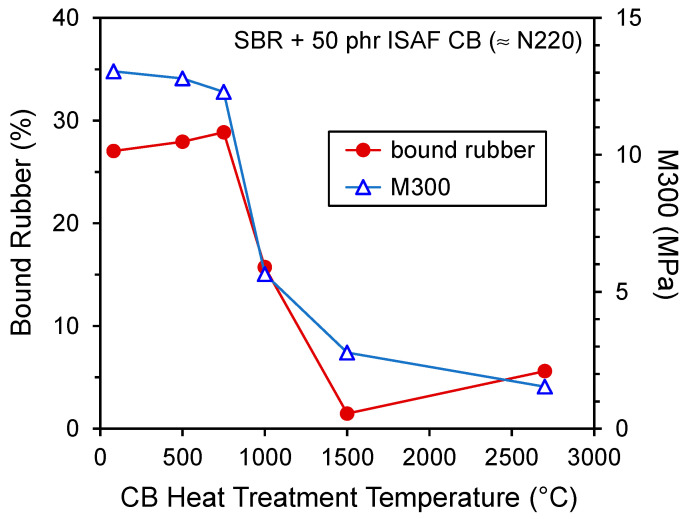
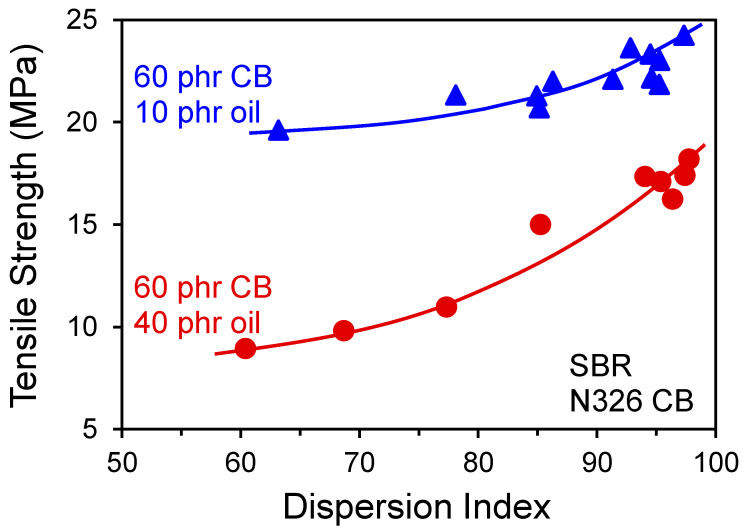
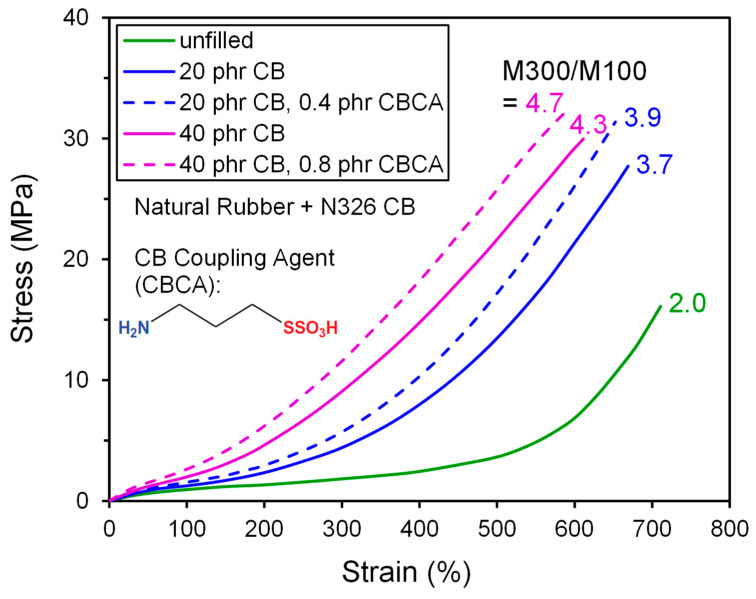
Adding carbon black (CB) particles to elastomeric polymers is essential to the successful industrial use of rubber in many applications, and the mechanical reinforcing effect of CB in rubber has been studied for nearly 100 years. Despite these many decades of investigations, the origin of stiffness enhancement of elastomers from incorporating nanometer-scale CB particles is still debated. It is not universally accepted whether the interactions between polymer chains and CB surfaces are purely physical adsorption or whether some polymer-particle chemical bonds are also introduced in the process of mixing and curing the CB-filled rubber compounds. We review key experimental observations of rubber reinforced with CB, including the finding that heat treatment of CB can greatly reduce the filler reinforcement effect in rubber. The details of the particle morphology and surface chemistry are described to give insights into the nature of the CB-elastomer interfaces. This is followed by a discussion of rubber processing effects, the influence of CB on crosslinking, and various chemical modification approaches that have been employed to improve polymer-filler interactions and reinforcement. Finally, we contrast various models that have been proposed for rationalizing the CB reinforcement of elastomers.
在许多应用中,向弹性体聚合物中添加炭黑(CB)颗粒对于橡胶在工业上的成功应用至关重要,并且炭黑在橡胶中的机械增强作用已经研究了近100年。尽管经过了数十年的研究,但对于通过掺入纳米级炭黑颗粒来提高弹性体刚度的起源仍存在争议。聚合物链与炭黑表面之间的相互作用是纯粹的物理吸附,还是在混合和硫化填充炭黑的橡胶化合物过程中也引入了一些聚合物 - 颗粒化学键,这一点并未得到普遍认可。我们回顾了用炭黑增强橡胶的关键实验观察结果,包括炭黑的热处理会大大降低橡胶中的填料增强效果这一发现。描述了颗粒形态和表面化学的细节,以深入了解炭黑 - 弹性体界面的性质。接下来讨论橡胶加工效果、炭黑对交联的影响以及为改善聚合物 - 填料相互作用和增强效果而采用的各种化学改性方法。最后,我们对比了为合理化炭黑增强弹性体而提出的各种模型。