Division of Pulmonology, Allergy-Immunology and Sleep, Department of Pediatrics, College of Medicine, University of Tennessee Health Science Center, Memphis, TN 38163, USA.
Children's Foundation Research Institute, Memphis, TN 38105, USA.
Cells. 2021 Feb 27;10(3):509. doi: 10.3390/cells10030509.
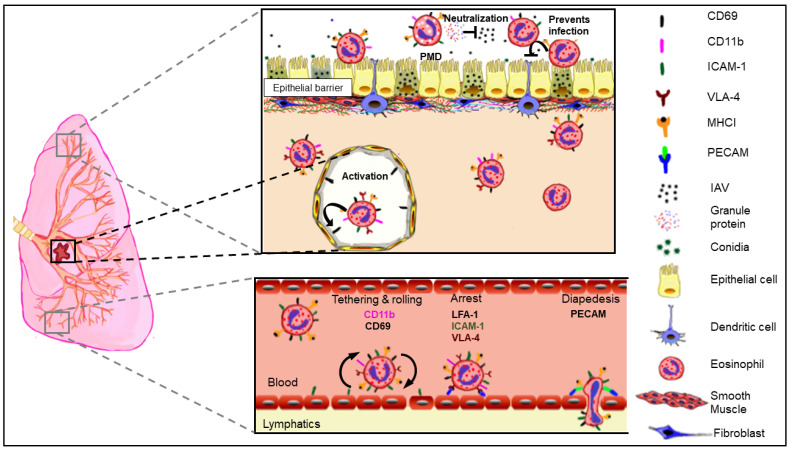
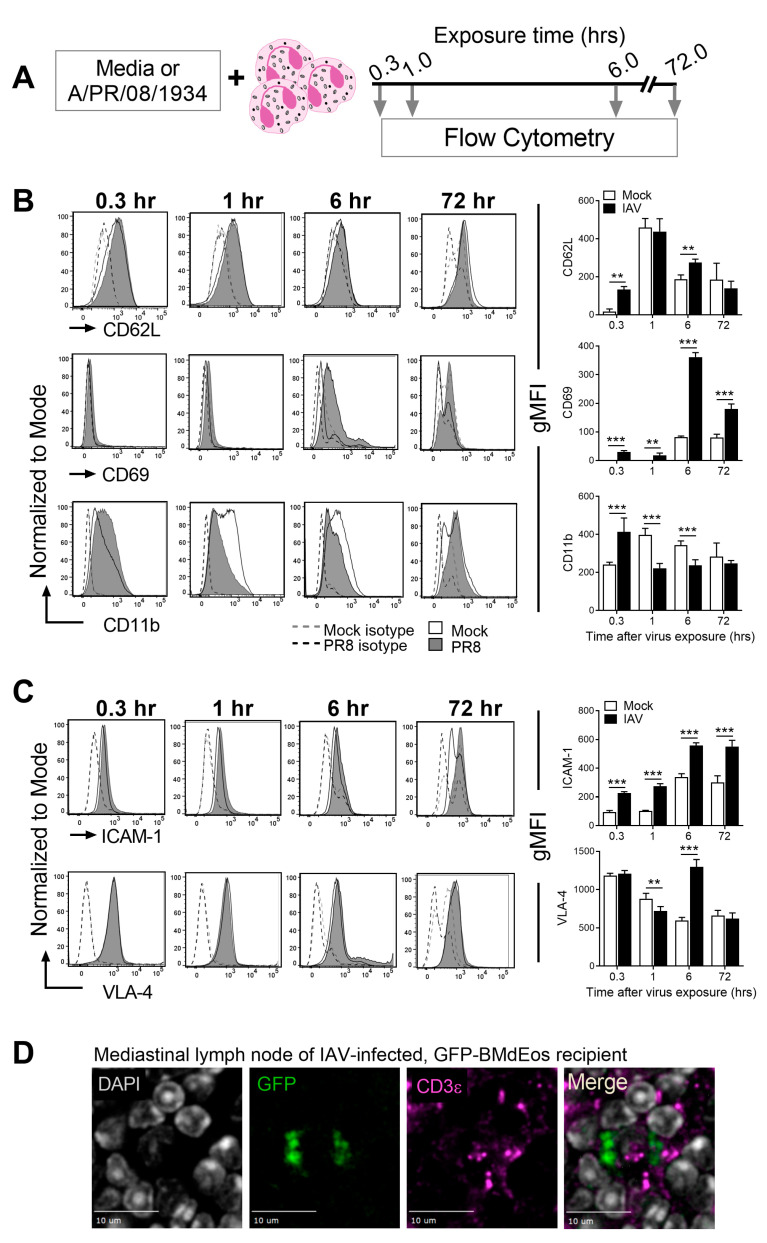
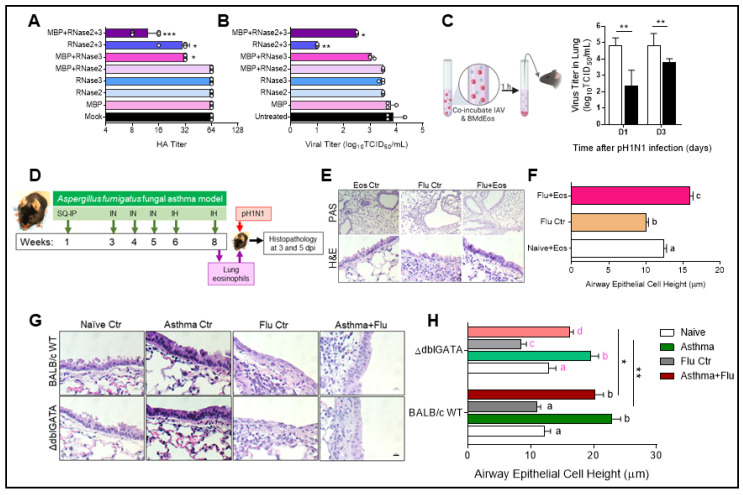
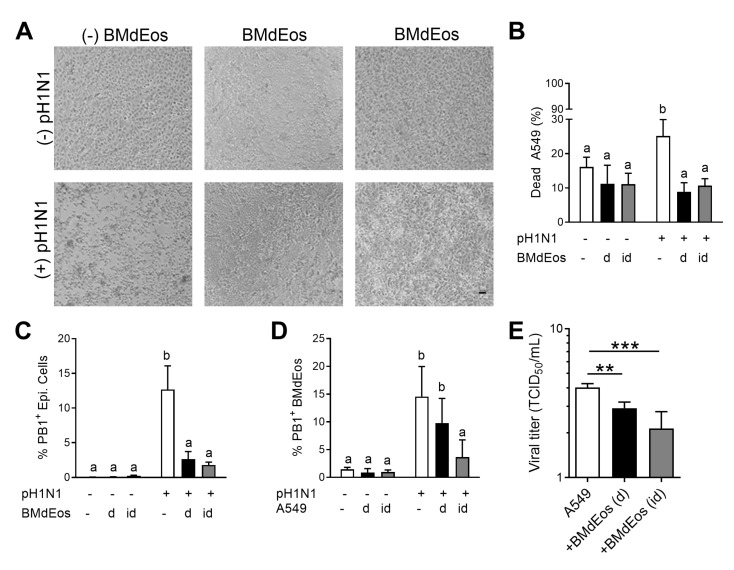
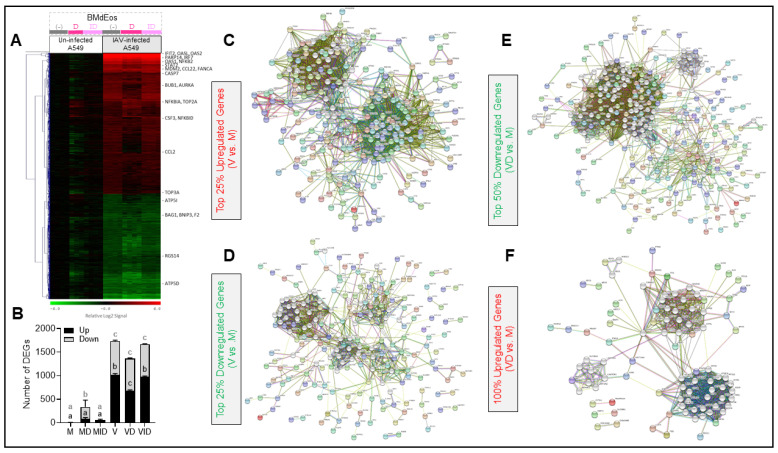
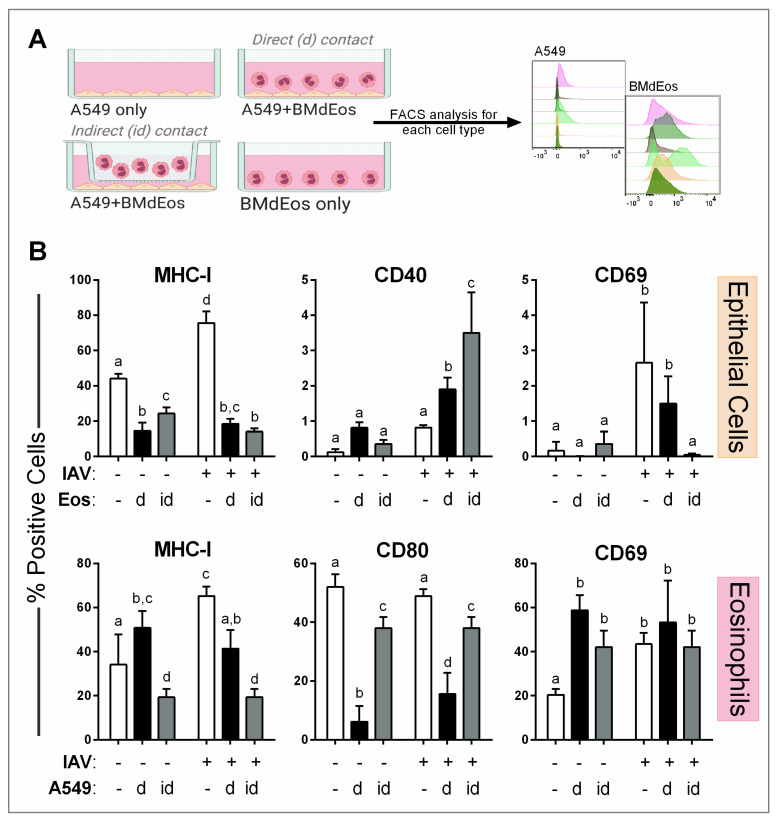
Eosinophils, previously considered terminally differentiated effector cells, have multifaceted functions in tissues. We previously found that allergic mice with eosinophil-rich inflammation were protected from severe influenza and discovered specialized antiviral effector functions for eosinophils including promoting cellular immunity during influenza. In this study, we hypothesized that eosinophil responses during the early phase of influenza contribute to host protection. Using in vitro and in vivo models, we found that eosinophils were rapidly and dynamically regulated upon influenza A virus (IAV) exposure to gain migratory capabilities to traffic to lymphoid organs after pulmonary infection. Eosinophils were capable of neutralizing virus upon contact and combinations of eosinophil granule proteins reduced virus infectivity through hemagglutinin inactivation. Bi-directional crosstalk between IAV-exposed epithelial cells and eosinophils occurred after IAV infection and cross-regulation promoted barrier responses to improve antiviral defenses in airway epithelial cells. Direct interactions between eosinophils and airway epithelial cells after IAV infection prevented virus-induced cytopathology in airway epithelial cells in vitro, and eosinophil recipient IAV-infected mice also maintained normal airway epithelial cell morphology. Our data suggest that eosinophils are important in the early phase of IAV infection providing immediate protection to the epithelial barrier until adaptive immune responses are deployed during influenza.
嗜酸性粒细胞,以前被认为是终末分化的效应细胞,在组织中具有多方面的功能。我们之前发现,富含嗜酸性粒细胞的过敏小鼠对严重流感具有保护作用,并发现嗜酸性粒细胞具有专门的抗病毒效应功能,包括在流感期间促进细胞免疫。在这项研究中,我们假设流感病毒(IAV)感染早期的嗜酸性粒细胞反应有助于宿主保护。使用体外和体内模型,我们发现嗜酸性粒细胞在接触流感病毒 A(IAV)后迅速和动态地被调节,获得迁移能力,在肺部感染后迁移到淋巴器官。嗜酸性粒细胞能够在接触时中和病毒,并且嗜酸性粒细胞颗粒蛋白的组合通过血凝素失活降低病毒感染力。IAV 感染后,IAV 暴露的上皮细胞和嗜酸性粒细胞之间发生双向串扰,交叉调节促进了气道上皮细胞的屏障反应,提高了抗病毒防御能力。流感病毒感染后嗜酸性粒细胞与气道上皮细胞的直接相互作用可防止气道上皮细胞中病毒诱导的细胞病变,并且接受嗜酸性粒细胞的流感病毒感染小鼠也保持正常的气道上皮细胞形态。我们的数据表明,嗜酸性粒细胞在 IAV 感染的早期阶段很重要,为上皮屏障提供即时保护,直到流感期间适应性免疫反应被部署。