Center for Cognitive Neuroscience, Dartmouth College, Hanover, NH, United States.
Vicarious AI, Union City, CA, United States.
Elife. 2021 Mar 8;10:e64058. doi: 10.7554/eLife.64058.
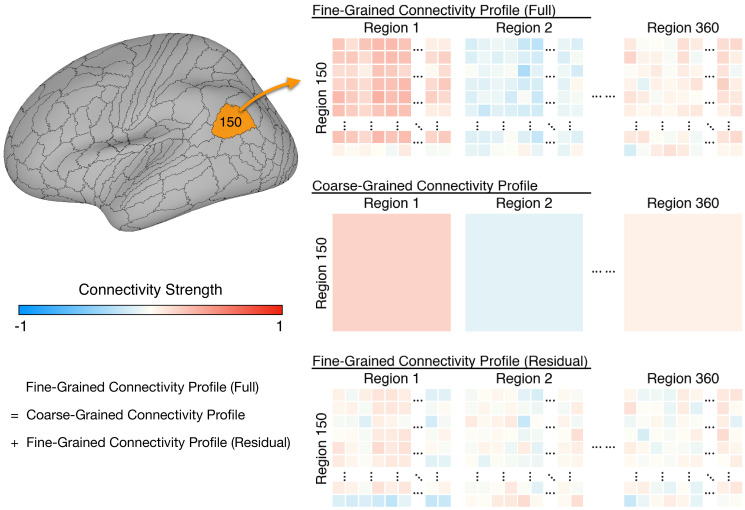
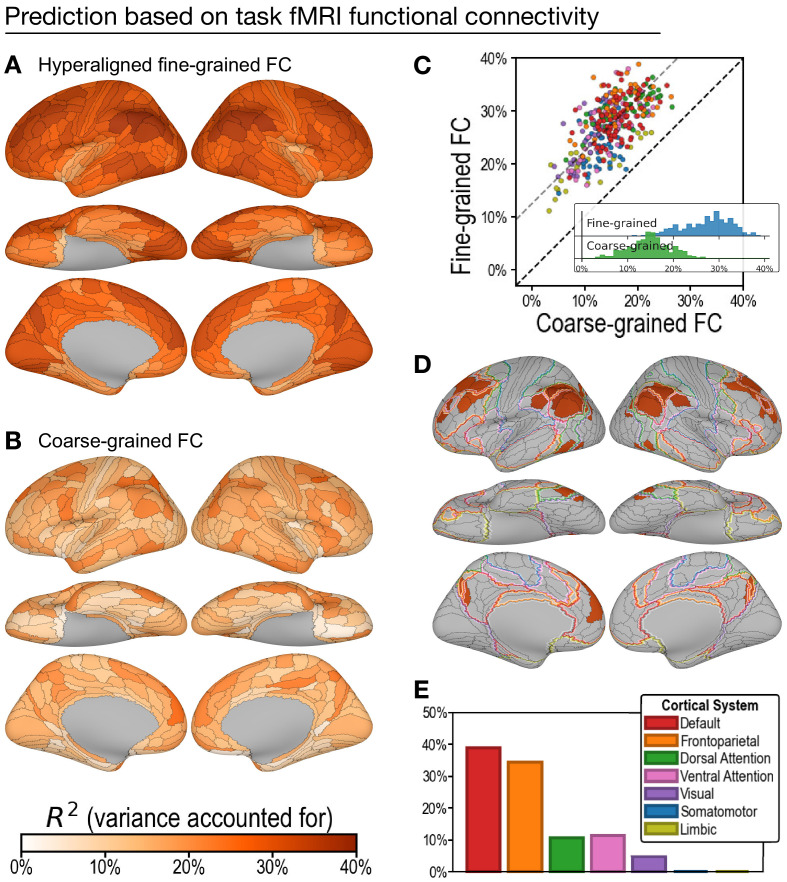
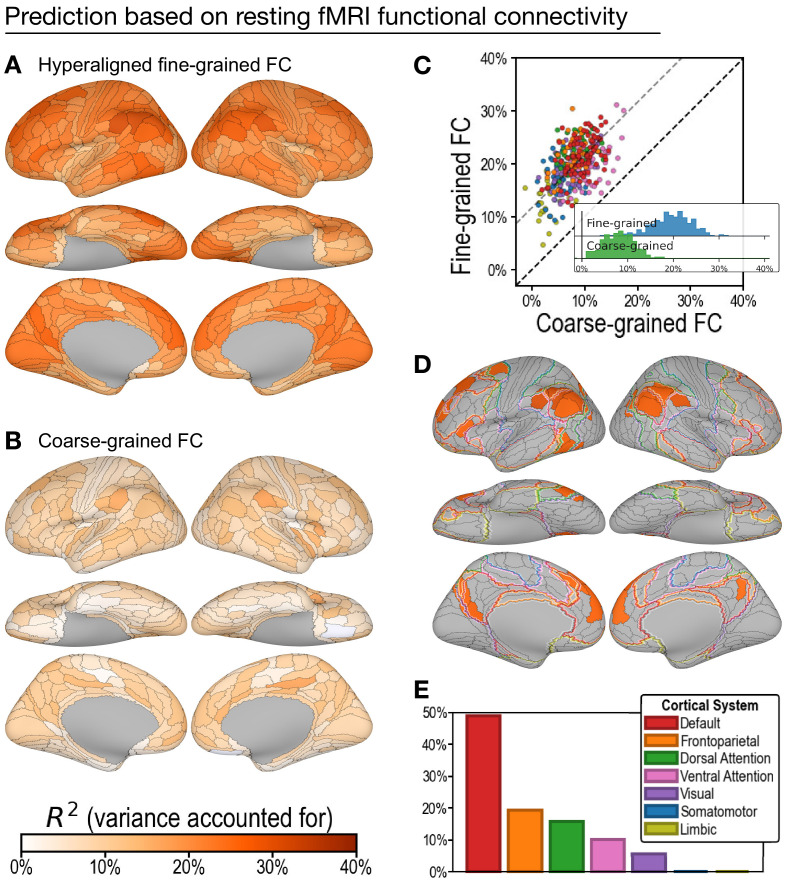
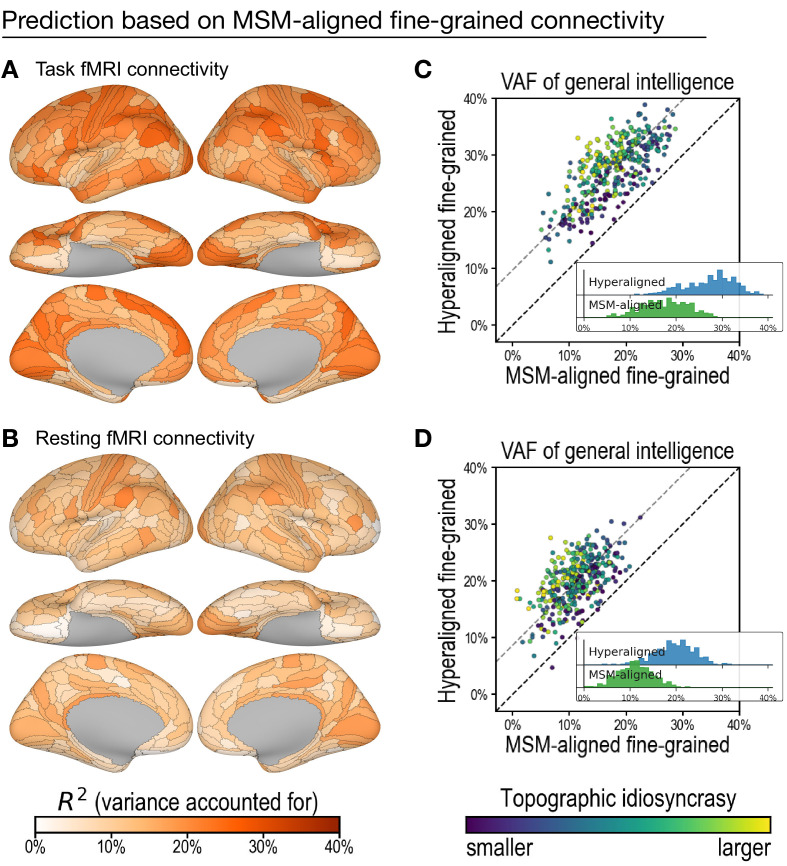
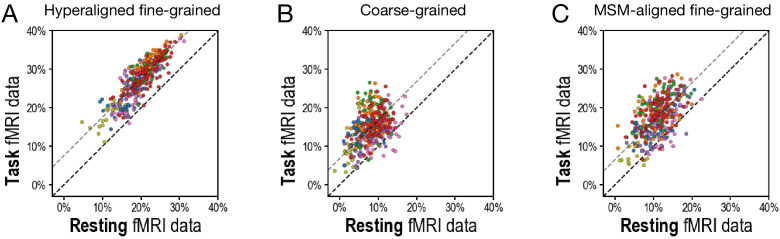
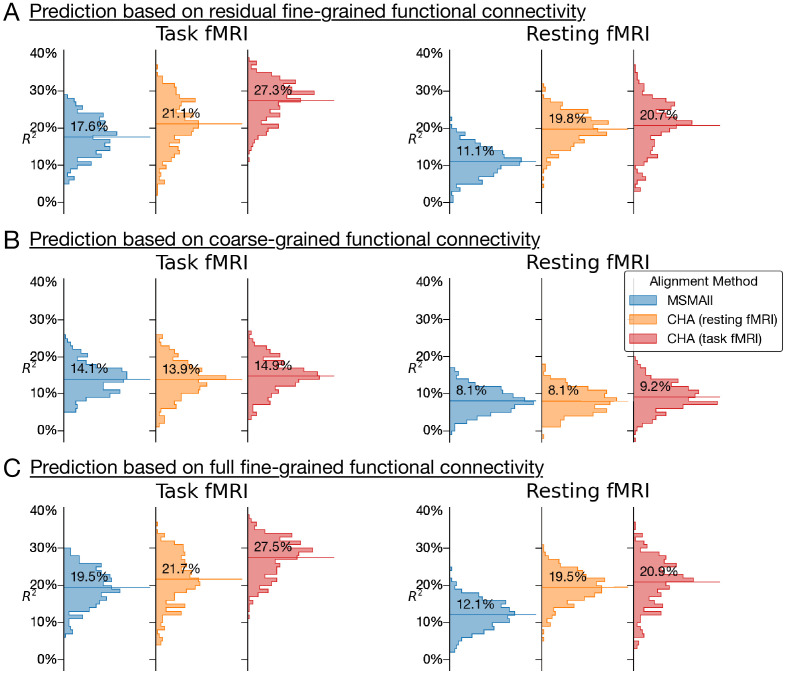
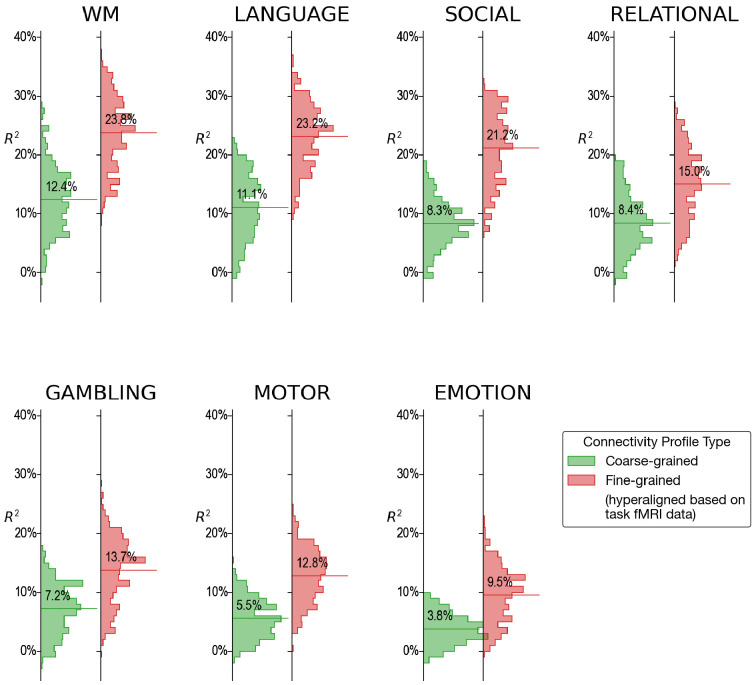
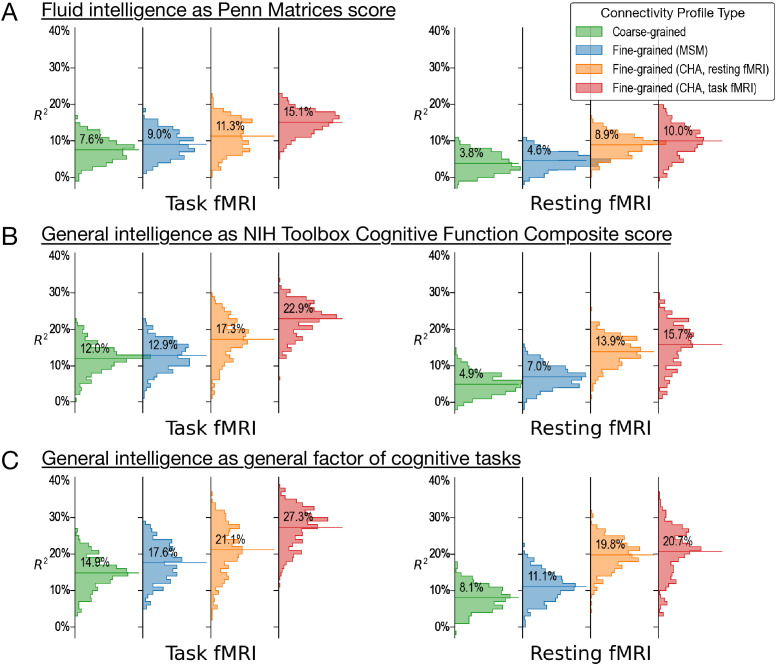
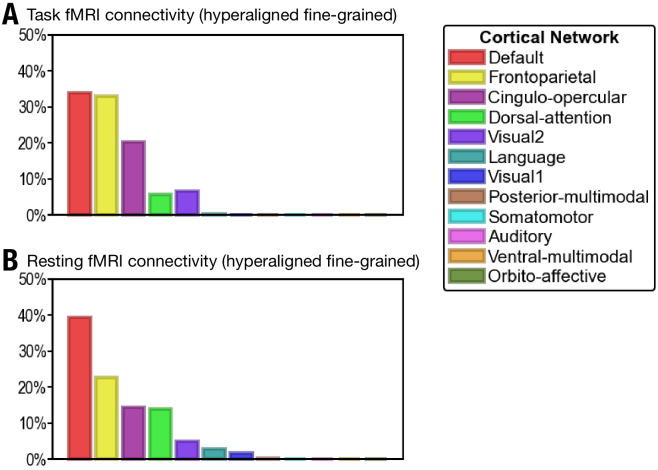
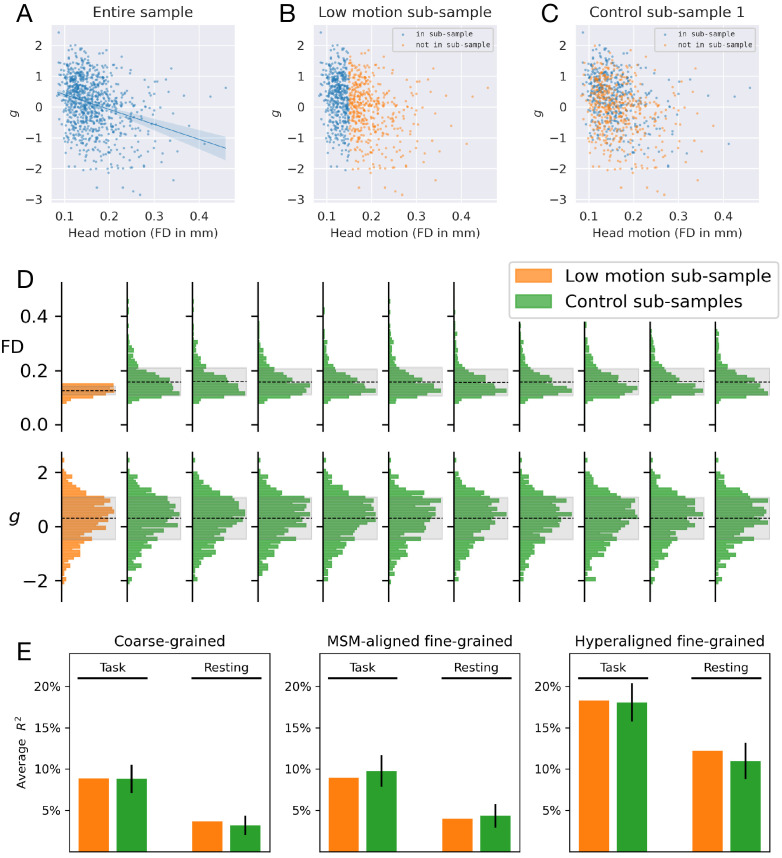
Intelligent thought is the product of efficient neural information processing, which is embedded in fine-grained, topographically organized population responses and supported by fine-grained patterns of connectivity among cortical fields. Previous work on the neural basis of intelligence, however, has focused on coarse-grained features of brain anatomy and function because cortical topographies are highly idiosyncratic at a finer scale, obscuring individual differences in fine-grained connectivity patterns. We used a computational algorithm, hyperalignment, to resolve these topographic idiosyncrasies and found that predictions of general intelligence based on fine-grained (vertex-by-vertex) connectivity patterns were markedly stronger than predictions based on coarse-grained (region-by-region) patterns. Intelligence was best predicted by fine-grained connectivity in the default and frontoparietal cortical systems, both of which are associated with self-generated thought. Previous work overlooked fine-grained architecture because existing methods could not resolve idiosyncratic topographies, preventing investigation where the keys to the neural basis of intelligence are more likely to be found.
智能思维是高效神经信息处理的产物,它嵌入在精细的、地形组织的群体反应中,并由皮质区域之间精细的连接模式支持。然而,先前关于智力的神经基础的研究主要集中在大脑解剖和功能的粗粒度特征上,因为皮质地形在更精细的尺度上高度独特,掩盖了细粒度连接模式的个体差异。我们使用了一种计算算法,超对齐,来解决这些地形上的差异,并发现基于细粒度(顶点到顶点)连接模式的一般智力预测明显强于基于粗粒度(区域到区域)模式的预测。精细的连接模式在默认和额顶皮质系统中对智力的预测最好,这两个系统都与自我产生的思维有关。先前的工作忽略了细粒度的结构,因为现有的方法无法解决独特的地形,从而阻止了在更有可能找到智力神经基础关键的地方进行研究。