Department of Pediatrics, New York University School of Medicine, New York, New York, United States of America.
University of Vermont Larner College of Medicine, Burlington, Vermont, United States of America.
PLoS Pathog. 2021 Mar 8;17(3):e1009116. doi: 10.1371/journal.ppat.1009116. eCollection 2021 Mar.
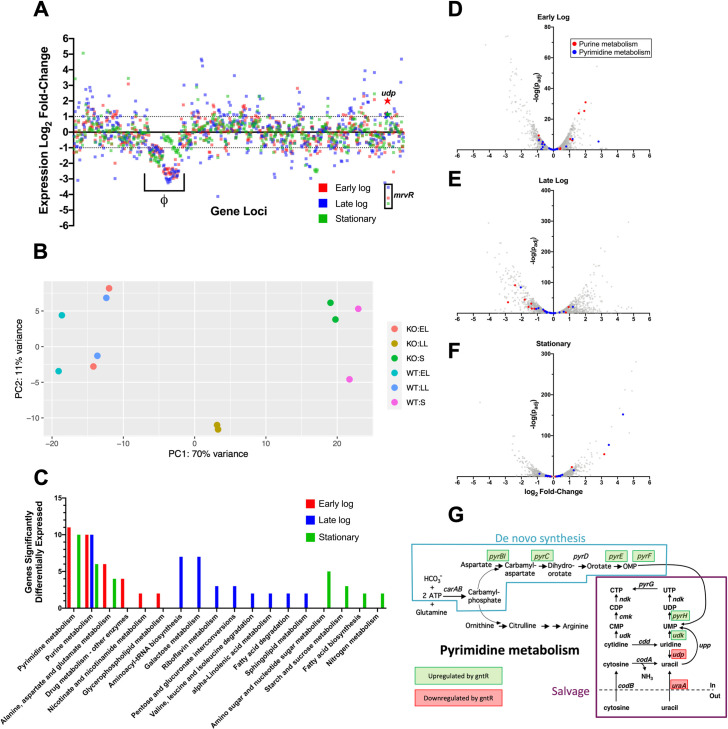
Streptococcus agalactiae (group B Streptococcus; GBS) remains a dominant cause of serious neonatal infections. One aspect of GBS that renders it particularly virulent during the perinatal period is its ability to invade the chorioamniotic membranes and persist in amniotic fluid, which is nutritionally deplete and rich in fetal immunologic factors such as antimicrobial peptides. We used next-generation sequencing of transposon-genome junctions (Tn-seq) to identify five GBS genes that promote survival in the presence of human amniotic fluid. We confirmed our Tn-seq findings using a novel CRISPR inhibition (CRISPRi) gene expression knockdown system. This analysis showed that one gene, which encodes a GntR-class transcription factor that we named MrvR, conferred a significant fitness benefit to GBS in amniotic fluid. We generated an isogenic targeted deletion of the mrvR gene, which had a growth defect in amniotic fluid relative to the wild type parent strain. The mrvR deletion strain also showed a significant biofilm defect in vitro. Subsequent in vivo studies showed that while the mutant was able to cause persistent murine vaginal colonization, pregnant mice colonized with the mrvR deletion strain did not develop preterm labor despite consistent GBS invasion of the uterus and the fetoplacental units. In contrast, pregnant mice colonized with wild type GBS consistently deliver prematurely. In a sepsis model the mrvR deletion strain showed significantly decreased lethality. In order to better understand the mechanism by which this newly identified transcription factor controls GBS virulence, we performed RNA-seq on wild type and mrvR deletion GBS strains, which revealed that the transcription factor affects expression of a wide range of genes across the GBS chromosome. Nucleotide biosynthesis and salvage pathways were highly represented among the set of differentially expressed genes, suggesting that MrvR may be involved in regulating nucleotide availability.
无乳链球菌(B 群链球菌;GBS)仍然是导致严重新生儿感染的主要原因。GBS 在围产期具有很强的毒力,其中一个方面是它能够侵袭绒毛膜羊膜并在羊水(富含胎儿免疫因子如抗菌肽且营养匮乏)中持续存在。我们使用转座子基因组连接的下一代测序(Tn-seq)鉴定了五个促进 GBS 在人羊水存在下存活的 GBS 基因。我们使用一种新型的 CRISPR 抑制(CRISPRi)基因表达敲低系统来验证我们的 Tn-seq 发现。该分析表明,一个基因(编码一种 GntR 类转录因子,我们将其命名为 MrvR)赋予 GBS 在羊水中显著的适应性优势。我们构建了 mrvR 基因的同源靶向缺失株,该缺失株在羊水培养中存在生长缺陷。mrvR 缺失株在体外的生物膜缺陷也很明显。随后的体内研究表明,虽然突变株能够导致持续性的鼠阴道定植,但感染 mrvR 缺失株的怀孕小鼠并未发生早产,尽管 GBS 持续侵袭子宫和胎-胎盘单位。相比之下,感染野生型 GBS 的怀孕小鼠则会早产。在败血症模型中,mrvR 缺失株的致死率显著降低。为了更好地理解这个新鉴定的转录因子控制 GBS 毒力的机制,我们对野生型和 mrvR 缺失 GBS 菌株进行了 RNA-seq 分析,结果表明该转录因子影响 GBS 染色体上广泛的基因表达。核苷酸生物合成和回收途径在差异表达基因中占很高比例,这表明 MrvR 可能参与调节核苷酸的可用性。