Bioprocess and Biochemical Engineering Group (BioProChem), Department of Chemical and Process Engineering, University of Surrey, Guildford, UK.
Department of Physics, University of Surrey, Guildford, UK.
Br J Radiol. 2021 Apr 1;94(1120):20201397. doi: 10.1259/bjr.20201397. Epub 2021 Mar 8.
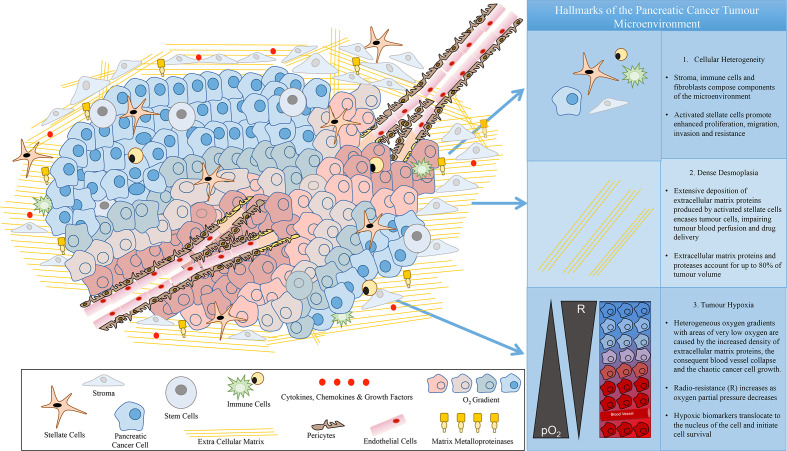
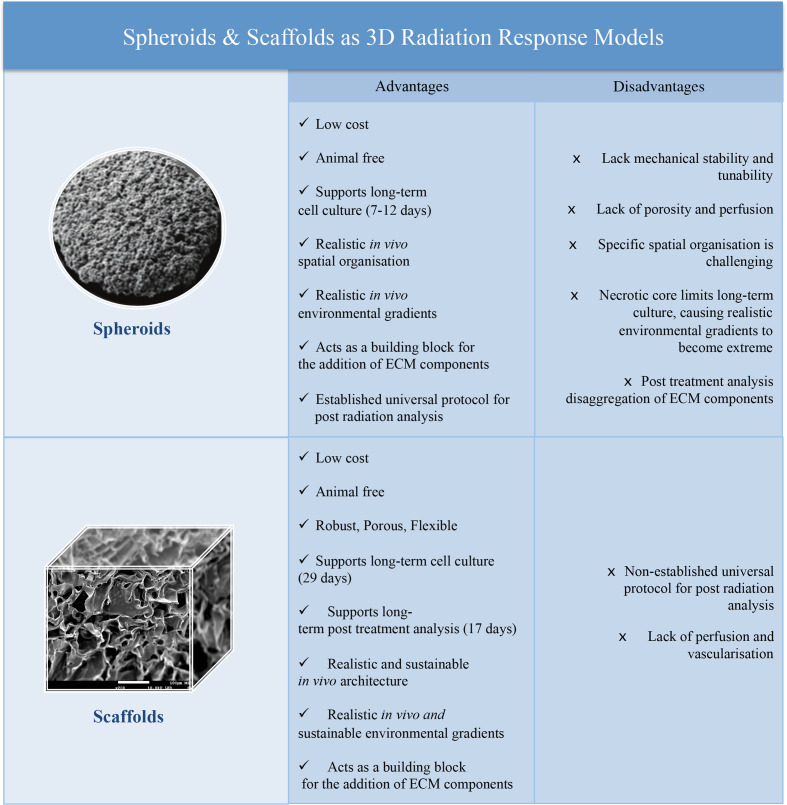
The efficiency of radiotherapy treatment regimes varies from tumour to tumour and from patient to patient but it is generally highly influenced by the tumour microenvironment (TME). The TME can be described as a heterogeneous composition of biological, biophysical, biomechanical and biochemical milieus that influence the tumour survival and its' response to treatment. Preclinical research faces challenges in the replication of these milieus for predictable treatment response studies. 2D cell culture is a traditional, simplistic and cost-effective approach to culture cells , however, the nature of the system fails to recapitulate important features of the TME such as structure, cell-cell and cell-matrix interactions. At the same time, the traditional use of animals (Xenografts) in cancer research allows realistic architecture, however foreign physiology, limited heterogeneity and reduced tumour mutation rates impairs relevance to humans. Furthermore, animal research is very time consuming and costly. Tissue engineering is advancing as a promising biomimetic approach, producing 3D models that capture structural, biophysical, biochemical and biomechanical features, therefore, facilitating more realistic treatment response studies for further clinical application. However, currently, the application of 3D models for radiation response studies is an understudied area of research, especially for pancreatic ductal adenocarcinoma (PDAC), a cancer with a notoriously complex microenvironment. At the same time, specific novel and/or more enhanced radiotherapy tumour-targeting techniques such as MRI-guided radiotherapy and proton therapy are emerging to more effectively target pancreatic cancer cells. However, these emerging technologies may have different biological effectiveness as compared to established photon-based radiotherapy. For example, for MRI-guided radiotherapy, the novel use of static magnetic fields (SMF) during radiation delivery is understudied and not fully understood. Thus, reliable biomimetic platforms to test new radiation delivery strategies are required to more accurately predict responses. Here, we aim to collate current 3D models for radiation response studies of PDAC, identifying the state of the art and outlines knowledge gaps. Overall, this review paper highlights the need for further research on the use of 3D models for pre-clinical radiotherapy screening including (i) 3D (re)-modeling of the PDAC hypoxic TME to allow for late effects of ionising radiation (ii) the screening of novel radiotherapy approaches and their combinations as well as (iii) a universally accepted 3D-model image quantification method for evaluating TME components that would facilitate accurate post-treatment(s) quantitative comparisons.
放疗方案的效率因肿瘤和患者而异,但通常受肿瘤微环境(TME)的高度影响。TME 可以描述为生物、生物物理、生物力学和生化环境的异质组成,这些环境影响肿瘤的存活及其对治疗的反应。临床前研究在复制这些环境以进行可预测的治疗反应研究方面面临挑战。二维细胞培养是一种传统的、简单的、具有成本效益的细胞培养方法,但是,该系统的性质无法再现 TME 的重要特征,例如结构、细胞-细胞和细胞-基质相互作用。同时,传统上在癌症研究中使用动物(异种移植物)可以实现真实的结构,但外来的生理学、有限的异质性和降低的肿瘤突变率会降低与人类的相关性。此外,动物研究非常耗时且昂贵。组织工程作为一种有前途的仿生方法正在发展,它产生的 3D 模型可以捕获结构、生物物理、生化和生物力学特征,因此,为进一步的临床应用提供了更真实的治疗反应研究。然而,目前,3D 模型在辐射反应研究中的应用是一个研究不足的领域,特别是对于胰腺导管腺癌(PDAC),这种癌症具有众所周知的复杂微环境。同时,特定的新型和/或更增强的放疗肿瘤靶向技术,如 MRI 引导放疗和质子治疗,正在出现,以更有效地靶向胰腺癌细胞。然而,与基于光子的传统放疗相比,这些新兴技术可能具有不同的生物学效果。例如,对于 MRI 引导放疗,在辐射输送过程中使用静态磁场(SMF)的新用途研究不足且尚未完全理解。因此,需要可靠的仿生平台来测试新的辐射输送策略,以更准确地预测反应。在这里,我们旨在收集 PDAC 辐射反应研究的当前 3D 模型,确定现状并概述知识空白。总的来说,本文综述强调了在临床前放疗筛选中使用 3D 模型的进一步研究的必要性,包括:(i)PDAC 缺氧 TME 的 3D(重新)建模,以允许离子辐射的晚期效应;(ii)新型放疗方法及其组合的筛选;以及(iii)用于评估 TME 成分的通用 3D 模型图像量化方法,这将有助于准确的治疗后(s)定量比较。