Elorza Alvaro A, Soffia Juan Pablo
Faculty of Medicine and Faculty of Life Sciences, Institute of Biomedical Sciences, Universidad Andres Bello, Santiago, Chile.
Millennium Institute on Immunology and Immunotherapy, Santiago, Chile.
Front Cell Dev Biol. 2021 Feb 22;9:625020. doi: 10.3389/fcell.2021.625020. eCollection 2021.
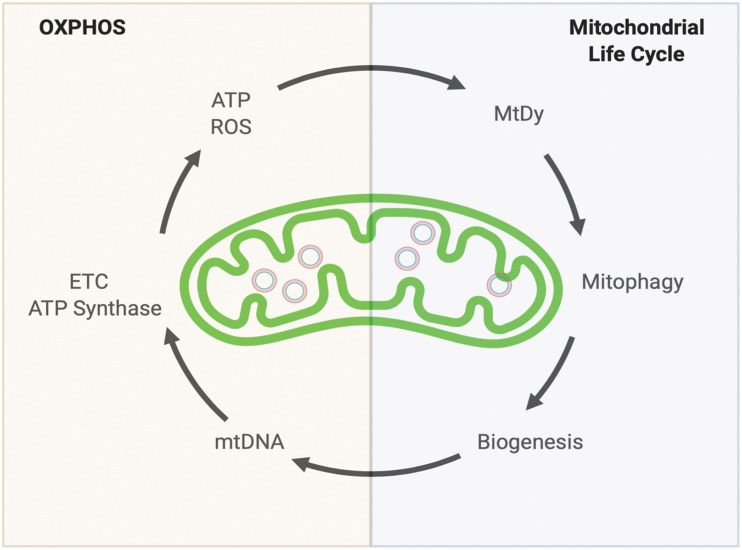
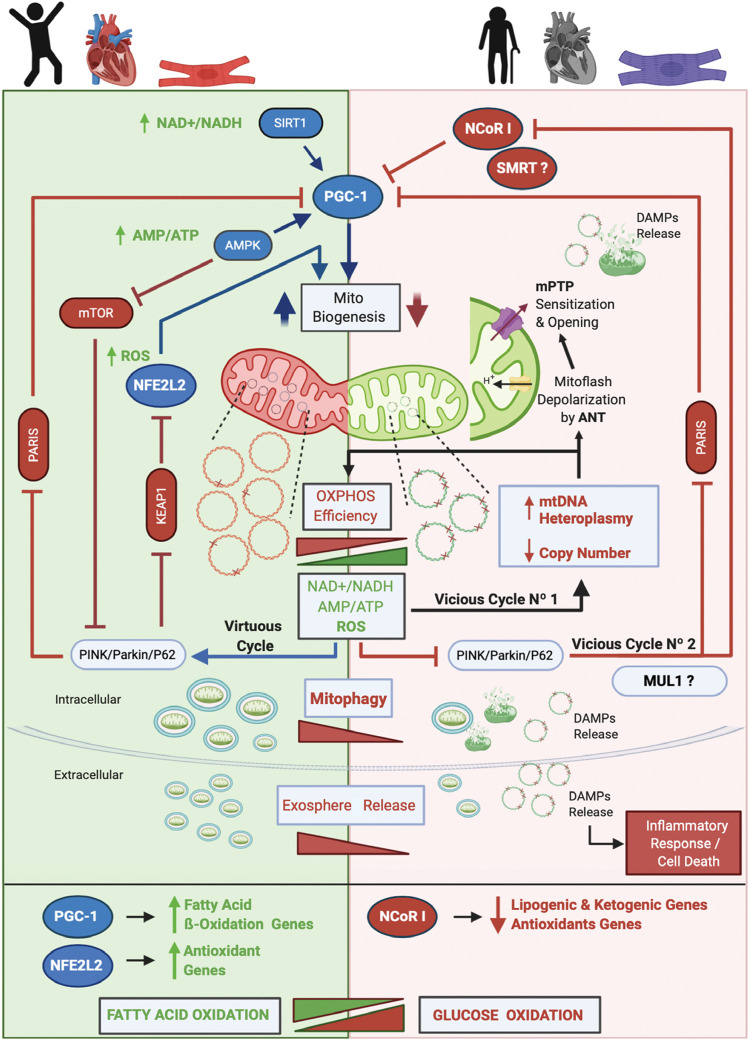
The most common aging-associated diseases are cardiovascular diseases which affect 40% of elderly people. Elderly people are prone to suffer aging-associated diseases which are not only related to health and medical cost but also to labor, household productivity and mortality cost. Aging is becoming a world problem and it is estimated that 21.8% of global population will be older than 65 years old in 2050; and for the first time in human history, there will be more elderly people than children. It is well accepted that the origin of aging-associated cardiovascular diseases is mitochondrial dysfunction. Mitochondria have their own genome (mtDNA) that is circular, double-stranded, and 16,569 bp long in humans. There are between 500 to 6000 mtDNA copies per cell which are tissue-specific. As a by-product of ATP production, reactive oxygen species (ROS) are generated which damage proteins, lipids, and mtDNA. ROS-mutated mtDNA co-existing with wild type mtDNA is called mtDNA heteroplasmy. The progressive increase in mtDNA heteroplasmy causes progressive mitochondrial dysfunction leading to a loss in their bioenergetic capacity, disruption in the balance of mitochondrial fusion and fission events (mitochondrial dynamics, MtDy) and decreased mitophagy. This failure in mitochondrial physiology leads to the accumulation of depolarized and ROS-generating mitochondria. Thus, besides attenuated ATP production, dysfunctional mitochondria interfere with proper cellular metabolism and signaling pathways in cardiac cells, contributing to the development of aging-associated cardiovascular diseases. In this context, there is a growing interest to enhance mitochondrial function by decreasing mtDNA heteroplasmy. Reduction in mtDNA heteroplasmy is associated with increased mitophagy, proper MtDy balance and mitochondrial biogenesis; and those processes can delay the onset or progression of cardiovascular diseases. This has led to the development of mitochondrial therapies based on the application of nutritional, pharmacological and genetic treatments. Those seeking to have a positive impact on mtDNA integrity, mitochondrial biogenesis, dynamics and mitophagy in old and sick hearts. This review covers the current knowledge of mitochondrial physiopathology in aging, how disruption of OXPHOS or mitochondrial life cycle alter mtDNA and cardiac cell function; and novel mitochondrial therapies to protect and rescue our heart from cardiovascular diseases.
最常见的与衰老相关的疾病是心血管疾病,40%的老年人受其影响。老年人容易患上与衰老相关的疾病,这些疾病不仅关乎健康和医疗成本,还涉及劳动力、家庭生产力和死亡成本。衰老正成为一个全球性问题,据估计,到2050年全球21.8%的人口将超过65岁;人类历史上老年人数量将首次超过儿童。人们普遍认为,与衰老相关的心血管疾病的根源是线粒体功能障碍。线粒体有自己的基因组(mtDNA),呈环状、双链,在人类中长度为16,569碱基对。每个细胞中有500到6000个mtDNA拷贝,且具有组织特异性。作为ATP产生的副产物,活性氧(ROS)会生成,它会损害蛋白质、脂质和mtDNA。与野生型mtDNA共存的ROS突变mtDNA被称为mtDNA异质性。mtDNA异质性的逐渐增加会导致线粒体功能逐渐失调,从而导致其生物能量能力丧失、线粒体融合与裂变事件(线粒体动力学,MtDy)平衡被破坏以及线粒体自噬减少。线粒体生理功能的这种失调会导致去极化和产生ROS的线粒体积累。因此,除了ATP产生减少外,功能失调的线粒体还会干扰心脏细胞中正常的细胞代谢和信号通路,促使与衰老相关的心血管疾病的发展。在这种情况下,人们越来越有兴趣通过降低mtDNA异质性来增强线粒体功能。mtDNA异质性的降低与线粒体自噬增加、MtDy平衡正常化和线粒体生物合成有关;而这些过程可以延缓心血管疾病的发生或进展。这促使了基于营养、药理和基因治疗应用的线粒体疗法的发展。这些疗法旨在对老年和患病心脏中的mtDNA完整性、线粒体生物合成、动力学和线粒体自噬产生积极影响。本综述涵盖了衰老中线粒体生理病理学的当前知识,氧化磷酸化或线粒体生命周期的破坏如何改变mtDNA和心脏细胞功能;以及保护心脏并使其免受心血管疾病侵害的新型线粒体疗法。