Department of Neurology, Yale School of Medicine, New Haven, CT, United States.
Department of Neurology, Yale School of Medicine, New Haven, CT, United States; Neuroscience Graduate Program, Tufts University School of Medicine, Boston, MA, United States.
Curr Top Dev Biol. 2021;142:319-370. doi: 10.1016/bs.ctdb.2020.12.009. Epub 2021 Feb 12.
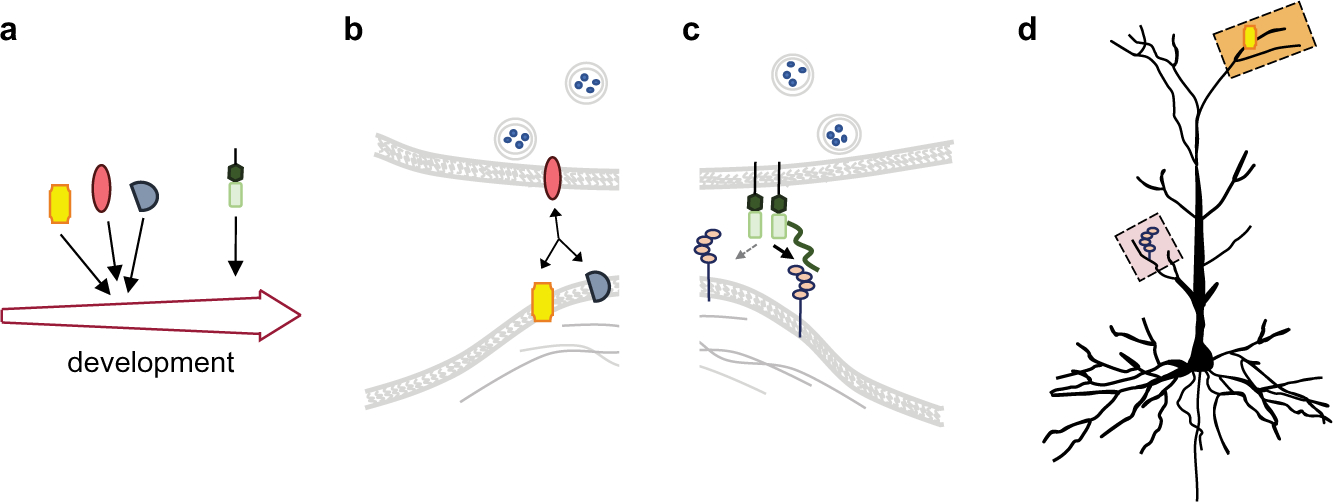
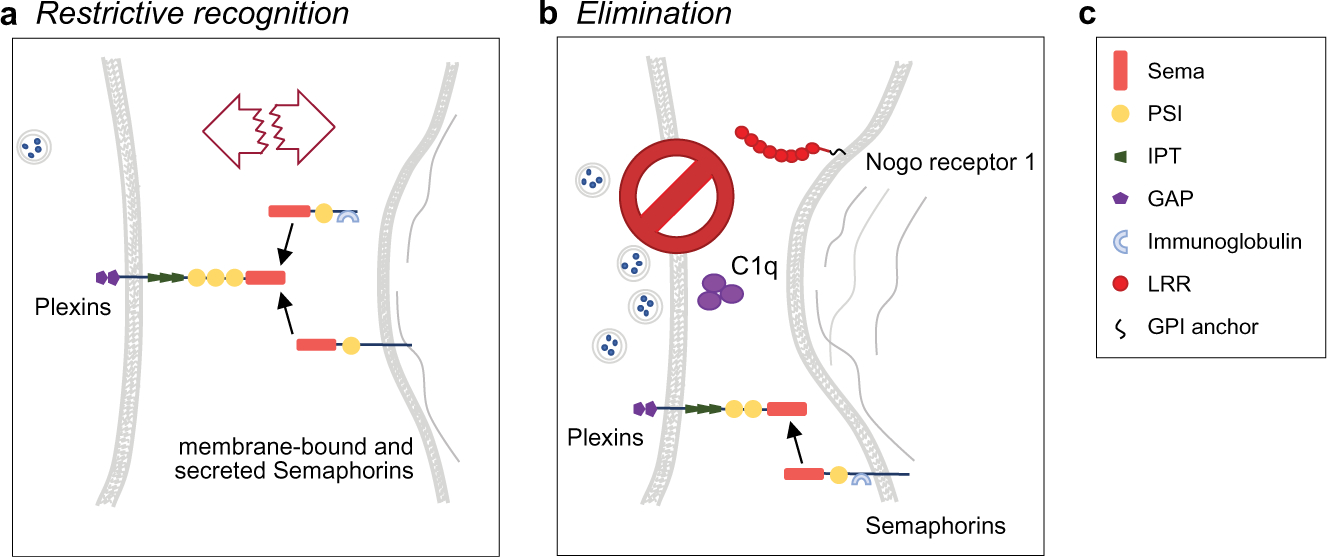
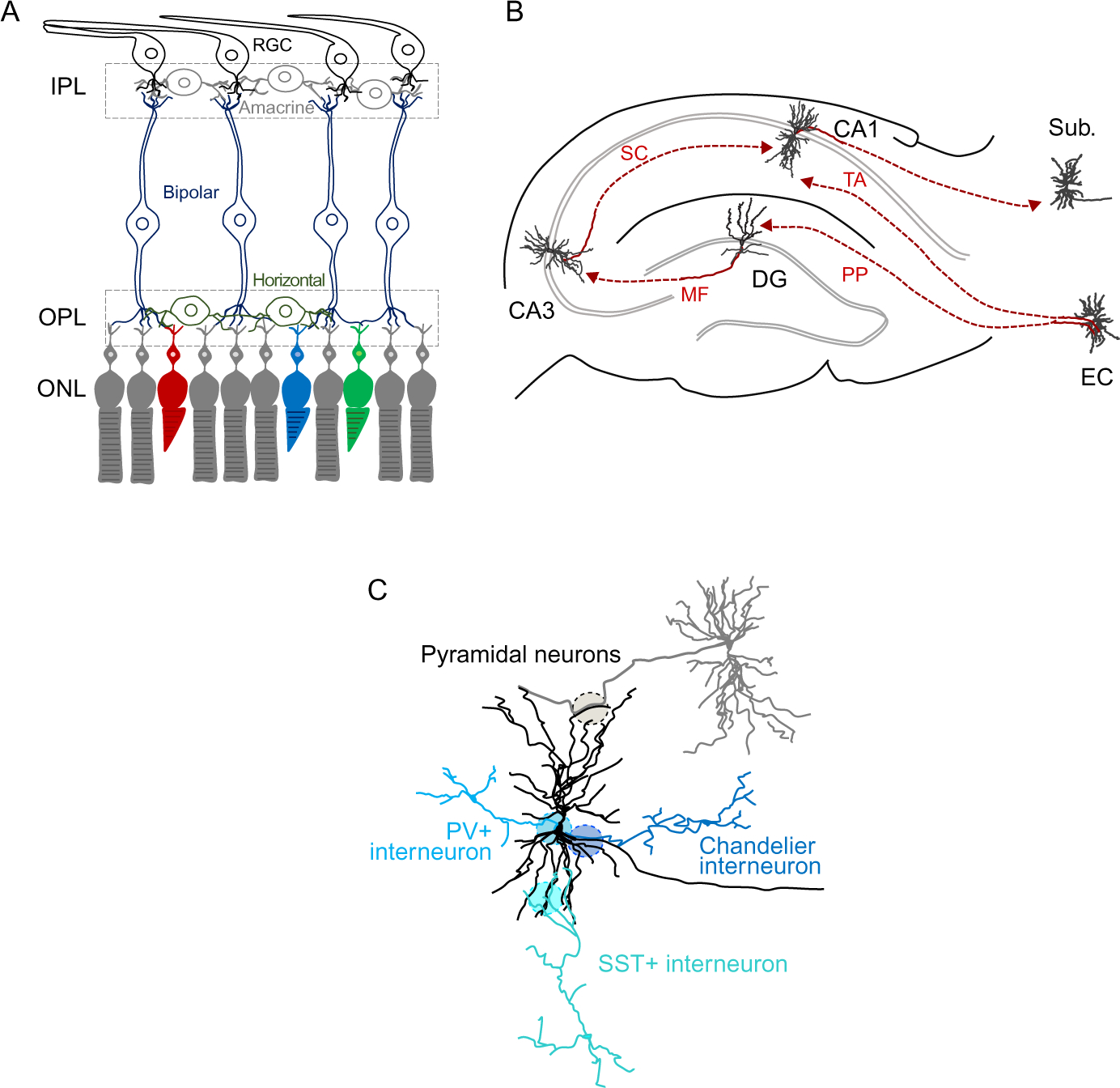
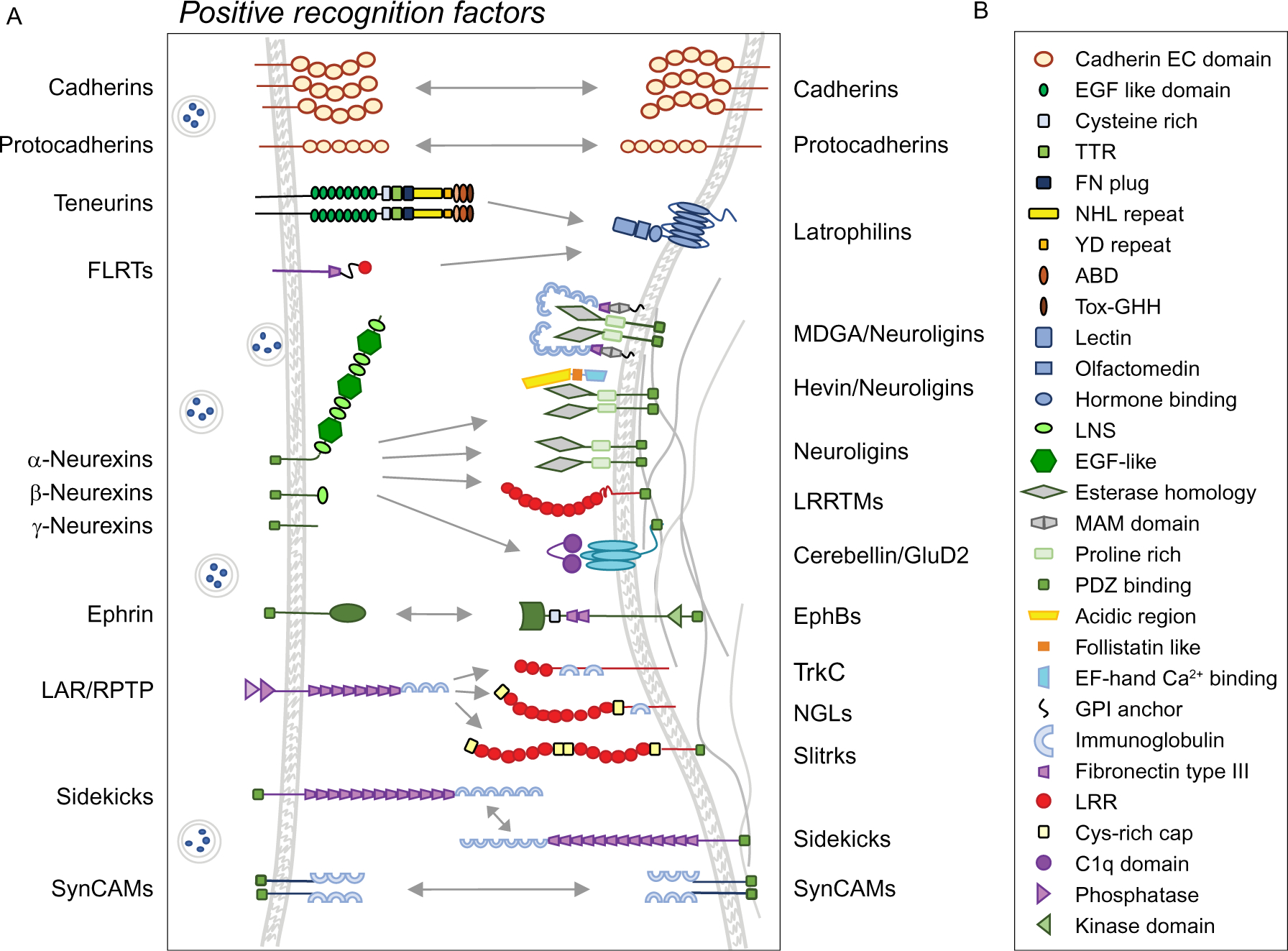
Synaptic connectivity patterns underlie brain functions. How recognition molecules control where and when neurons form synapses with each other, therefore, is a fundamental question of cellular neuroscience. This chapter delineates adhesion and signaling complexes as well as secreted factors that contribute to synaptic partner recognition in the vertebrate brain. The sections follow a developmental perspective and discuss how recognition molecules (1) guide initial synaptic wiring, (2) provide for the rejection of incorrect partner choices, (3) contribute to synapse specification, and (4) support the removal of inappropriate synapses once formed. These processes involve a rich repertoire of molecular players and key protein families are described, notably the Cadherin and immunoglobulin superfamilies, Semaphorins/Plexins, Leucine-rich repeat containing proteins, and Neurexins and their binding partners. Molecular themes that diversify these recognition systems are defined and highlighted throughout the text, including the neuron-type specific expression and combinatorial action of recognition factors, alternative splicing, and post-translational modifications. Methodological innovations advancing the field such as proteomic approaches and single cell expression studies are additionally described. Further, the chapter highlights the importance of choosing an appropriate brain region to analyze synaptic recognition factors and the advantages offered by laminated structures like the hippocampus or retina. In a concluding section, the profound disease relevance of aberrant synaptic recognition for neurodevelopmental and psychiatric disorders is discussed. Based on the current progress, an outlook is presented on research goals that can further advance insights into how recognition molecules provide for the astounding precision and diversity of synaptic connections.
突触连接模式是大脑功能的基础。因此,识别分子如何控制神经元彼此形成突触的位置和时间,是细胞神经科学的一个基本问题。本章阐述了黏附与信号复合物以及分泌因子在脊椎动物脑中对突触伴侣识别的作用。各部分内容遵循发育的观点,讨论了识别分子(1)如何指导初始突触连接,(2)如何排斥错误的突触连接,(3)如何促进突触特化,以及(4)如何在形成后去除不合适的突触。这些过程涉及到丰富的分子组成,描述了关键的蛋白家族,包括钙黏蛋白和免疫球蛋白超家族、神经导向因子/轴突引导蛋白和整联蛋白、富含亮氨酸重复的蛋白和神经连接蛋白及其结合伴侣。贯穿全文定义并强调了使这些识别系统多样化的分子主题,包括识别因子的神经元类型特异性表达和组合作用、选择性剪接和翻译后修饰。还另外描述了推进该领域的方法学创新,如蛋白质组学方法和单细胞表达研究。此外,本章强调了选择适当的脑区来分析突触识别因子的重要性,以及类似海马体或视网膜等层状结构所提供的优势。在最后的结论部分,讨论了异常突触识别对神经发育和精神疾病的深远疾病相关性。基于目前的进展,提出了研究目标的展望,这将进一步深入了解识别分子如何提供惊人的突触连接精度和多样性。